Recipes · Preserving memories
How to Preserve Family Recipes for Future Generations
There is a particular kind of magic in an old recipe card — the faded ink, the buttery thumbprint in one corner. Family recipes are love letters written in flour and sugar, and they deserve to be kept. Here's how to preserve yours for the people you love. – Jona
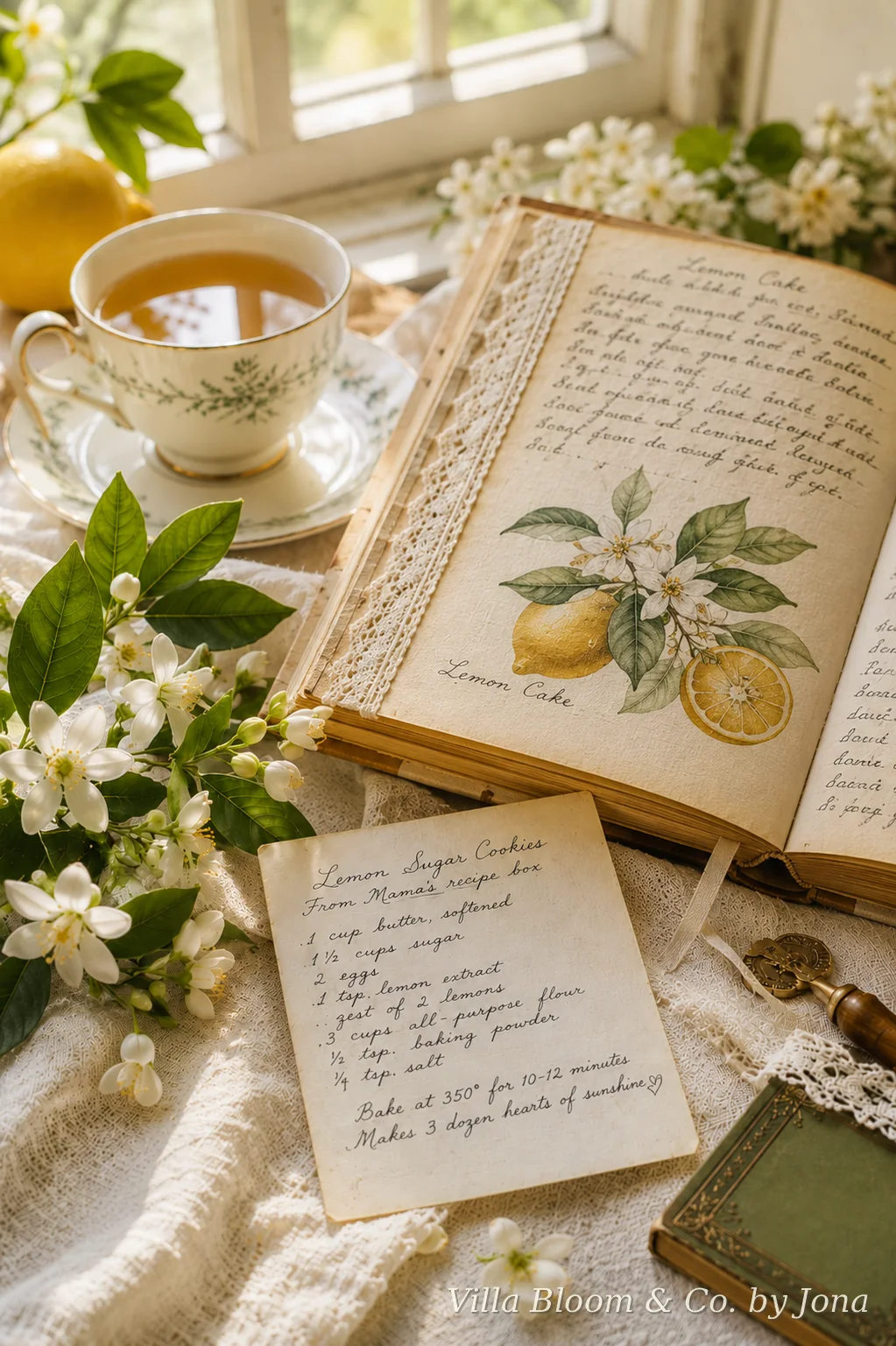
The soft fold of the paper. The faded ink. A buttery thumbprint left there decades ago by hands you may never have met. Family recipes are more than lists of ingredients — they are love letters written in flour and sugar, passed quietly from one generation to the next.
And yet, so many of them disappear. A handwritten card slips behind a drawer. A grandmother's voice fades before anyone thinks to write down exactly how much cinnamon she really used. The dish that defined every holiday becomes "something Grandma made" — remembered fondly, but never quite recreated.
If you've ever felt the gentle ache of a recipe almost lost, this guide is for you. Preserving family recipes isn't complicated, but it is one of the most meaningful things you can do for the people you love — both the ones at your table now and the ones who will gather there long after you're gone. Let's walk through it together, slowly and with care.
Related: Cottagecore Zuhause — the calm aesthetic a family cookbook looks loveliest in.
How to Preserve Family Recipes in 5 Simple Steps
If you're not sure where to begin, here's the whole journey at a glance. These five simple steps take you from a scattered pile of cards to a family cookbook you'll treasure for generations.
- Gather your recipes. Collect every handwritten card, clipping, and scribbled note into one place.
- Organize them. Sort by course, occasion, or person — whatever matches how your family really cooks.
- Protect the originals. Slip fragile cards into clear sleeves and photograph the most precious handwriting.
- Create a recipe journal. Copy your favorites into one beautiful book — a blank notebook, or a ready-made printable recipe journal with templates.
- Share and archive. Make copies for loved ones and keep a digital backup so your recipes live in more than one place.
Why Family Recipes Matter — and Why They're Worth Preserving
Food is memory you can taste. A single bite of a familiar dish can carry you back to a sunlit kitchen, a crowded holiday table, or the quiet comfort of being cared for as a child. This is why family recipes matter so deeply — they hold our stories in a way that photographs cannot.
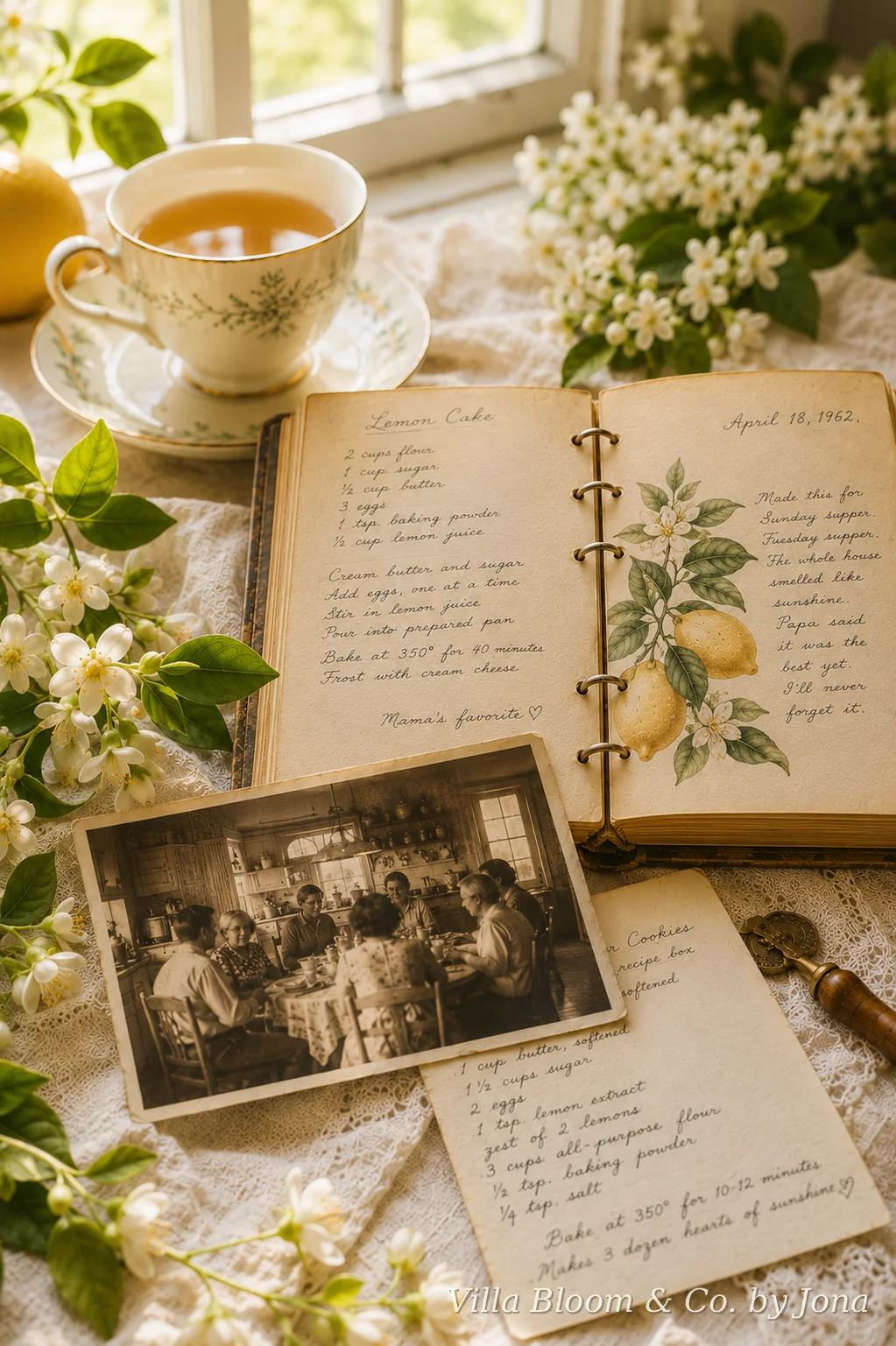
More than instructions
A recipe is never just a recipe. It's the Sunday your mother taught you to fold dumplings. It's the smell of bread that meant home. When you preserve family traditions through food, you're keeping the feeling alive, not only the flavor.
Handwritten recipes carry this even more powerfully. The slant of the handwriting, the little notes in the margins ("add more butter than it says"), the splatters and smudges — these are fingerprints of a life. A typed recipe gives you the dish. A handwritten one gives you the person.
A gift to the future
Think of the descendants you'll never meet — a great-granddaughter who will one day want to know where she came from. When you preserve family recipes, you're handing her a piece of her own history. You're saying: this is who we were, this is what we loved, this is how we celebrated.
That's not a small thing. It's a quiet kind of immortality, wrapped in the warmth of a shared meal.
7 Beautiful Ways to Preserve Family Recipes
There's no single right way to keep your family's recipes safe. Here are seven of the loveliest — pick the ones that feel like you.
- Start a recipe journal. Write your favorites by hand in one beautiful book, the heart of any family recipe collection.
- Build a family recipe binder. Flexible, expandable, and easy to share across the family.
- Scan the handwritten cards. Preserve the actual handwriting before the paper fades.
- Record a relative cooking. Capture the pinches and the "until it looks right" on video, before that knowledge slips away.
- Frame a treasured recipe. Turn a grandmother's handwriting into heirloom kitchen art.
- Make a printable family cookbook. A printable recipe journal turns loose pages into a finished keepsake book.
- Gift copies to loved ones. Shared recipes are the ones that survive the generations.
How to Organize Old Recipe Cards and Handwritten Recipes
Before you can pass anything down, you have to gather it. Most families have recipes scattered everywhere — tucked in cookbooks, taped inside cabinet doors, stuffed in shoeboxes, saved in fading emails. The first step in good recipe organization is simply bringing them all into one place.
Start with a gentle gathering
Set aside a quiet afternoon. Pour yourself a cup of tea. Then go room to room and collect every recipe you can find — the cards, the clippings, the scribbled notes, the printouts. Don't sort yet. Just gather. You may be surprised how much you uncover, and how many memories surface along the way.
Sort with intention
Once everything is in one spot, begin to sort. A few simple categories work beautifully:
- By course — appetizers, mains, sides, desserts, drinks
- By occasion — holidays, birthdays, Sunday dinners, everyday meals
- By person — Grandma's recipes, Mom's recipes, your own creations
Choose whatever feels natural to your family. There's no wrong way, only the way that makes sense to you.
Protect the originals
Old handwritten recipes are fragile, and once they're gone, they're gone. Treat the originals like the heirlooms they are. Slip each one into a clear protective sleeve to guard against grease, water, and time. For the most precious cards, consider photographing or scanning them, so the handwriting itself is preserved even if the paper one day crumbles. This small act of care is the foundation of everything that follows.
The Benefits of a Recipe Journal for Your Family Recipe Collection
Sorting and protecting your cards is a wonderful start. But there's something even lovelier you can do: begin a recipe journal — a single, beautiful place where your family's recipes live together, written in your own hand. One of the first recipes I ever copied by hand was a simple lemon cake from a relative, and from my own experience, that's the moment everything shifts: loose scraps become something you tend with care — and one day, gladly pass on.
Why a journal feels different
A recipe journal turns a scattered collection into a story. Instead of loose cards that get lost, you have a book — something you can hold, leaf through on a rainy afternoon, and pass across the table to a curious grandchild. It becomes an object of comfort, not just a container of information.
There's also a quiet joy in the writing itself. As you copy a recipe into your journal, you slow down. You remember the person who gave it to you. You add your own notes — halve the sugar, Dad's favorite, first made this the winter we moved in. Over time, the journal fills not only with recipes, but with you.
A few of the loveliest benefits of a recipe journal
- Everything in one place. No more digging through drawers or losing a beloved card.
- A record of memories. Space to write the story behind each dish, not just the steps.
- A creative keepsake. Splatters, stars beside the winners, notes in the margins — a living family heirloom.
- Easy to continue. Add new recipes as your family grows and traditions evolve.
A gentle suggestion
If you love the idea but feel daunted by starting from a blank notebook, a printable recipe journal can make it effortless and beautiful. A well-designed printable gives you ready-made pages — recipe templates, a family recipe section, a place for favorites, even a kitchen conversion chart — all in one calm, cohesive style.
You simply print the pages you need, slip them into a binder, and begin. It's an easy way to create something that looks like a treasured cookbook from the very first page. This is exactly what led me to design my own Lemon Cottage Recipe Journal — soft watercolor pages, made to sit beautifully alongside your handwritten family recipes.
Creating a Family Recipe Binder and Cookbook
For many families, the most practical and flexible way to preserve recipes is a family recipe binder. Unlike a bound book, a binder grows with you — you can add pages, rearrange sections, and include contributions from relatives near and far.
What you'll need
Creating a recipe binder is wonderfully simple. Gather:
- A sturdy binder you love the look of
- Clear page protectors, to guard against kitchen messes
- Printable recipe pages or plain cardstock
- Dividers to separate your sections
- A pen, and perhaps some pretty labels
That's truly all it takes to begin a family cookbook that could last for generations.
Build your family cookbook section by section
Use your dividers to create sections that mirror how your family actually cooks. A classic layout might include:
- Family Treasures — the handed-down recipes, with space for their stories
- Everyday Favorites — the weeknight dishes you reach for again and again
- Holidays & Celebrations — the recipes that mark your special days
- Baking & Sweets — because these deserve their own loving corner
- Notes & Conversions — handy references, kitchen tips, and substitutions
Within each section, slip your protected original cards alongside freshly written pages. This way, the binder honors both the old and the new — the fragile handwriting of those who came before, and the clear copies your children will be able to read for decades.
Make it beautiful
A family recipe binder isn't just functional; it's an heirloom in the making. Choose a cover that brings you joy. Add a title page with your family name. Tuck in a few photographs of the cooks themselves, smiling in their kitchens. When the binder is lovely to look at, it becomes something your family wants to open — and that is how traditions stay alive.
Related: Sommerliche Tischdeko selber machen — for the table where those family recipes are served.
Family Cookbook Checklist: What to Include
Ready to make your own family cookbook? This gentle checklist helps you remember every lovely detail. You don't need all of it at once — think of it as an invitation, not a to-do list.
- A title page with your family name
- A contents page so every recipe is easy to find
- Recipe templates with room for ingredients, steps, and notes
- A dedicated section for family recipes and their stories
- A page for your all-time favorite recipes
- A kitchen conversion chart for quick reference
- Clear sleeves to protect against kitchen splatters
- Space for photos of the cooks themselves
- Blank pages to keep growing over the years
These are exactly the pages I gathered into my Lemon Cottage Recipe Journal — in case you'd rather skip the design work and begin with ready-made pages.
Related: Zitronenzauber im Hochsommer and Zitronenkuchen — two favourite recipes to bake together.
Passing Down Family Recipes for Future Generations
Preserving recipes is only half the story. The deeper goal is to pass them down — to make sure they live on in the hands and hearts of the people who come after you. This is how you truly preserve family traditions.
Cook together, not just apart
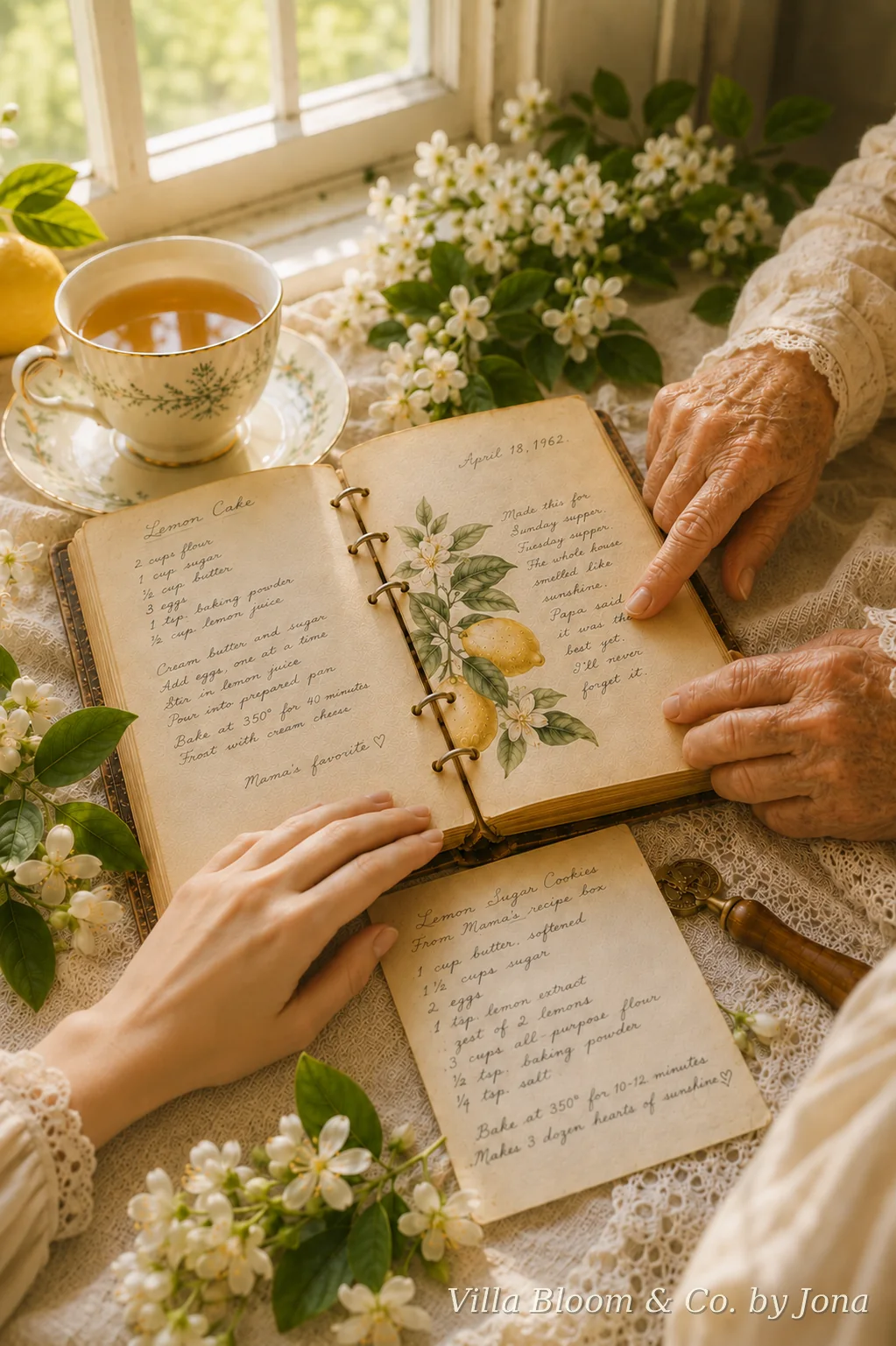
The most powerful way to pass a recipe down isn't on paper at all — it's side by side at the counter. Invite your children, your grandchildren, your nieces into the kitchen. Let them measure, stir, and taste. Tell them the stories as you cook: who created this dish, why it mattered, the holidays it graced. Recipes learned this way are never forgotten. The paper becomes a backup; the real recipe lives in the memory of an afternoon spent together.
Capture the unwritten details
So much of family cooking lives in the gaps — the pinch of this, the "until it looks right" of that. As you preserve your recipes, try to capture these unwritten details. Write down the little tricks. Note the textures and the timing. If an older relative still cooks the dish, sit beside them and record exactly what they do, before that knowledge slips away. These small, specific notes are often what make a recreated recipe finally taste right.
Share copies generously
A recipe kept in a single book can still be lost — to a flood, a fire, or simply the passage of time. The safest way to preserve family recipes is to share them. Make copies of your recipe journal or family cookbook for siblings, children, and cousins. Consider creating a simple digital version, too, so the recipes exist in more than one place. The more hands that hold your family's recipes, the longer they will live.
Create a giving tradition
Some families turn recipe-sharing into a ritual all its own. A handwritten recipe tucked into a wedding gift. A small family cookbook printed for each child when they move into their first home. A holiday tradition of adding one new recipe to the family binder each year. When passing recipes down becomes a tradition in itself, you create something that renews with every generation — a thread of love that never breaks.
A recipe is never just a recipe. A typed one gives you the dish. A handwritten one gives you the person.
A Love That Outlasts Us
In the end, preserving family recipes is an act of love that reaches far beyond the kitchen. It's a way of saying I was here, this is what brought us joy, and I want you to have it too.
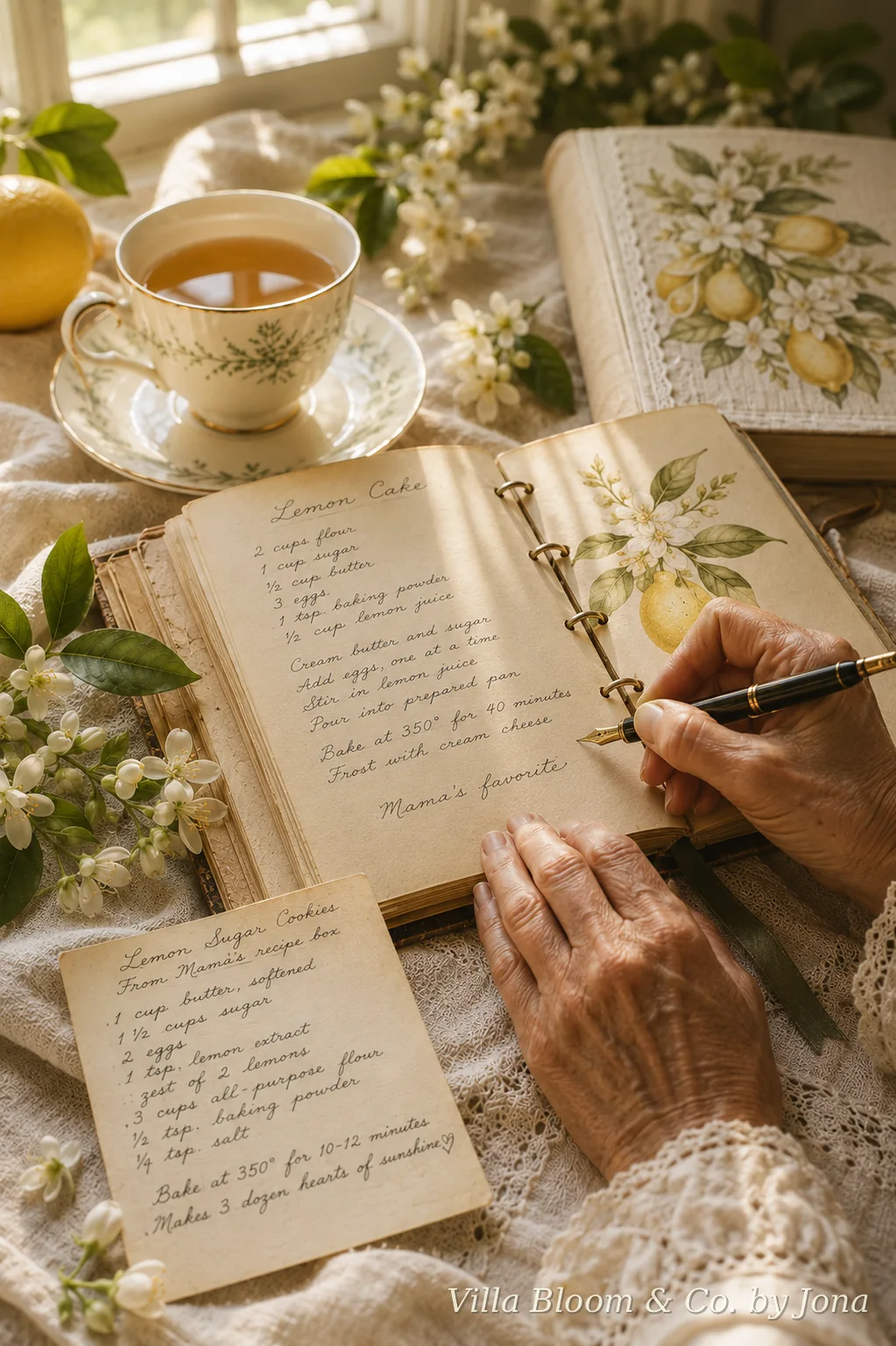
You don't have to do it all at once. Start with a single afternoon of gathering. Protect the handwritten recipes you treasure most. Begin a recipe journal, build a family recipe binder, or simply invite someone you love into the kitchen to cook beside you. Each small step keeps a little more of your family's story safe.
And one day — perhaps long after you've gone — someone will open that binder or that journal, run a finger across the familiar handwriting, and feel the warmth of a kitchen they may never have stood in. They'll taste a dish that tastes like belonging. And in that moment, the love you preserved will be alive again. That is the quiet, beautiful power of a family recipe. Take care of yours. They are worth keeping forever.
Frequently Asked Questions About Preserving Family Recipes
How do you preserve handwritten recipes?
Slip the original cards into clear sleeves and store them somewhere cool, dry, and out of direct sunlight. Photograph or scan the most precious cards as well, so the handwriting is saved — and gradually copy the recipes into a recipe journal.
How do you create a family cookbook?
Gather all your recipes in one place, sort them by occasion or person, copy them onto beautiful recipe pages or a printable template, and bind everything into a binder or book. Add stories and photos, and make copies for the people you love.
What recipes belong in a family cookbook?
Include the recipes that have been handed down, your everyday favorites, holiday and celebration dishes, and treasured bakes. Leave room for the little stories behind each recipe, too — they're what turn a cookbook into an heirloom.
How do you digitize old recipe cards?
Photograph or scan the cards in good, even light from directly above, save them as PDF or JPG files, and back them up in more than one place — for example, the cloud and a hard drive. This keeps the handwriting safe even as the paper ages.
A gentle place to begin
If you've read all the way to here, I hope you feel inspired to keep your own family's recipes safe. Tell me — which recipe will you write down first? – Jona