Living · Slow Living
The Marks of a Life
A lived-in home doesn’t need to be perfect to be beautiful – it only needs to be honest. On wear, patina and a small practice for seeing your home with new eyes. – Jona
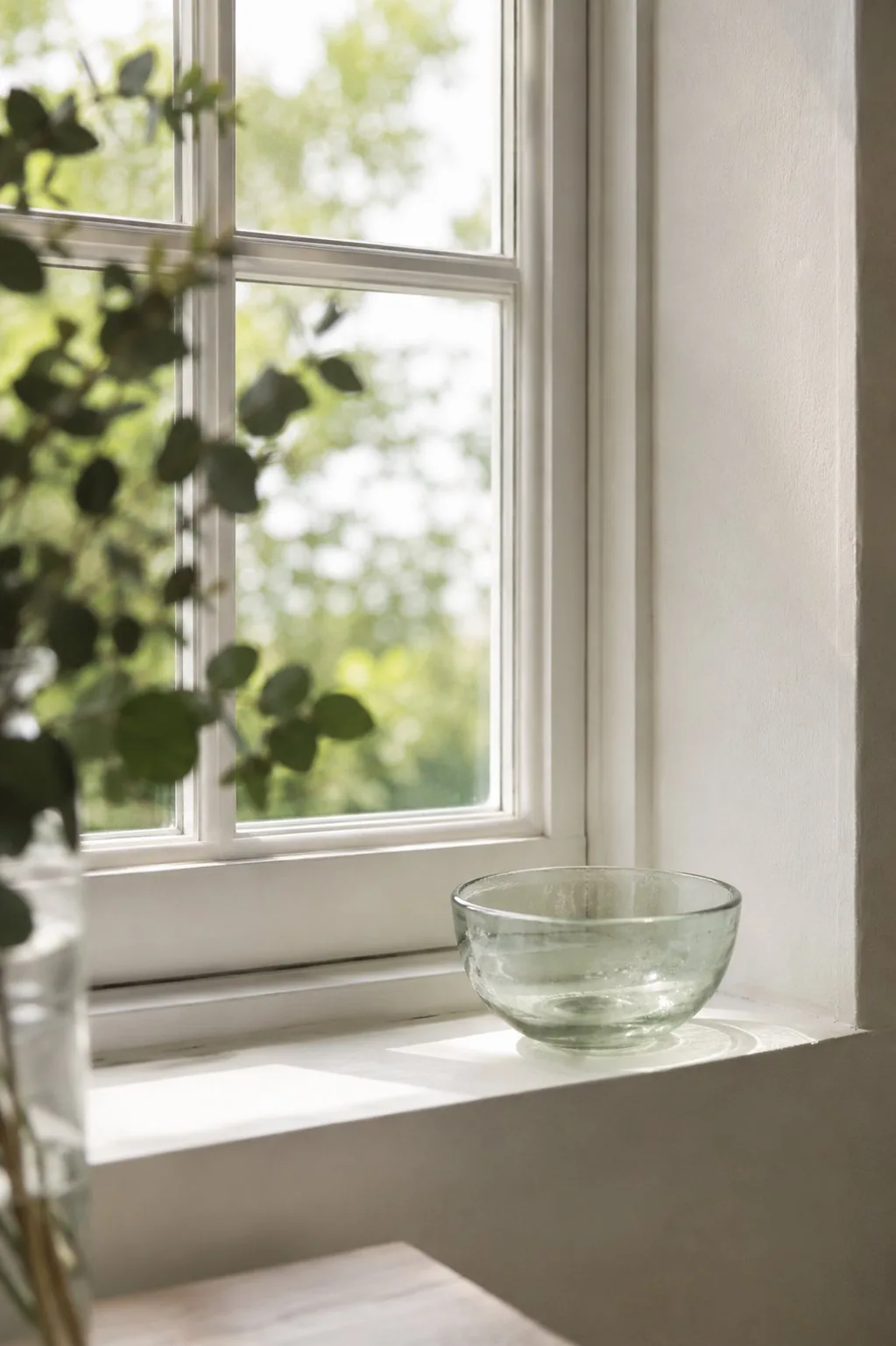
There’s a table in my house whose every pale ring I know by heart. One came from a cup set down too hot; another is just a faint shadow beside it. One edge is worn round and smooth, where the same hand has pulled the same chair close for years. For a long time I took these marks for small flaws – something to polish away the moment I found the time.
Now I see them differently. These marks aren’t what my table is missing. They’re what makes it mine.
In a time when flawless rooms glow at us from every screen – every surface new, every corner untouched – that’s an almost uncomfortable thought. But it’s also a release. Because it means your home doesn’t have to be perfect to be beautiful. It only has to be honest.
Part of the series Quiet Observations – one object, one glance, one quiet moment at a time.
Patina Isn’t a Flaw. It’s a Record.
It’s worth drawing a fine distinction. An object remembers nothing – a table has no feelings, a staircase carries no longing. But it records. Plainly, visibly, the surface holds on to whatever use has passed across it.
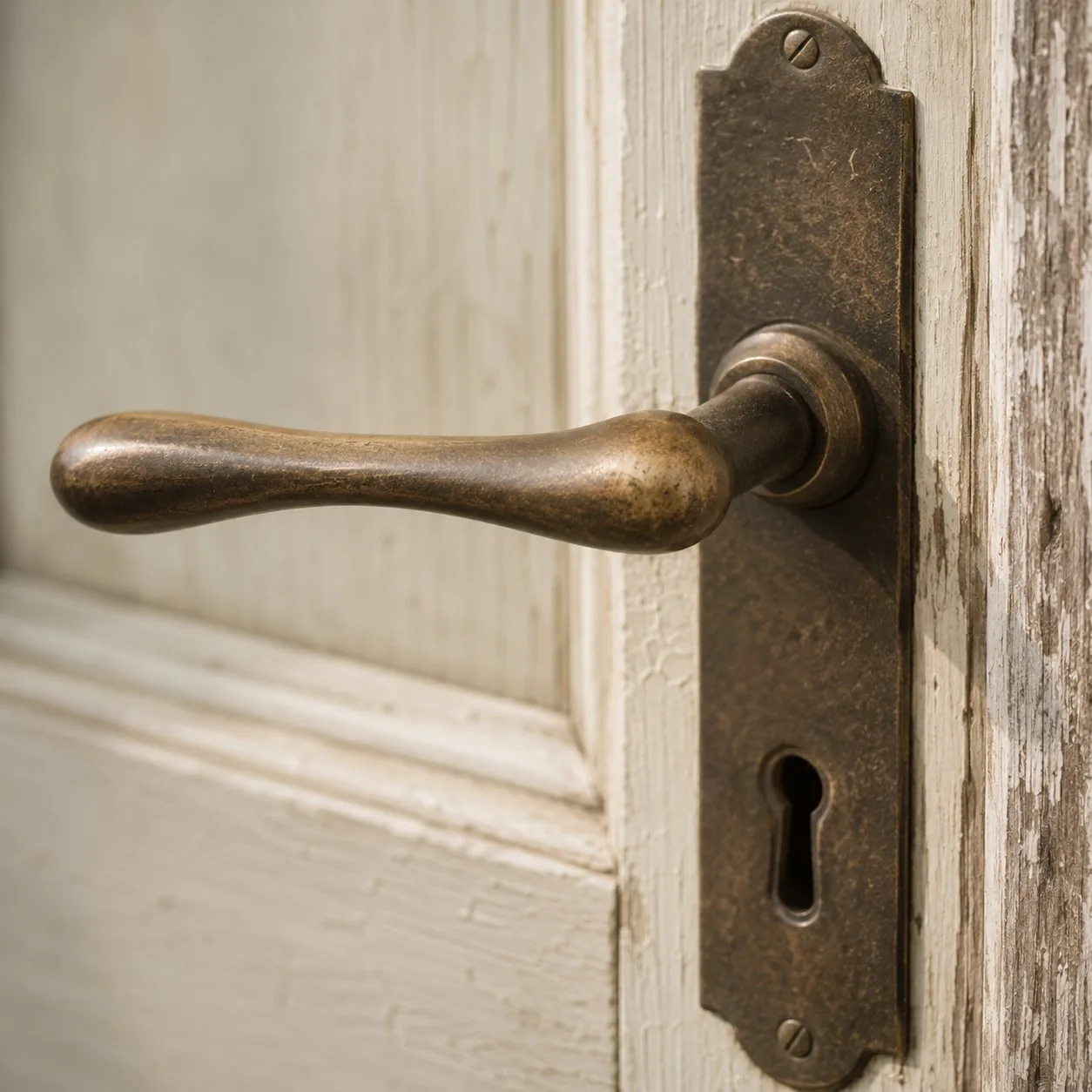
The worn-down middle of a stair tread. The polished patch on a banister, just where the hand takes hold. The handle of a front door, rubbed matte by a thousand touches. None of it was placed there on purpose. It’s simply use, made visible – and precisely because no one planned it, it’s unmistakable.
Imagine setting your dining table beside a second, identical one, fresh from the same workshop. In a single moment you’d know which was yours. Not by the shape they share – but by what the years have left behind. That isn’t wear. That’s character.
Two Layers in Every Home
Once you begin to look this way, you notice that every familiar object carries two layers.
One is lasting: the marks of the years, written into wood, stone, metal, cloth. They stay. They are the object’s real identity.
The other is fleeting: whatever today leaves behind. A few crumbs beside a place setting. The morning post. A band of light falling across the surface at just this hour. A fine line of dust where no foot ever falls. All of it will be different, or gone, by tomorrow.
The beauty is in seeing both at once. The day that’s already leaving – and the years that remain. You don’t have to change anything, buy anything, improve anything. You only have to look.
A Small Practice for a Quiet Moment
Slow living is often mistaken for a question of time – as if we simply didn’t have enough. It’s really a question of attention. This small practice takes no more than five minutes, and it quietly changes how you see your own four walls.
- Choose a single object you use every day and barely look at anymore. The kitchen table. The favourite armchair. The front door. A staircase.
- Look at it as if for the first time. Not judging (“that could use a fresh coat”), but observing. Where is the surface lighter, because it’s touched? Where darker, because it never is? Which edge has gone soft, which is still sharp?
- Find the one place that makes this object unmistakable. Not the largest or most obvious – but the one whose disappearance would make it look like any other. That single place is, in a way, its quiet name.
- Then notice what is only here today: the light, an object set down without thinking, a trace of the day. Something that will already be different tomorrow.
That’s all there is to it. But once you’ve looked this way, you go on looking differently. You begin to see your home not as a project that’s never finished, but as a place already full of quiet, beautiful proof of a life being lived.
Beauty Before Perfection
Maybe that’s the real luxury of a considered home: not that everything is new and flawless, but that you stop wanting it to be. That you see the worn handle, the soft table edge, the hollowed stair for what they are – the quiet signs that life is truly happening here.
A perfect home looks as though no one is home. A lived-in home tells, without a single word, of all the days that have happened inside it.
And that, I think, is the lovelier story.
“The most beautiful rooms are often the ones where life has become visible.”
If you’d like to learn to look this way
- The Villa Bloom Coastal Living Companion – a fillable journal for living slowly and intentionally
- Quiet Observations · Part 1: What Your Front Door Knows
- Quiet Observations · Part 2: No Two Steps Are Alike
- Quiet Observations · Part 3: A Table Keeps No Memory
Maybe you’ll start today, with a single object. Tell me – which quiet mark in your home would you never want to polish away? – Jona