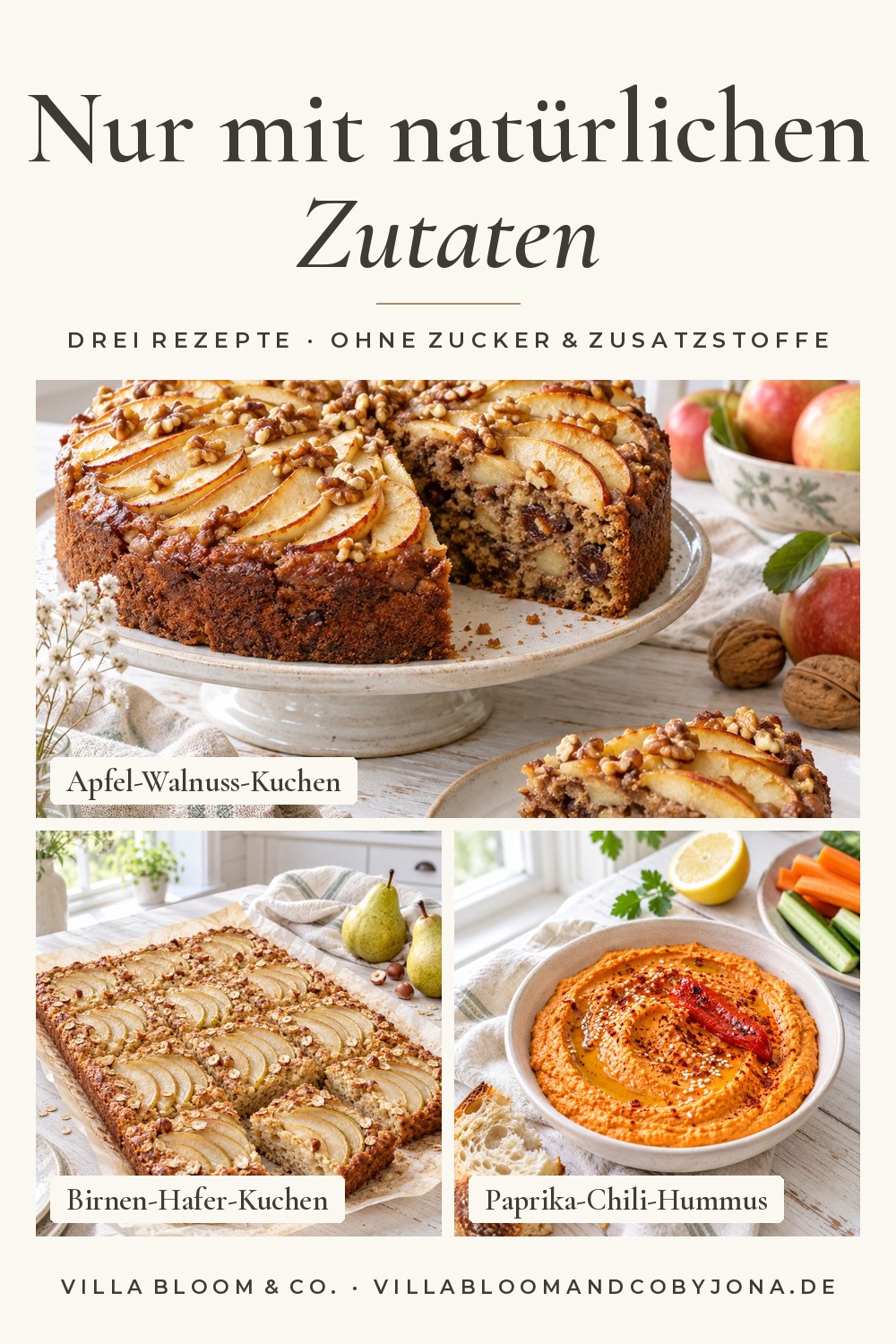
Naturally Sweet – recipes made with nothing but natural ingredients
A small series for anyone who likes to know what they are eating: cakes without sugar, syrup or sweeteners, spreads without vinegar or additives – built from ingredients you can name one by one and that are all available on the organic shelf. Here are all the recipes in the series, the rules behind them and what comes next.

What it is about
The idea is simple and still has consequences: everything in these recipes could also sit in a fruit bowl, on a pantry shelf or on a market stall. Dates, apples, pears, rolled oats, walnuts, chickpeas, tahini, roasted peppers, lemon, yoghurt, eggs, cold-pressed oil. No sugar, no syrup, no sweetener, no factory vinegar, no flavouring, no preservative. Not because those things are forbidden, but because they are not needed – and because without them you suddenly taste what is actually in there.
The series began with a savoury recipe, the roasted pepper chili hummus, and then moved on to cakes, because that is where the question is most interesting: can a cake without sugar taste like cake? The answer is yes, with one reservation that every recipe states plainly: it tastes less sweet than a cake from the bakery. And that is exactly why you taste apple, pear, walnut and cinnamon properly for the first time.
The recipes in the series
Four recipes so far, three sweet and one savoury. Each has a page of its own with a detailed look at the ingredients, step-by-step instructions, two variations, notes on keeping and the most frequent questions. The order is not a ranking – the best place to start is whichever one you already have the fruit for.


The five rules behind the recipes
Sweetness comes from fruit. Dates are the backbone of the sweet recipes: soaked and blended, they sweeten, bind and keep the crumb moist. Alongside them come unsweetened apple purée, grated apples or pears and ripe fruit on top. Syrup – maple, agave or date syrup included – is not used, because it is concentrated sugar in liquid form. Where a recipe does need syrup as an exception, it is explicitly labelled "no refined sugar", never "no sugar".
Acidity comes from lemon. In the savoury recipes freshly squeezed lemon juice replaces spirit vinegar; in the sweet ones lemon zest lifts the fruit and, together with bicarbonate of soda, keeps the crumb light. Mild cider vinegar is the only vinegar exception, and only as an alternative.
Fat is good fat. Cold-pressed rapeseed oil where it should stay in the background, mild olive oil where Mediterranean warmth is wanted, tahini and nuts for depth. Butter is allowed and named as an alternative, but the base recipes work with oil, because they stay moister and keep longer that way.
Flour has character. Wholemeal spelt, ground oats, ground walnuts. Wholemeal suits cakes that are allowed to be rustic anyway and gives a nutty depth that goes with dates and fruit. Anyone who prefers a finer crumb finds a note in every recipe on how much white flour can be mixed in.
Everything organic. Not as dogma, but because with exactly these ingredients it makes a difference: dates without sugar solution, apple purée without sugar, tahini from hulled sesame, roasted peppers in nothing but water and salt, smoked paprika without smoke flavouring. Every recipe says what to look for on the label.

What "no sugar" means here – and what it does not
This note appears in every cake recipe of the series, and it belongs here too: no recipe with fruit is entirely free of sugar. Dates are two thirds fructose and glucose, apples and pears bring their own. The difference to table sugar is not that fruit sweetness were not sugar, but how it arrives: bound into fibre, water and flavour, and in an amount that fruit does not let you overdo. A slice of the apple walnut cake carries about as much sweetness as two small apples.
So "no sugar" in this series means: no added sugar, no syrup, no sweetener, no sugar substitute. No more, no less. Anyone who has to watch fruit sugar for health reasons finds the quantities in the recipes and can judge for themselves – the recipes are not a free pass, and they are not described as one.
How the sweetness works – three techniques
Date purée. Soak soft, pitted dates in hot water for ten minutes and blend very smooth with the water. The result is a dark, smooth cream that stirs into batters like liquid sugar and binds as well. 120 to 150 g of dates sweeten a cake for twelve slices. Medjool are the creamiest, Deglet Nour need a little longer in the water.
Grated fruit in the batter. A coarsely grated apple or pear with its juice makes batters moist and adds sweetness without registering as a piece of fruit. The technique replaces part of the fat and is the reason the cakes in this series manage with 80 to 100 ml of oil.
Fruit on top that sweetens in the oven. Apple slices in a circle, pear fans in rows, halved plums packed close together: whatever sits on the batter caramelises lightly at the edges and ends up bringing more sweetness than it had raw. It must be ripe, but still firm – otherwise it collapses.

The small pantry for the whole series
Lay the recipes side by side and a short shopping list appears behind them. With these things in the house, any recipe in the series is possible on the spur of the moment; only the fresh fruit and vegetables are added each time: soft dates in a resealable pack, a jar of unsweetened apple purée, wholemeal spelt flour and fine rolled oats, walnuts and hazelnuts, a jar of light tahini, roasted peppers in a jar, a can of chickpeas, cold-pressed rapeseed oil, unwaxed lemons, cinnamon, cardamom, cumin, sweet and smoked paprika. Plus eggs and plain yoghurt from the fridge.
The nice thing about this list is that nothing on it spoils quickly. Dates and nuts keep for months, tahini and apple purée for a year, spices longer. A Sunday morning with one cake and one hummus then needs only three pears or two apples from the market – and breakfast for half the week and the dip for the evening are done in an hour and a half, baking time included. If you make both on the same day, start with the cake; while it is in the oven, the hummus is blended in ten minutes and can rest in the fridge.
What comes next
The series grows with the season. For autumn, two recipes are in preparation that already exist as variations inside the current articles and will get pages of their own: a pumpkin spice cake with Hokkaido, ginger and nutmeg, which will be the only one in the series to honestly carry the label "no refined sugar", because it needs three tablespoons of maple syrup. And a pumpkin and pepper hummus that takes the hummus technique further with baked Hokkaido and turns out even creamier.
For winter, a baked-apple compote without sugar, a nut and date spread as an alternative to chocolate spread, and a granola that turns crunchy without honey or syrup are on the list. All three follow the same five rules. If you do not want to miss any of them, the new recipes will appear here on this page and in the newsletter.
Frequently asked questions about the series
- Are the recipes suitable for diabetics?
- They contain no added sugar, but fruit sugar from dates and fruit – and not a little of it. The quantities are in every recipe. Whether and how much of that fits is an individual question best settled with a dietitian or doctor; the recipes themselves make no medical claim.
- Can I bake the cakes with sugar if I like them sweeter?
- Of course – then they are simply different cakes. The more sensible route is more dates (150 g instead of 120 g) or particularly ripe fruit; that stays within the series and will usually be enough.
- Are the recipes vegan?
- The hummus, yes. The cakes contain eggs and some contain yoghurt, but every recipe names the vegan substitute in its FAQ: flaxseed for eggs, plant yoghurt for yoghurt, maple syrup for honey where honey is optional.
- Why no coconut sugar or erythritol?
- Coconut sugar is sugar with a different label. Erythritol is not sugar, but it tastes faintly cool and is an industrially produced substance – neither fits the idea of using only ingredients that could also sit in a fruit bowl or on a pantry shelf.
- What tins and equipment do I need?
- A 22 cm springform tin, a rectangular tin or small tray of about 20 × 30 cm, a stick blender or blender for date purée and hummus, a coarse grater. That is all – no stand mixer, no thermometer, no special tin.
- May I share the recipes?
- Gladly, with Villa Bloom & Co. by Jona named as the source and a link to the recipe page. For print or commercial use, please ask briefly beforehand.