Garten · Pflanzen · Pflege ·
Hortensien im Kübel Pflege, Standort und die besten Sorten
Hortensien sind für mich die romantischsten Pflanzen überhaupt. Diese üppige Blüte in Cremerosa, Weiß und Lavendelblau – das kann kein anderer Strauch. Und das Schönste: Sie wachsen wunderbar im Kübel, sodass sich auch ohne Garten Hortensien auf der Terrasse genießen lassen. Sie sind etwas anspruchsvoller als viele andere Kübelpflanzen, aber wer die Grundregeln zu Gießen, Schnitt, Düngen und Überwintern kennt, wird mit einem Anblick belohnt, der jeden Sommer aufs Neue begeistert.
Zuletzt aktualisiert: 3. Juni 2026
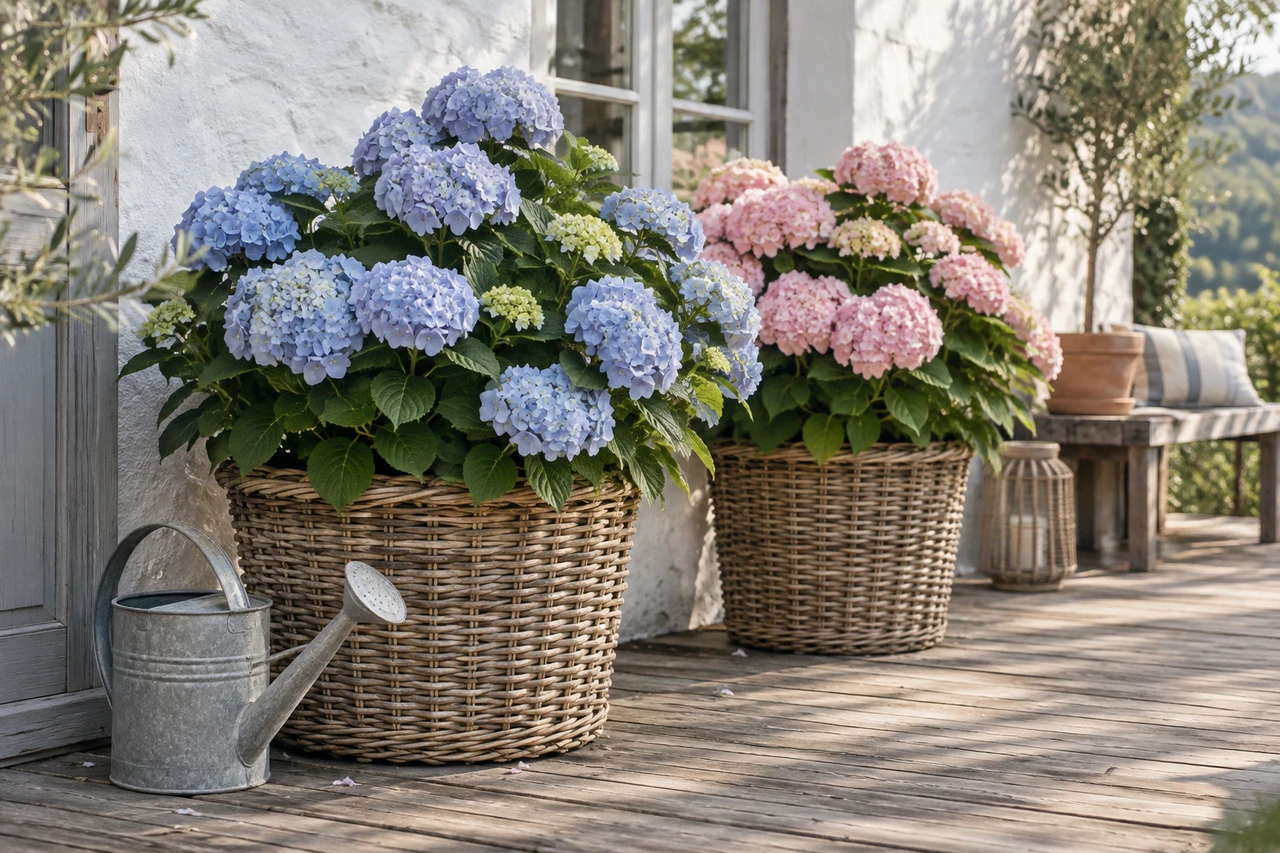
Hortensien im Kübel: worauf es wirklich ankommt
Hortensien im Kübel zu halten ist etwas mehr Arbeit als im Beet, denn im Topf trocknen sie schneller aus und verbrauchen Nährstoffe schneller. Die vier wichtigsten Faktoren: saure Erde (das ist der häufigste Fehler – normale Erde macht sie krank), viel Wasser (bei Hitze täglich!), regelmäßiges Düngen und ein großer Topf mit guter Drainage. Wer diese vier Punkte beachtet, wird belohnt. Hortensien passen außerdem wunderbar auf eine kleine Terrasse – sie sind Blickfang und Raumteiler zugleich und brauchen nur einen einzigen Kübel.
Hortensien im Kübel pflegen: gießen, schneiden, düngen, überwintern
Im Grunde laufen Hortensien im Kübel auf vier Dinge hinaus: die richtige Erde (sauer, pH 4,5–5,5), genug Wasser (bei Hitze täglich, immer mit weichem Wasser), den richtigen Schnitt (bei Bauernhortensien nie ins alte Holz) und etwas Winterschutz für den Topf. Nimm dir das zu Herzen, und deine Terrassenhortensie macht dir jahrelang Freude. Ignorierst du einen dieser Punkte, wirst du dich im nächsten Frühjahr fragen, warum sie nicht blüht. Alle Details findest du in den einzelnen Abschnitten – von der richtigen Erde bis zum Überwintern.
1 · Der richtige Topf groß, mit Drainage
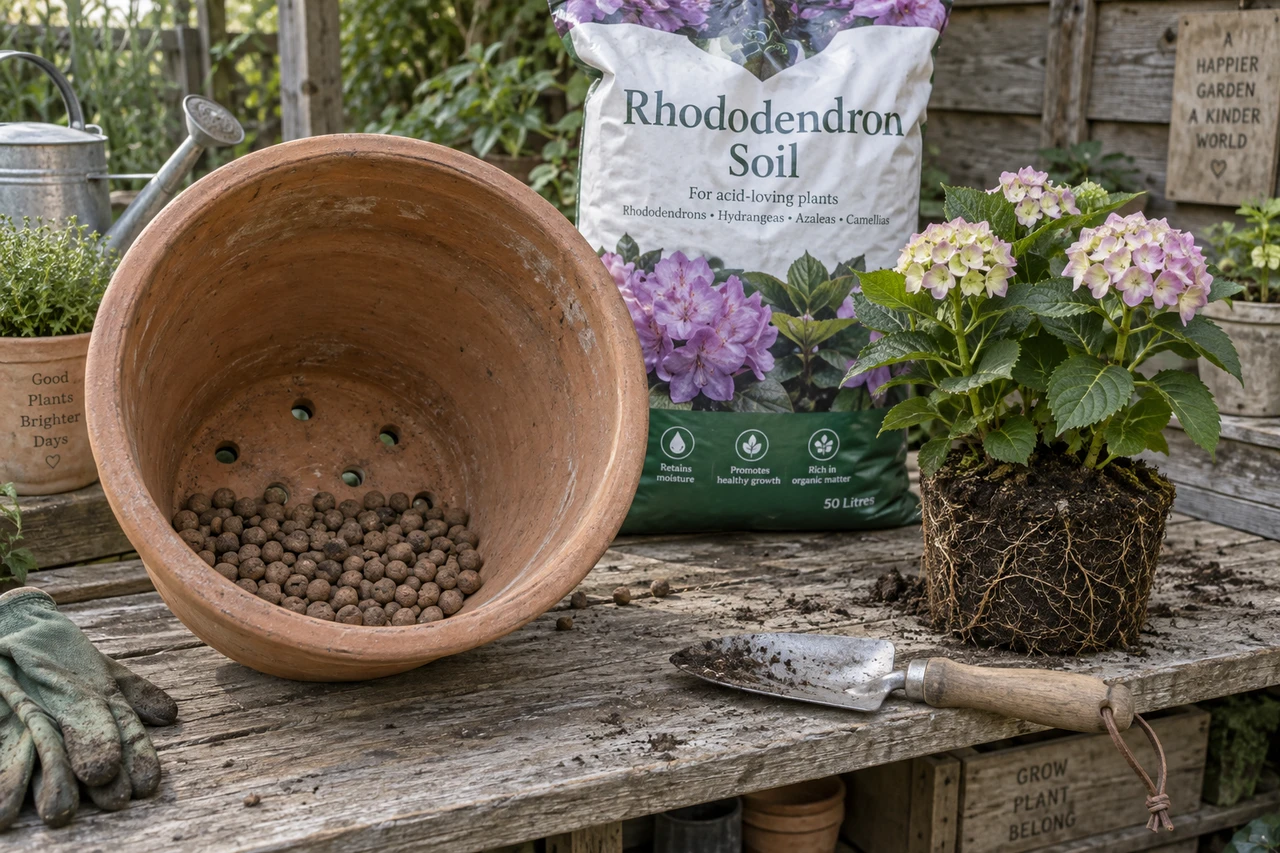
Topf mit Drainage · Blähton unten, dann saure Erde
Hortensien brauchen viel Platz für ihre Wurzeln – wähle einen Topf mit mindestens 30–40 cm Durchmesser, größer ist besser. Je größer der Topf, desto stabiler die Feuchtigkeit und desto seltener musst du gießen. Material: Terrakotta sieht schön aus, trocknet aber schneller aus. Für Hortensien bevorzuge ich einen Kunststofftopf in einem Terrakotta-Übertopf – das Beste aus beiden Welten. Abzugslöcher im Boden sind Pflicht. Leg eine Schicht Blähton oder Kies als Drainage ein, dann die Erde. Tipp: Stell den Topf auf Rollen – Hortensien brauchen im Winter einen anderen Platz als im Sommer.
2 · Die richtige Erde sauer ist Pflicht
Das ist der häufigste Fehler bei Hortensien im Kübel: normale Blumen- oder Universalerde zu verwenden. Hortensien brauchen saure Erde mit einem pH-Wert zwischen 4,5 und 5,5. Nur dann können sie Nährstoffe aufnehmen. Ein zu hoher pH-Wert führt zur Chlorose – gelbe Blätter mit grünen Adern. Kauf spezielle Rhododendron- oder Hortensienerde, alternativ Azaleenerde. Erneuere diese Erde alle 2–3 Jahre oder tausche zumindest die obere Schicht (10–15 cm) aus. Extratipp: Blaue Hortensien werden noch blauer, wenn du das Gießwasser gelegentlich mit einem Schuss Zitronensaft ansäuerst.
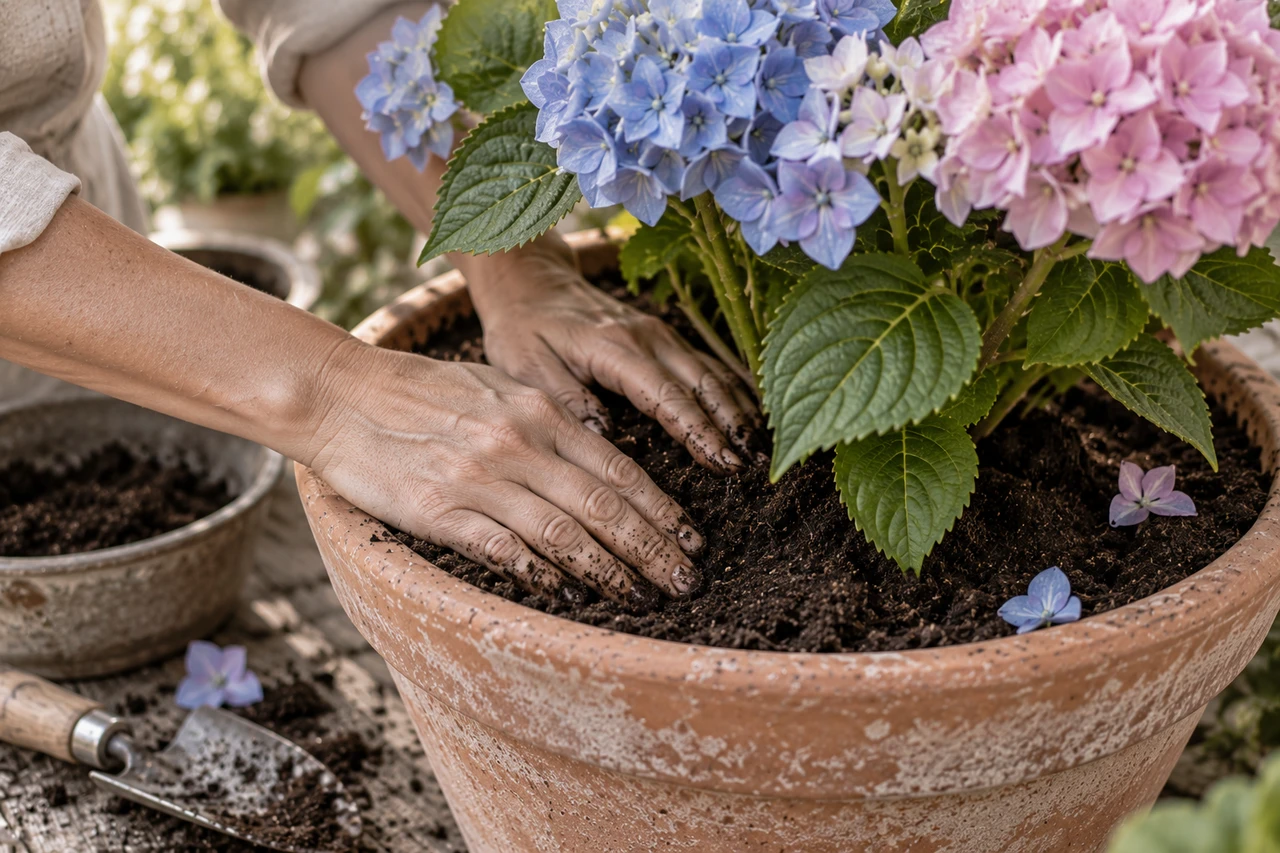
3 · Standort Halbschatten, keine pralle Mittagssonne
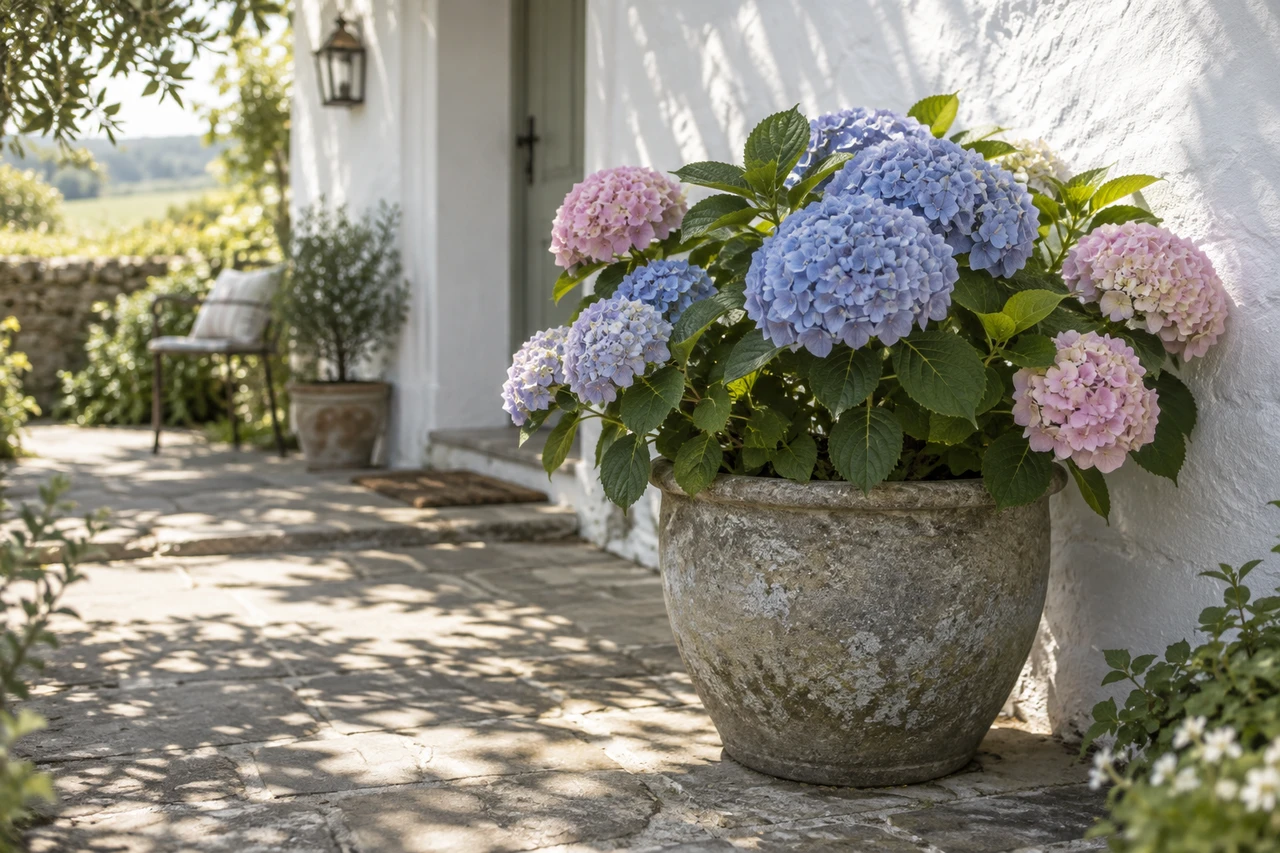
Halbschatten · Morgensonne ja, pralle Mittagssonne nein
Hortensien mögen Licht, aber keinen Platz in der prallen Mittagssonne – dann verbrennen die Blüten und hängen schlaff herunter. Ideal ist ein Platz mit Morgen- oder Abendsonne und leichtem Schatten von 12 bis 15 Uhr. Eine Ostausrichtung ist oft perfekt. Auf der Terrasse im Landhausstil sehen Hortensien besonders schön vor hellen Wänden oder an einer Pergola aus, die Halbschatten spendet. Vermeide sehr windige Plätze – der Wind trocknet die Blüten aus und der Kübel kippt um.
4 · Gießen täglich, reichlich, mit weichem Wasser
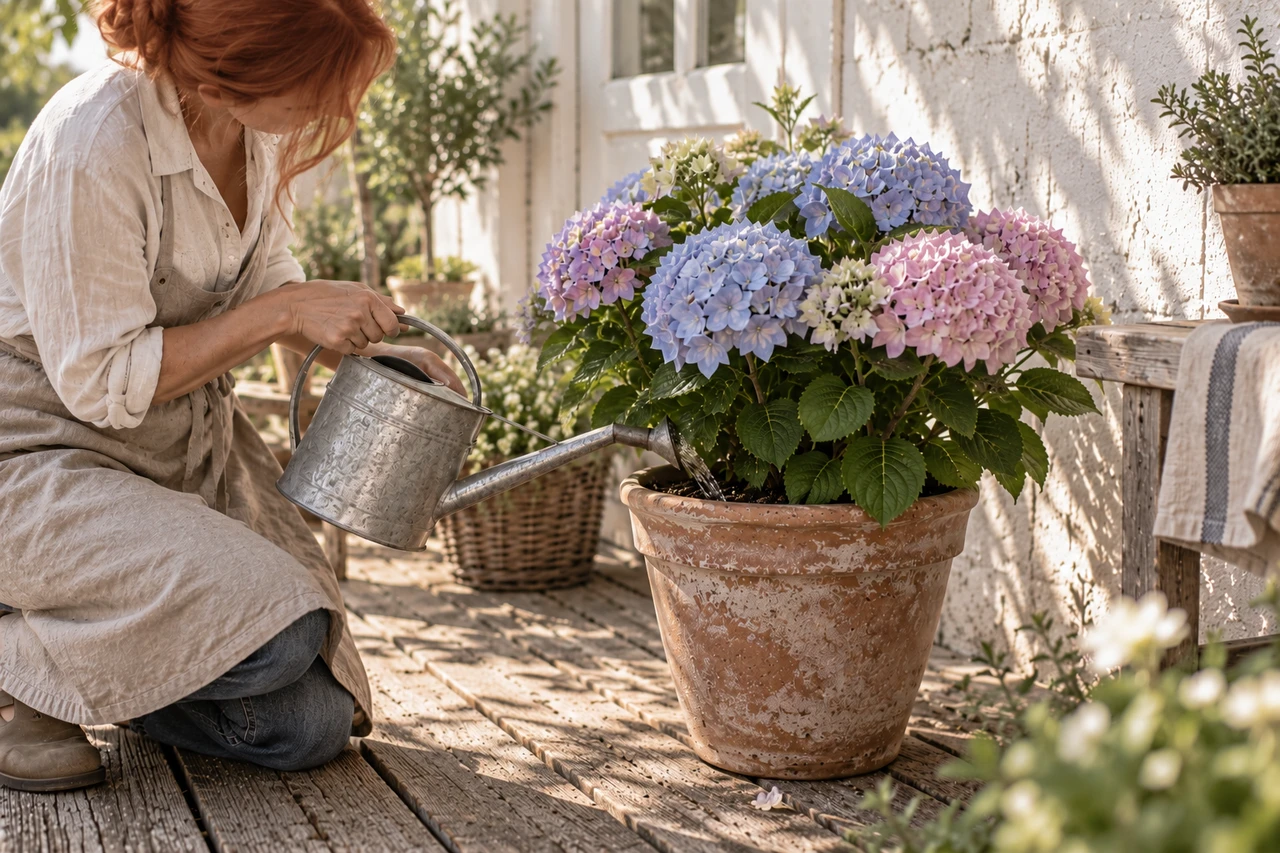
Gießen · an die Erde, nicht über die Blüten
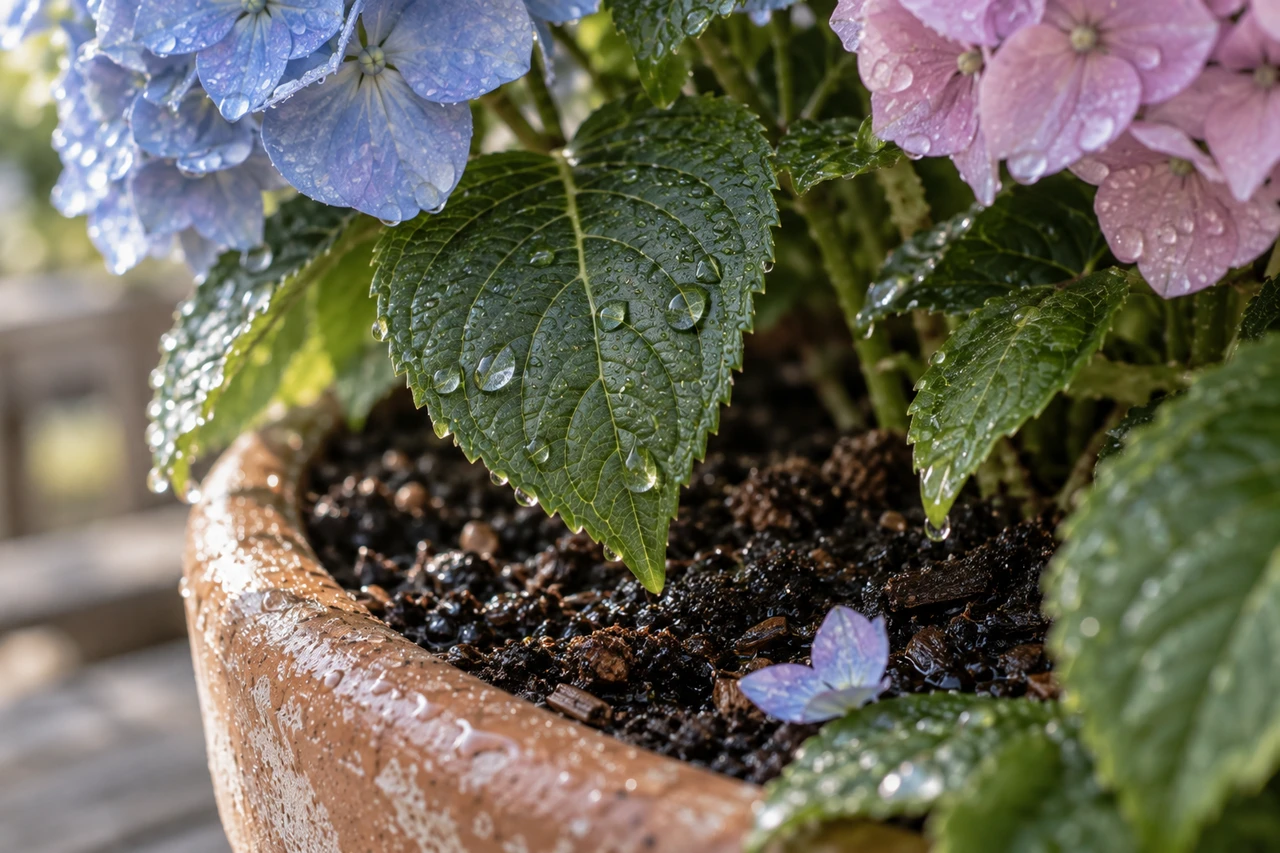
Täglich, reichlich, mit weichem Wasser
Hortensien sind Wasserfreunde – das Gegenteil von Lavendel. Im Kübel trocknen sie schnell aus und lassen dann sofort die Blüten hängen. Im Sommer täglich gießen, bei Hitze morgens und abends. Steck einen Finger in die Erde: Fühlt sich die obere Schicht (5 cm) trocken an – sofort gießen. Regenwasser ist besser als Leitungswasser, weil es weniger Kalk enthält. Wenn du nur Leitungswasser hast, lass es über Nacht in einer Gießkanne stehen (so setzt sich ein Teil des Kalks ab). Tipp: größerer Topf = seltener gießen. Lohnt sich immer.
5 · Düngen regelmäßig von April bis August
Im Kübel verbrauchen Hortensien Nährstoffe schneller als im Beet. Dünge von April bis August alle 2 Wochen mit speziellem flüssigem Hortensien- oder Rhododendrondünger. Der ist auf den sauren pH-Wert abgestimmt und enthält die richtigen Nährstoffe für üppige Blüten. Ab September nicht mehr düngen – die Pflanze soll in die Winterruhe gehen. Kein Universaldünger mit hohem Stickstoffanteil: Der macht viele Blätter, aber wenige Blüten.
6 · Schneiden weniger ist mehr
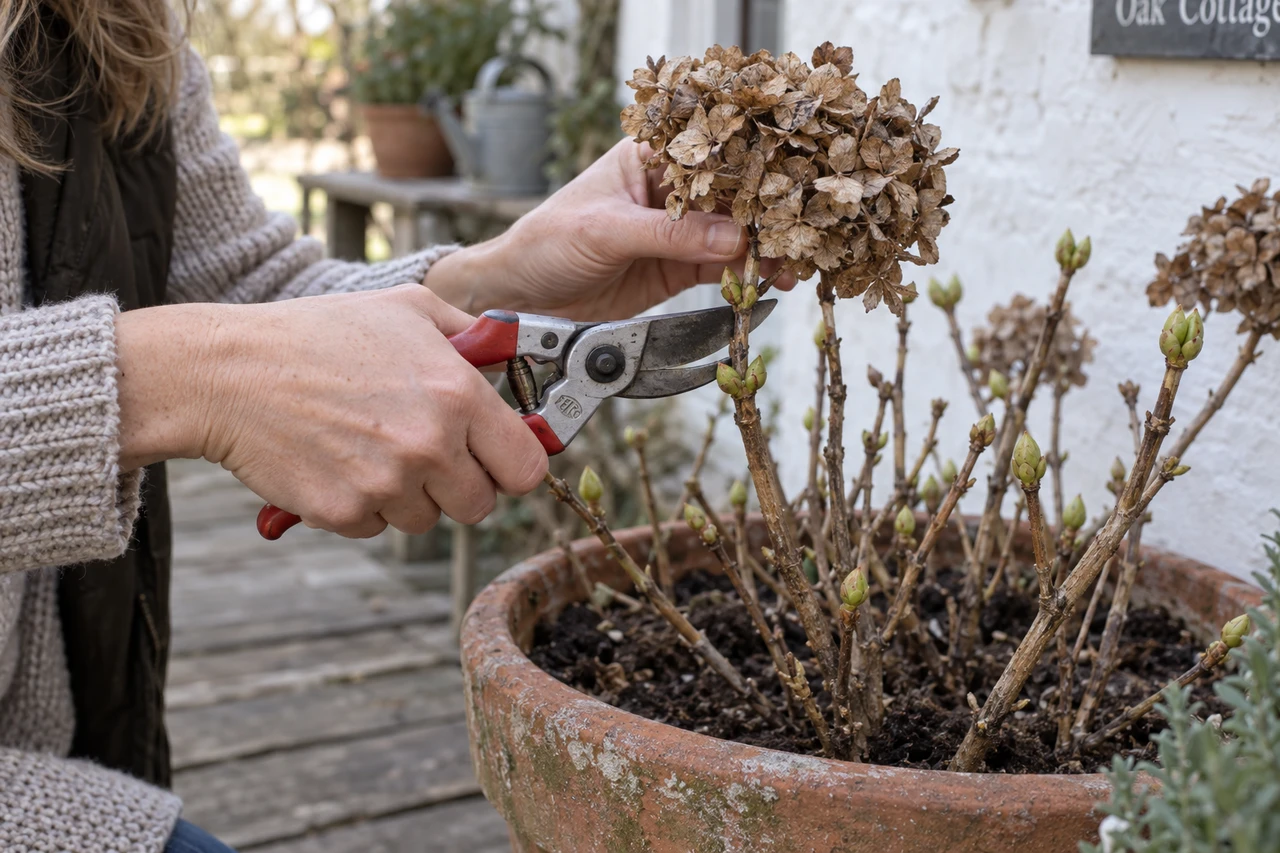
Nur den verblühten Kopf · die Schere setzt knapp über dem ersten Knospenpaar an
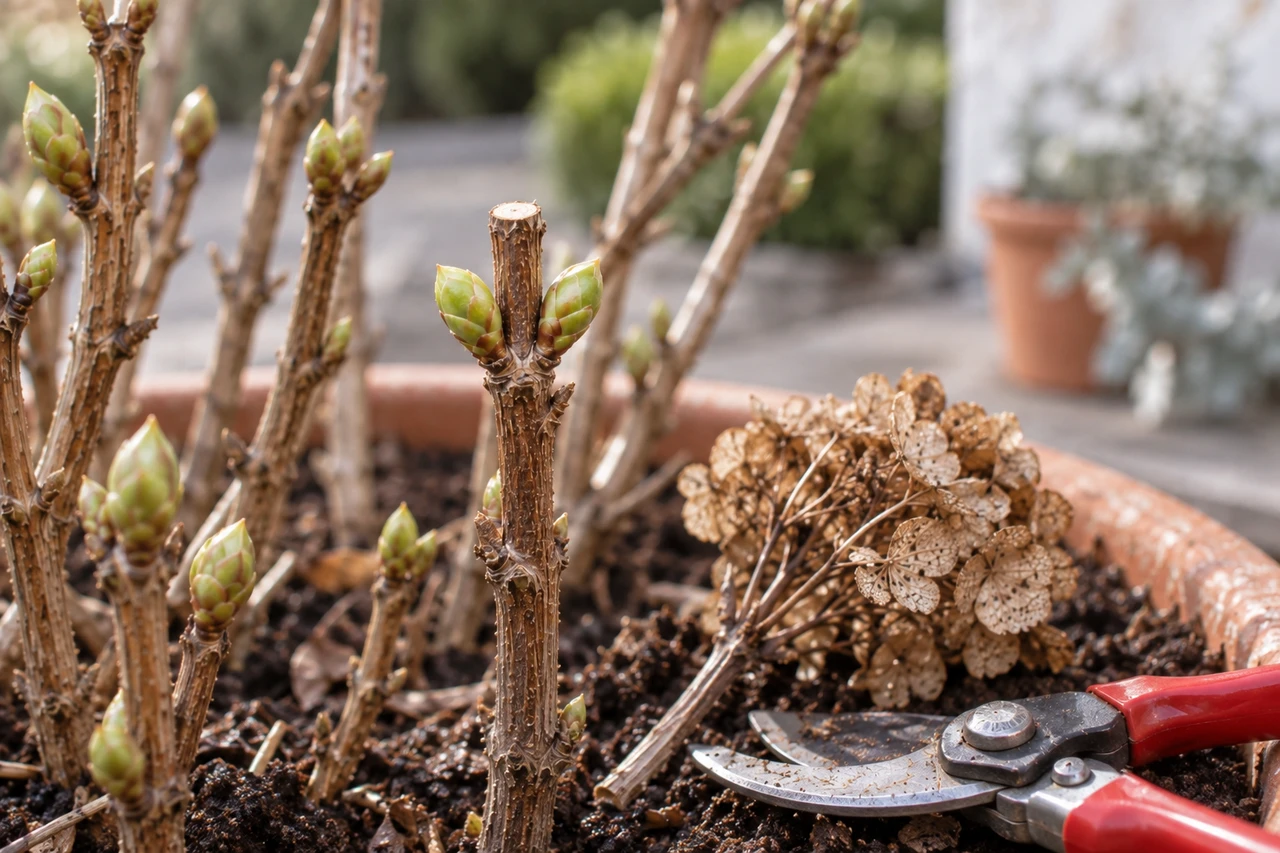
So sieht es danach aus · zwei Zentimeter über den Knospen geschnitten
Hortensien (Bauern- und Tellerhortensien) blühen am alten Holz – das heißt, die Blütenknospen für den nächsten Sommer werden bereits im Herbst gebildet. Ein zu starker Schnitt im Herbst oder Winter zerstört die Blüten. Meine Regel: Im Frühjahr (März/April) nur die verblühten Blütenköpfe und frostgeschädigten Triebspitzen entfernen – mehr nicht. Die alten Blütenköpfe lasse ich über den Winter stehen: Sie schützen die darunterliegenden Knospen vor Frost und sehen mit Raureif im Wintergarten bezaubernd aus. Rispenhortensien (Hydrangea paniculata) dürfen dagegen im Frühjahr stärker zurückgeschnitten werden – sie blühen am neuen Holz.
7 · Überwintern den Topf schützen, die Knospen retten
Hortensien im Kübel zu überwintern ist etwas mehr Arbeit als im Beet, weil der Topf die Wurzeln weniger schützt als der Boden. So geht es: Ab Oktober weniger gießen. Stell den Topf an eine geschützte Hauswand (Nordwind meiden). Wickle den Topf in Jutesäcke, Vlies oder Luftpolsterfolie. Stell ihn auf Füße oder Holzklötze. Die Pflanze selbst nicht einwickeln – das begünstigt Schimmel. Entferne die alten Blütenköpfe erst im Frühjahr, sie schützen die Knospen darunter. Bei starkem Frost (unter -10 °C): den Topf zusätzlich in eine dicke Laubschicht packen. Mit dieser Methode überwintern meine Hortensien seit Jahren problemlos.
8 · Die besten Sorten für den Kübel meine Favoriten
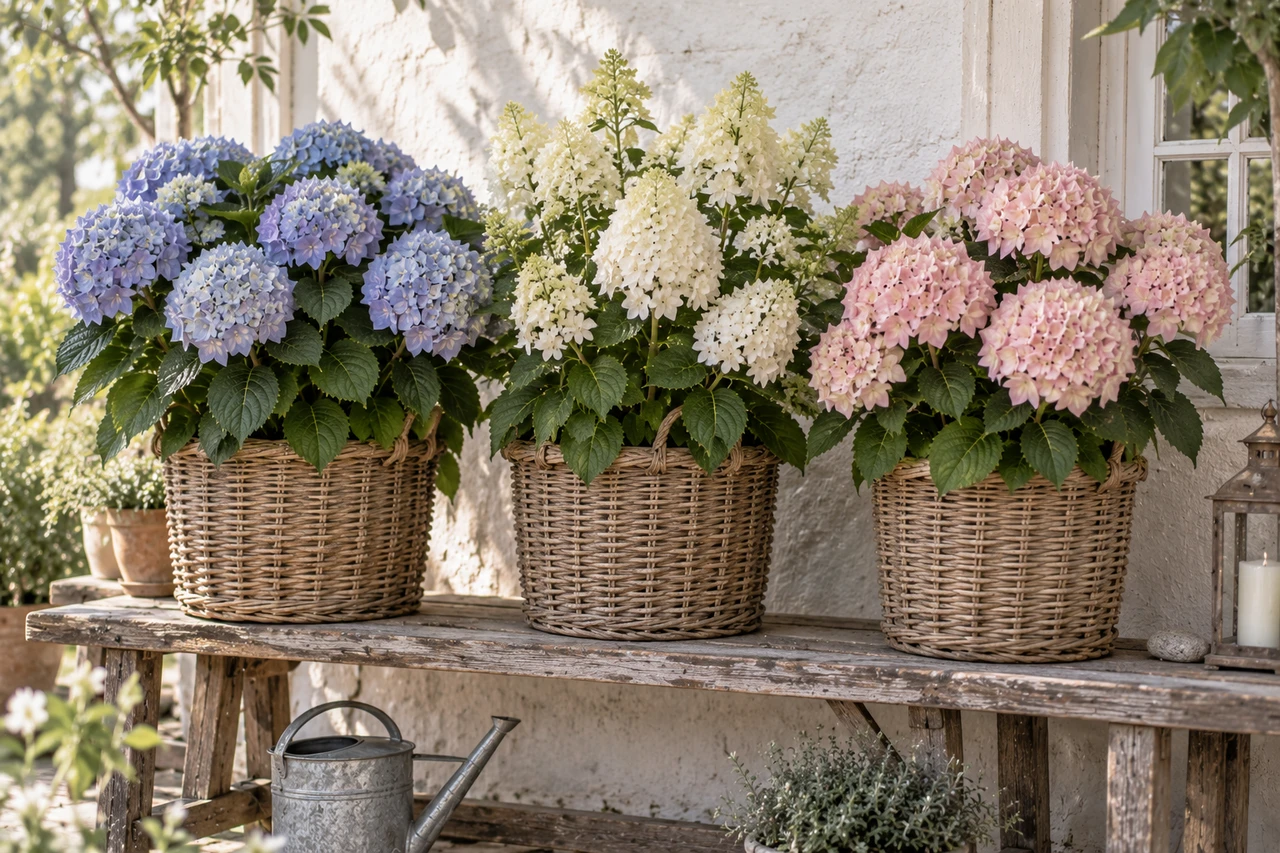
Meine Favoriten für den Kübel
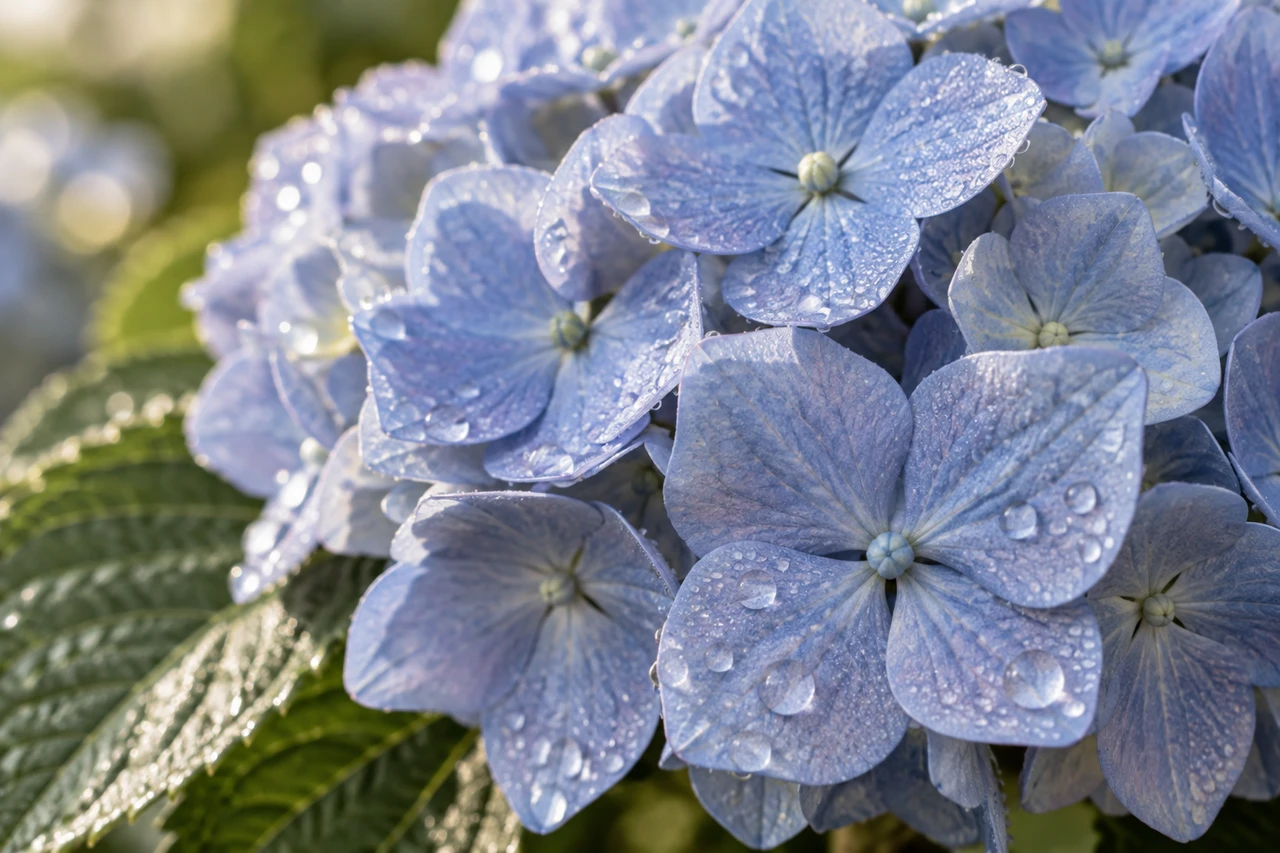
Bauernhortensie · die Farbe hängt am pH-Wert der Erde
Nicht alle Hortensien eignen sich gleich gut für den Kübel. Das sind die Hortensiensorten für den Topf, die ich am häufigsten empfehle: Hydrangea macrophylla 'Endless Summer' – blüht am alten und am neuen Holz, verzeiht also einen versehentlichen Schnitt, mit langer Blütezeit. Hydrangea arborescens 'Annabelle' – weiß, sehr üppig, braucht aber einen sehr großen Topf (mindestens 50 cm). Hydrangea arborescens 'Incrediball' – riesige weiße Blütenbälle, robust, standfester als Annabelle. Hydrangea serrata 'Bluebird' – kleinere Tellerblüten in Blau, kompakt, ideal für mittelgroße Töpfe. Hydrangea paniculata 'Limelight' – cremeweiß-grüne Blüten, sehr robust, für sonnigere Plätze geeignet. All diese Sorten passen wunderbar in einen romantischen Landhausgarten.
Hortensien im Kübel auf einen Blick
Die fünf häufigsten Fehler und wie du sie vermeidest.
- Falsche Erde · immer saure Rhododendronerde verwenden, pH 4,5–5,5
- Zu wenig Wasser · bei Hitze täglich gießen, nie austrocknen lassen
- Zu starker Schnitt · Bauernhortensien blühen am alten Holz, nur Verblühtes entfernen
- Kein Winterschutz · Topf einwickeln, geschützten Platz wählen
- Falscher Dünger · nur Hortensien- oder Rhododendrondünger, regelmäßig bis August
Wenn die Blätter gelb werden mit grünen Adern: Der pH-Wert ist zu hoch. Wechsle sofort auf saure Erde und hilf mit einem Dünger für säureliebende Pflanzen nach.
Warum blüht meine Hortensie im Kübel nicht? die 5 häufigsten Ursachen
Das ist die mit Abstand häufigste Frage zu Hortensien im Kübel. Die Antwort ist fast immer eine dieser fünf Ursachen: 1. Falscher Schnitt: Bauernhortensien blühen am alten Holz – ein starker Schnitt im Herbst oder Winter entfernt die Blütenknospen des nächsten Jahres. 2. Falscher pH-Wert: Ein zu hoher pH-Wert führt zur Chlorose (gelbe Blätter); die Pflanze kann keine Nährstoffe aufnehmen und bildet keine Blüten. 3. Zu wenig Licht: Hortensien brauchen hellen Halbschatten – tiefer Schatten bringt viel Grün, aber kaum Blüten. 4. Zu wenig Wasser: Chronischer Wassermangel hemmt die Blüte. 5. Zu viel Stickstoff: Der falsche Dünger fördert Blattmasse statt Blüten – nimm immer einen speziellen Hortensiendünger.
Standort für Hortensien im Kübel worauf es wirklich ankommt
Der ideale Standort für Hortensien im Kübel auf der Terrasse: heller Halbschatten, Sonne am Morgen oder Abend, Schatten am Mittag. Eine Ostausrichtung ist oft perfekt. Wichtig: Hortensien mögen keinen kalten Nordwind – der trocknet die Blüten aus und hemmt das Wachstum. Auf der Terrasse sehen sie am schönsten vor hellen Wänden oder unter einem Pergoladach aus, das den intensiven Mittagsschatten spendet. Im Hochsommer gilt: Hängen die Blätter mittags herunter, braucht die Pflanze sofort Wasser – ein bleibender Schaden ist das nicht, solange du schnell reagierst. Wenn du deinen Hortensienkübel auf Rollen stellst, kannst du flexibel auf das Wetter reagieren und die Pflanze in den Schatten schieben.
Hortensien im Kübel düngen wann, wie oft, womit
Hortensien im Kübel zu düngen ist einfacher, als viele denken: von April bis Ende August alle zwei Wochen mit flüssigem Hortensien- oder Rhododendrondünger. Der ist auf den sauren pH-Wert abgestimmt und enthält alle nötigen Spurennährstoffe. Ab September nicht mehr düngen – die Pflanze soll in die Winterruhe gehen. Wenn du lieber einen Langzeitdünger nimmst: Steck im Frühjahr einmalig spezielle Hortensien-Düngestäbchen in die Erde. Aber Vorsicht: keine Universaldünger mit hohem Stickstoffanteil (N) – die fördern Blattmasse auf Kosten der Blüten. Ein schlechtes Zeichen: viel grünes Laub, aber kaum Blütenknospen. Dann wechsle den Dünger und prüfe den pH-Wert.
Hortensien im Kübel – deine Fragen, meine Antworten
Wie oft sollte man Hortensien im Kübel gießen?
Im Sommer täglich, bei Hitze morgens und abends. Die Erde darf nie ganz austrocknen. Am liebsten Regenwasser.
Welche Erde für Hortensien im Kübel?
Rhododendron- oder Hortensienerde mit pH 4,5–5,5. Keine normale Blumenerde – ein zu hoher pH-Wert verursacht Chlorose.
Warum blühen meine Hortensien im Kübel nicht?
Häufigste Ursachen: zu starker Schnitt im Herbst (Knospen entfernt), der falsche pH-Wert, zu wenig Wasser oder zu wenig Licht.
Welche Hortensien eignen sich für den Kübel?
Bauern- und Tellerhortensien bleiben kompakter. 'Endless Summer' ist besonders gut, weil sie auch am neuen Holz blüht.
Wie schneide ich Hortensien im Kübel?
Bei Bauernhortensien (Hydrangea macrophylla) im Frühjahr nur die verblühten Blütenköpfe entfernen – niemals ins alte Holz schneiden! Rispenhortensien dürfen stärker zurückgeschnitten werden, da sie am neuen Holz blühen.
Welche Erde für Hortensien im Kübel?
Saure Rhododendron- oder Hortensienerde mit pH 4,5–5,5. Keine normale Blumenerde – ein zu hoher pH-Wert führt zur Chlorose (gelbe Blätter mit grünen Adern). Alle 2–3 Jahre erneuern oder zumindest die obere Schicht austauschen.
Mehr Inspiration
Das könnte dich auch interessieren passende Beiträge
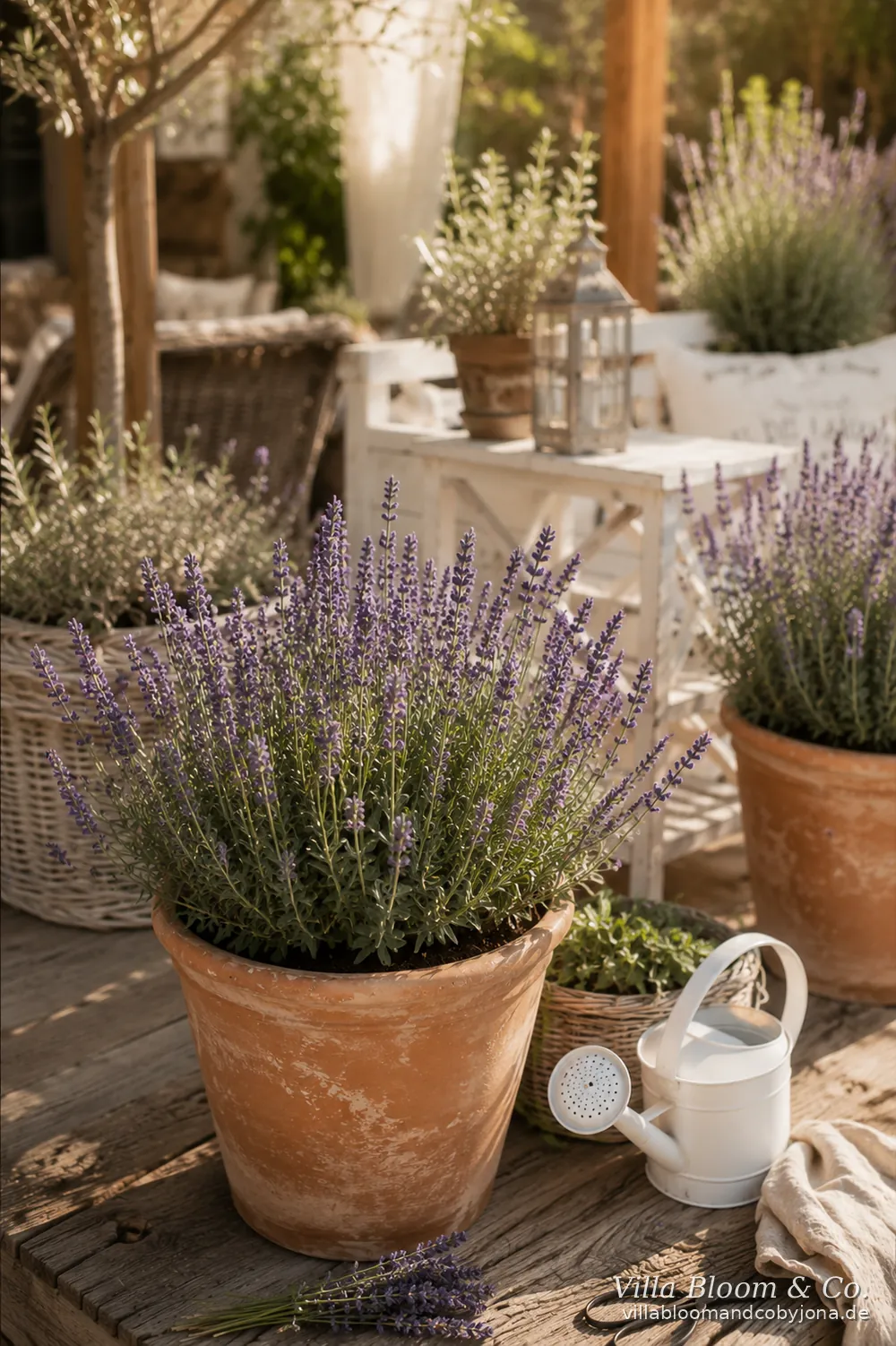
Lavendel im Topf pflegen
Standort, Schneiden und Überwintern – Jahr für Jahr in Blüte.
Weiterlesen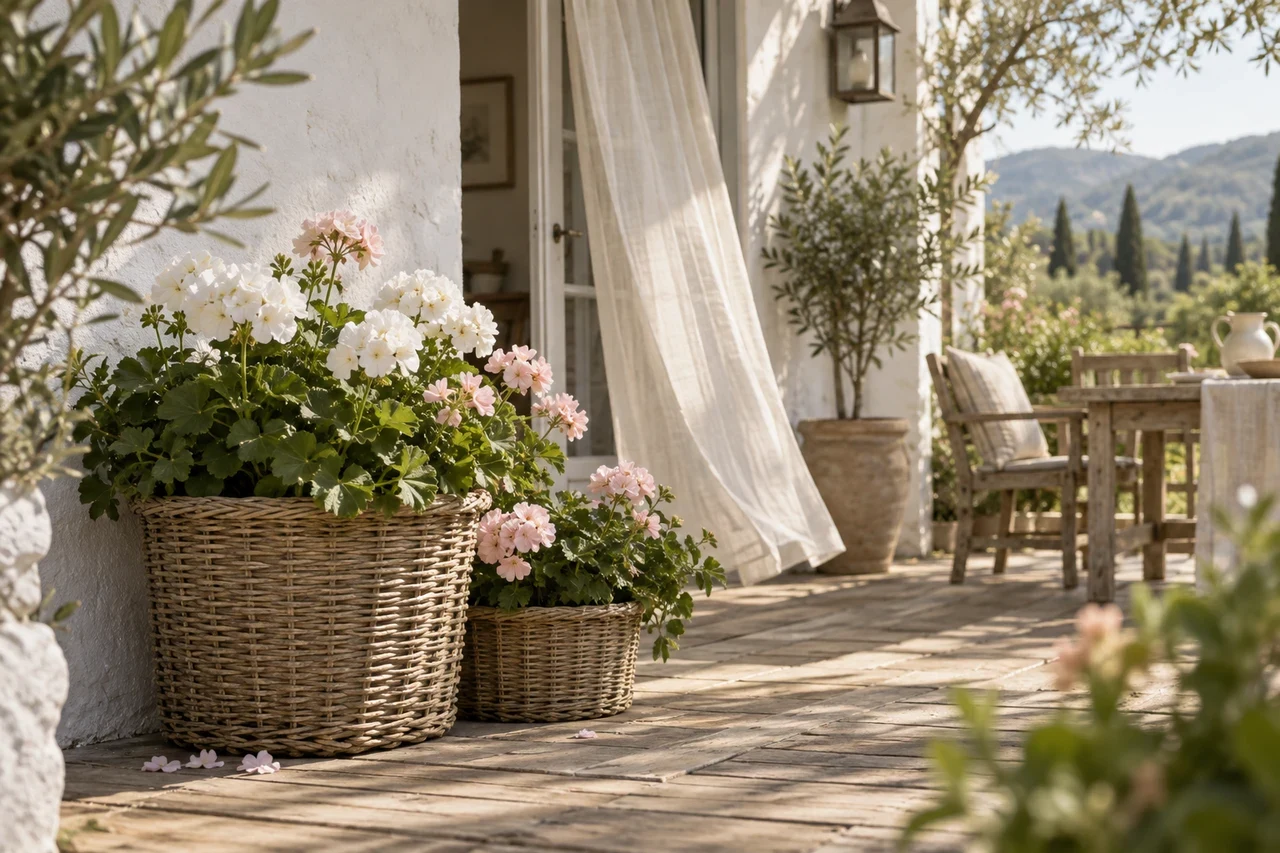
Geranien pflegen
Der eine Handgriff, der sie von Mai bis Oktober blühen lässt.
Weiterlesen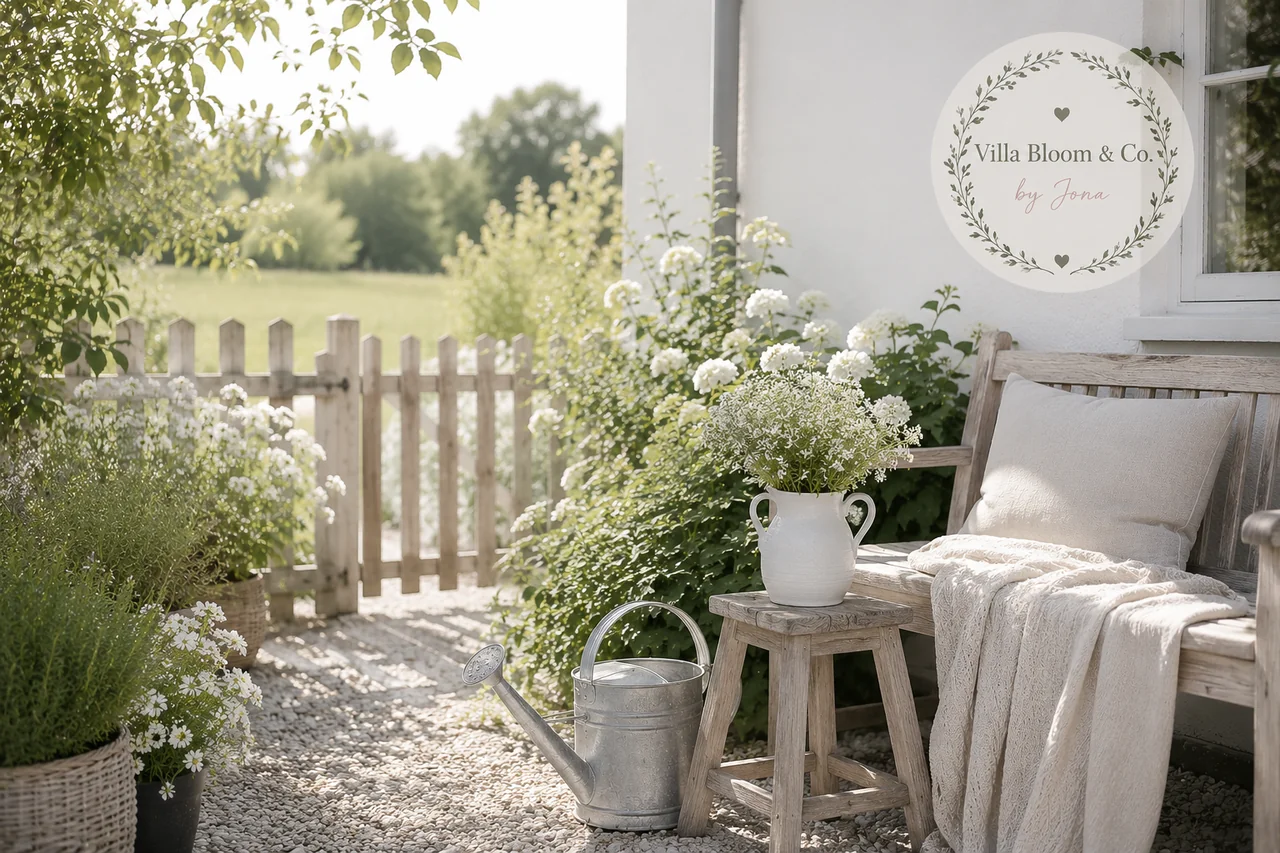
Romantische Gartendeko
Hortensien, Lavendel, Wildblumen, Zink und Rattan.
Weiterlesen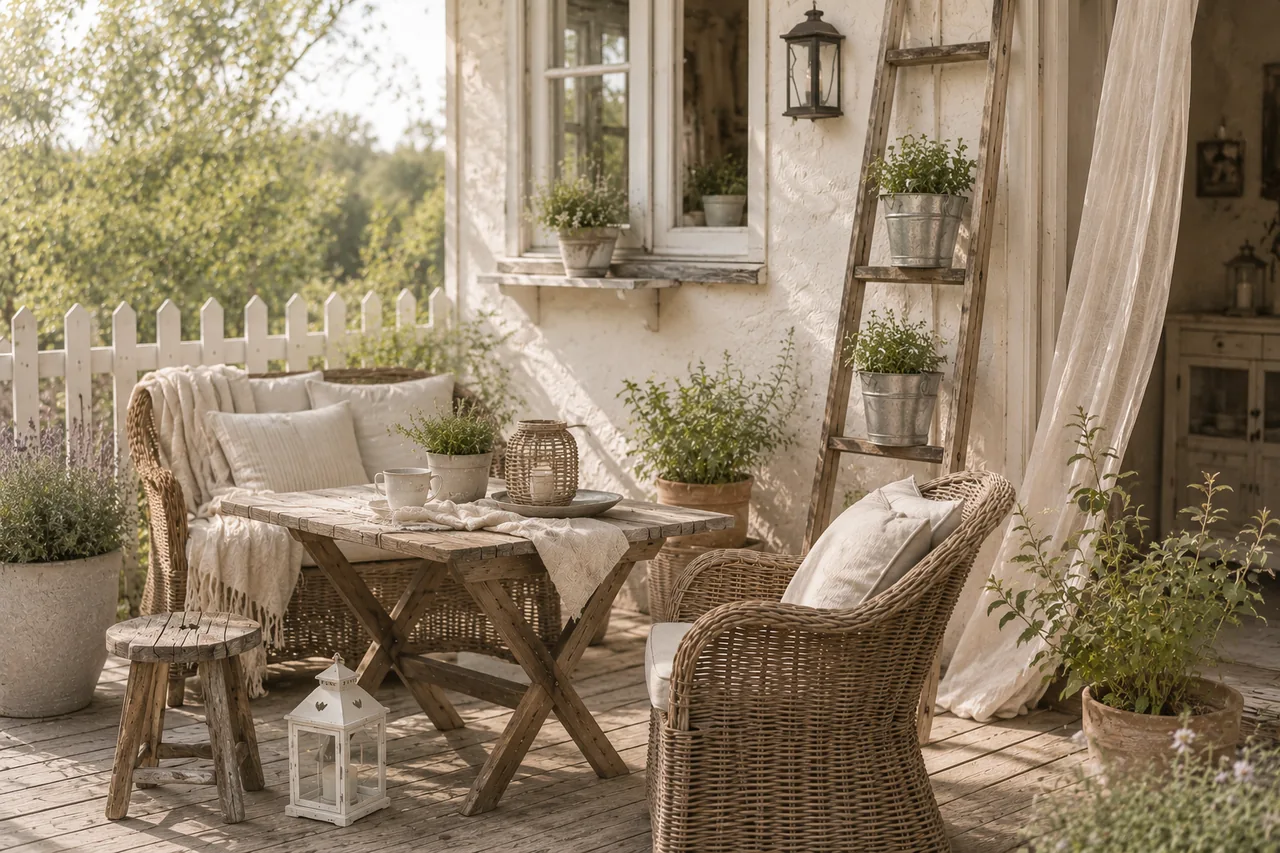
Kleine Terrasse gestalten
8 gemütliche Ideen für wenig Platz.
Weiterlesen„Eine Hortensie im Kübel ist der einfachste Weg, aus einer Terrasse einen romantischen Rückzugsort zu machen. Sie verlangt wenig – nur saure Erde und viel Wasser."

Über die Autorin
Jona · Villa Bloom & Co.
Ich liebe den Landhausstil, gemütliche Wohnideen und Gärten in voller Blüte. Auf Villa Bloom & Co. teile ich Inspiration für Terrasse, Garten, Zuhause und ein langsameres, sanfteres Leben – ehrlich, praktisch und mit viel Liebe zu den kleinen Details. Mein Herz schlägt für Hortensien, Lavendel, alte Zinkgießkannen und alles, was sich nach Sommer anfühlt.
Learn more about me →Gönn dir in diesem Sommer eine Hortensie in jenem großen Terrakotta-Übertopf, den du schon so lange im Blick hast. Stell sie an einen halbschattigen Platz, gieß sie täglich und schau ihr im Juli beim Aufblühen zu. Es gibt im Sommer kaum einen schöneren Anblick als eine volle Hortensie in Cremerosa – auf deiner eigenen Terrasse.
More from the gardenGefällt dir der Beitrag? Dann pinne ihn für später – dann sind die Ideen da, wenn du sie brauchst.
#HortensienImKübel #Hortensienpflege #Terrassenpflanzen #RomantischePflanzen #Landhausgarten
Schön, oder? Pinne den Beitrag für später.
Pin on Pinterest