Garten · Pflanzen · Pflege
Lavendel im Topf pflegen Jahr für Jahr in Blüte
Lavendel im Topf ist mein absolutes Lieblingsstück für die Terrasse. Er duftet himmlisch, lockt die Bienen an und sieht in jedem Terrakotta-Topf aus wie ein kleines Stück Provence – und er ist wunderbar pflegeleicht, wenn man die paar Regeln kennt, auf die es ankommt. Heute teile ich alles mit dir, damit dein Lavendel glücklich und voller Blüten gedeiht, Jahr für Jahr.
Zuletzt aktualisiert: 3. Juni 2026
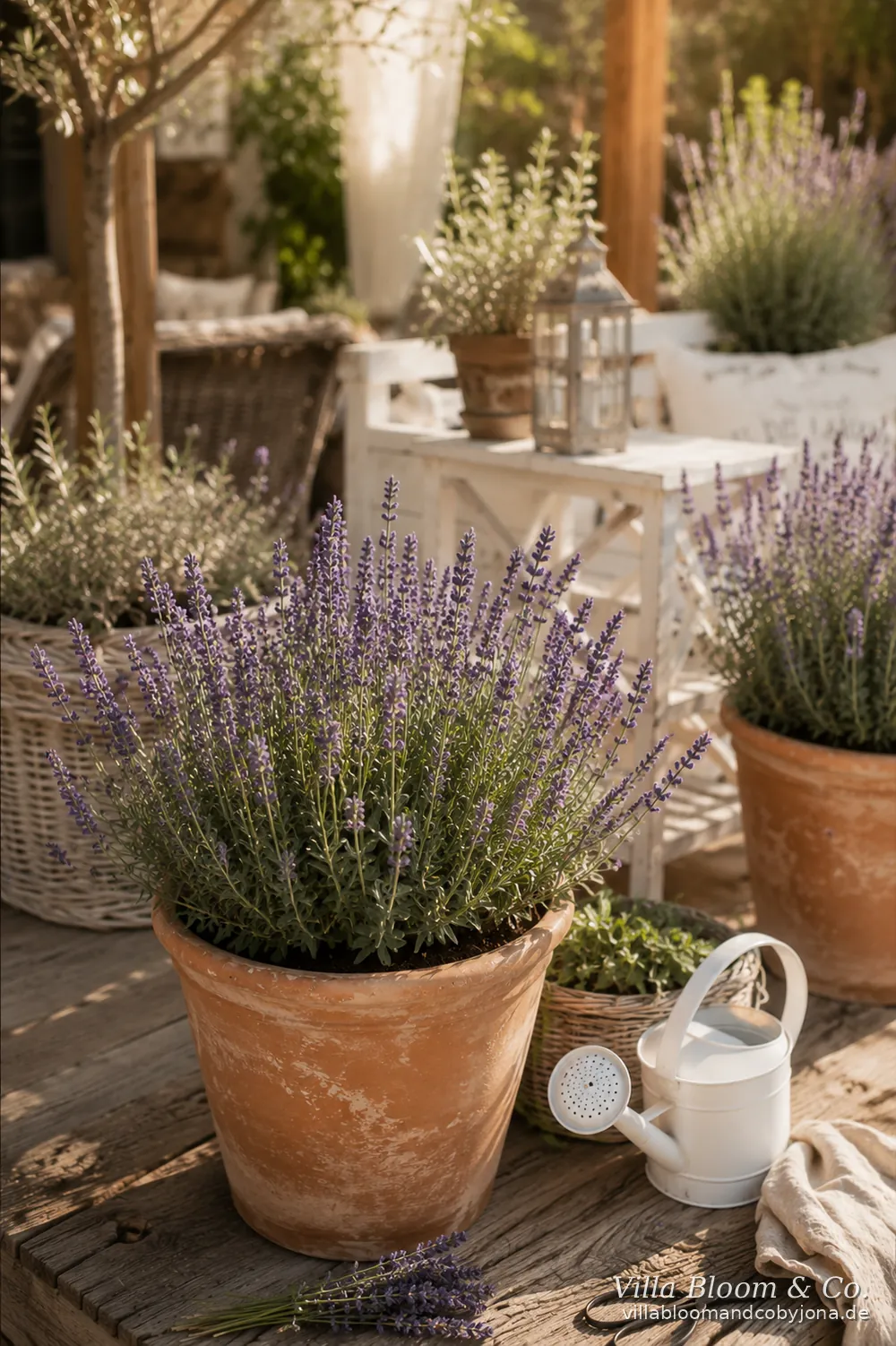
Lavendel im Topf und Kübel pflegen: die wichtigsten Grundlagen
Lavendel stammt aus dem Mittelmeerraum – trocken, heiß, steinig. Das erklärt fast alles über seine Pflege. Er liebt die Sonne, hasst nasse Füße und gedeiht, wenn man ihn einfach in Ruhe lässt. Der häufigste Fehler: zu viel gießen. Der zweithäufigste: nie schneiden.
1 · Der richtige Topf am liebsten Terrakotta
Der Topf ist fast so wichtig wie die Erde. Terrakotta ist meine erste Wahl: Er atmet, zieht überschüssige Feuchtigkeit wunderbar ab und wärmt sich in der Sonne auf. Plastiktöpfe halten zu viel Nässe. Achte immer auf ein Abzugsloch im Boden.
2 · Die richtige Erde mager, durchlässig, sandig
Die richtige Erde macht den ganzen Unterschied. Normale Blumenerde hält zu viel Feuchtigkeit – für Lavendel ist das ein Todesurteil. Mische zwei Teile Kräuter- oder Mediterran-Erde mit einem Teil grobem Sand oder Perlite. Im Gartencenter gibt es auch fertige mediterrane Kübelerde.
3 · Der Standort so viel Sonne wie möglich
Lavendel auf der Terrasse braucht mindestens 6 Stunden direkte Sonne am Tag – mehr ist besser. Ein Südplatz ist ideal. In einer schattigen Ecke treibt Lavendel zwar Blätter, blüht aber kaum.
3b · Lavendel auf der Terrasse so platzierst du ihn richtig
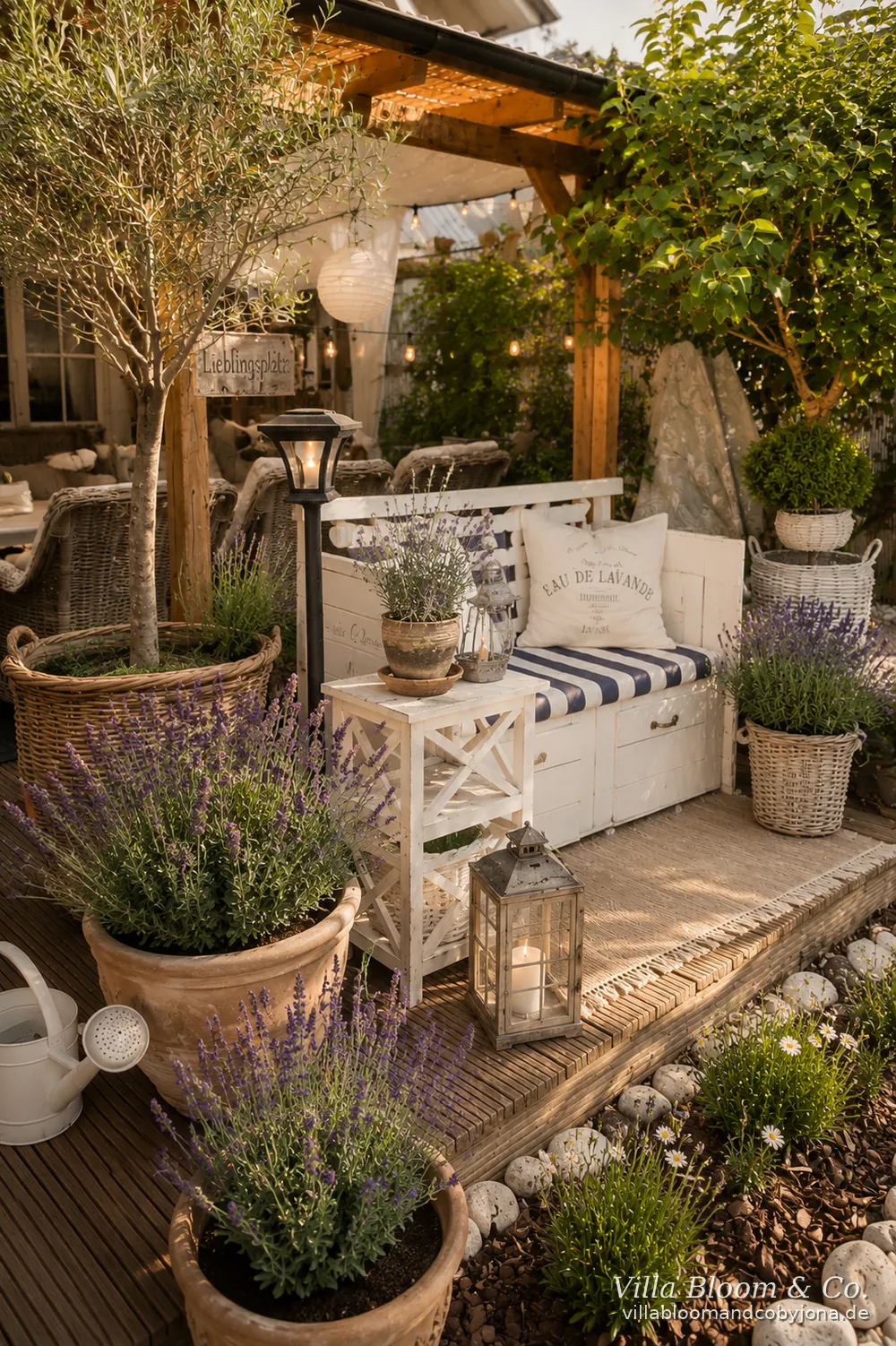
Am schönsten wirkt Lavendel auf der Terrasse in Gruppen: zwei oder drei Töpfe nebeneinander, am besten in verschiedenen Höhen. Neben der Tür, rund um die Sitzecke oder als duftende Linie entlang der Terrassenkante.
4 · Gießen weniger ist mehr
Die goldene Regel: erst gießen, wenn die oberen 3–4 cm Erde komplett trocken sind. Im Sommer ist das meist alle 5–7 Tage. Im Frühjahr und Herbst deutlich seltener. Im Winter: kaum.
5 · Düngen einmal im Jahr reicht
Lavendel braucht sehr wenige Nährstoffe. Im Topf reicht eine einzige Düngung im Frühjahr. Wähle einen stickstoffarmen Dünger – ein Kräuter- oder Mediterran-Dünger passt gut. Zu viel Stickstoff bringt üppige Blätter statt Blüten.
6 · Schneiden das Wichtigste überhaupt
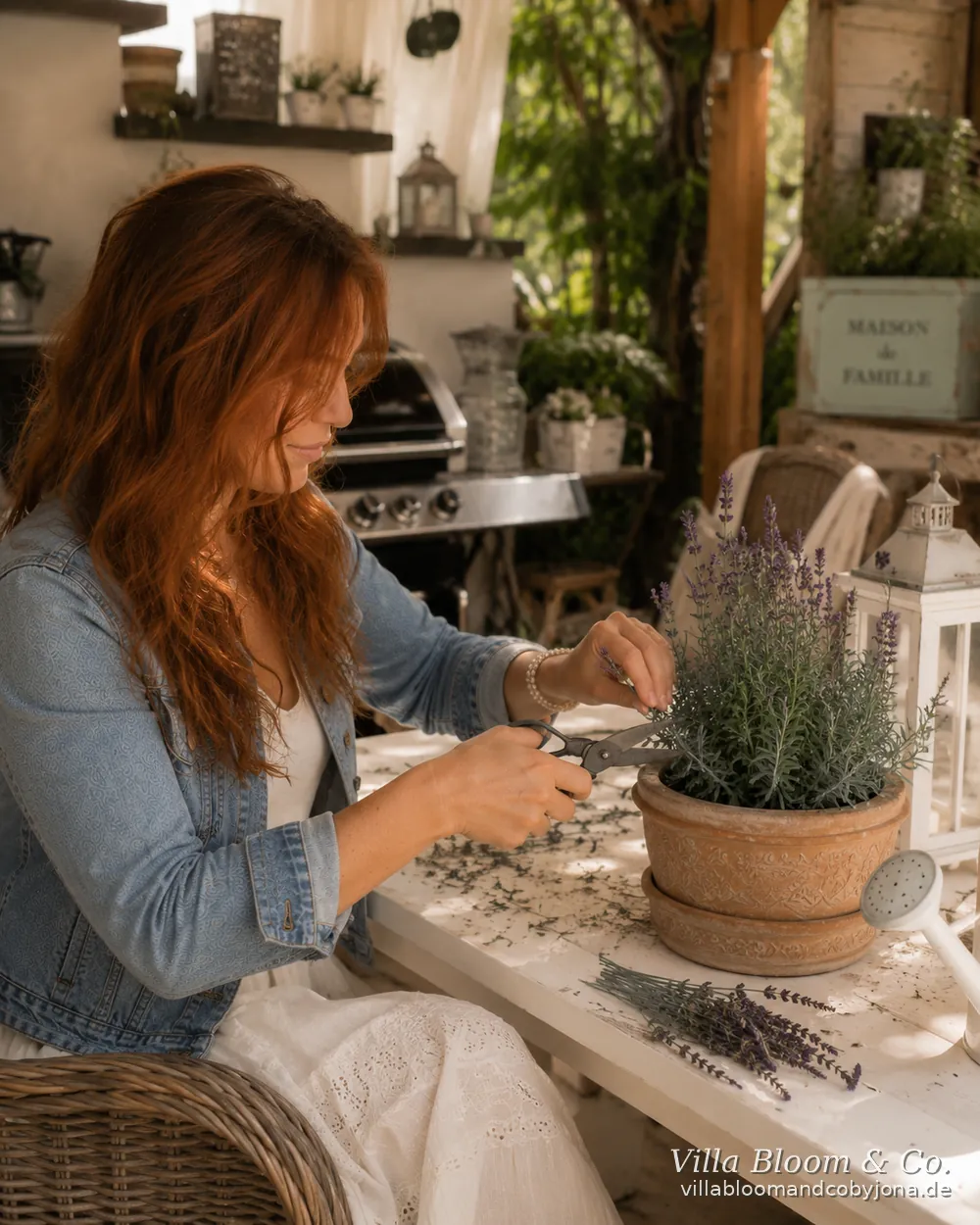
Das ist das Wichtigste, was du für deinen Lavendel tun kannst. Schneide ihn nach der Blüte um etwa ein Drittel zurück, immer ins Grüne – nie in die verholzten alten Triebe. Aus altem Holz treibt Lavendel einfach nicht wieder aus.
7 · Überwintern einfacher als gedacht
Keine Sorge – Lavendel im Topf zu überwintern ist viel einfacher, als die meisten denken. Echter Lavendel (Lavandula angustifolia) ist von Natur aus winterhart. Im Topf braucht er nur ein wenig Schutz vor der Kombination aus Nässe und Frost. Wie genau, zeige ich dir Schritt für Schritt weiter unten.
8 · Die besten Lavendelsorten für den Topf meine Favoriten
Nicht jede Lavendelsorte eignet sich für den Topf. Meine Empfehlungen: Hidcote (kompakt, tiefviolett), Munstead (der Klassiker, zuverlässiger Englischer Lavendel), Vera (etwas größer, herrlich duftend) und Lavandula stoechas (Schopflavendel – wunderschön, aber weniger frosthart).
Topf-Lavendel – was wann zu tun ist
Mit diesem Kalender verpasst du nie einen wichtigen Schritt.
- März / April · Frühjahrsschnitt um ⅓–½, erste Düngung, Vlies entfernen
- Mai / Juni · regelmäßig gießen (Erde abtrocknen lassen), erste Blüten zeigen sich
- Juli · nach der Hauptblüte zurückschneiden, fördert eine zweite Blüte
- August / September · die zweite Blüte genießen, weniger gießen
- Oktober · Gießen einstellen, den Topf winterfest machen
- November – Februar · Winterschutz, kaum oder gar nicht gießen
Der Juli-Schnitt ist der Schritt, den man am häufigsten vergisst – und der den größten Unterschied macht.
9 · Warum wird mein Lavendel braun? die häufigsten Ursachen
Braune Stellen sind das häufigste Problem bei Topf-Lavendel und liegen fast immer an einer von drei Ursachen: Staunässe (Wurzelfäule durch zu viel Wasser oder schlechten Abzug), Schnitt ins alte Holz (aus verholzten Trieben treibt Lavendel nicht wieder aus) oder – seltener – Schädlinge.
10 · Lavendel im Topf überwintern Schritt für Schritt
Lavendel im Topf zu überwintern gelingt zuverlässig mit dieser Schritt-für-Schritt-Methode: Oktober: das Gießen stark zurückfahren und den letzten Schnitt des Jahres weglassen (zum Schutz der Knospen). November: den Topf an eine geschützte, sonnige Wand stellen – eine Südseite ist ideal, Nordwind meiden. Den Topf in Jute, Vlies oder Luftpolsterfolie einpacken und auf Holzklötze oder einen Pflanzenroller stellen (Abzug!). Dezember–Februar: nur gießen, wenn die Erde komplett trocken ist und kein Frost herrscht. Das Hauptproblem im Winter ist nicht die Kälte, sondern Feuchtigkeit bei Frost. März: das Vlies entfernen, sobald die Fröste vorbei sind. Gleich den Frühjahrsschnitt machen und zum ersten Mal düngen.
Topf-Lavendel – deine Fragen, meine Antworten
Wie oft muss ich Topf-Lavendel gießen?
Erst, wenn die obere Erdschicht komplett trocken ist – im Sommer etwa alle 5–10 Tage. Im Winter kaum. Staunässe ist der größte Feind.
Wann schneide ich Topf-Lavendel?
Zweimal: nach der Hauptblüte im Juli (für eine zweite Blüte) und im Frühjahr im März (für die Form). Nie ins alte Holz schneiden.
Kann Lavendel im Topf überwintern?
Ja – Lavandula angustifolia ist winterhart. Schütze den Topf: geschützte Wand, einpacken, auf Füße stellen, kaum gießen.
Welche Erde für Topf-Lavendel?
Kräutererde, gemischt mit einem Drittel grobem Sand oder Perlite. Keine normale Blumenerde – sie hält zu viel Feuchtigkeit.
Warum blüht mein Topf-Lavendel nicht?
Die üblichen Ursachen: zu wenig Sonne, zu viel Dünger (Stickstoff), kein Schnitt oder Staunässe. Prüfe den Standort, hole den Frühjahrsschnitt nach.
Was ist die beste Erde für Topf-Lavendel?
Zwei Teile Kräuter- oder Mediterran-Erde, gemischt mit einem Teil grobem Sand oder Perlite. Keine normale Blumenerde – sie hält zu viel Feuchtigkeit und fördert Wurzelfäule. Im Gartencenter gibt es sie auch fertig als Mediterran- oder Kräutererde.
Ist Topf-Lavendel frosthart?
Lavandula angustifolia ist bis etwa -15 °C winterhart. Im Topf trotzdem schützen: an eine geschützte Wand stellen, den Topf einpacken, kaum gießen. Nicht der Frost killt den Lavendel – meist ist es die Kombination aus Feuchtigkeit und Frost.
Mehr Inspiration
Das könnte dir auch gefallen verwandte Beiträge
„Lavendel im Topf ist mein günstigster kleiner Luxus – er duftet nach Südfrankreich, kostet drei Euro und blüht, solange man ihn einfach in Ruhe lässt."
Gönn dir diesen Sommer einen Topf Lavendel – am besten genau jetzt, solange die Pflanzen frisch und in voller Blüte sind. Stell ihn neben deine Sitzecke, schau den Bienen zu, die jeden Abend kommen, und atme einfach ein. Kein Gartenprojekt gibt für so wenig Aufwand so viel zurück. Und mit dem richtigen Schnitt im Juli kommt er nächstes Jahr noch schöner wieder.
Mehr aus dem GartenGefällt dir der Beitrag? Pinne ihn für später – so sind die Ideen da, wenn du sie brauchst.
#LavenderInPots #LavenderCare #ContainerPlants #TerracePlants #CountryGarden
Schön, oder? Pinne den Beitrag für später.
Auf Pinterest pinnen