Living · December
A Quiet Christmas – why we could all do with being a little gentler
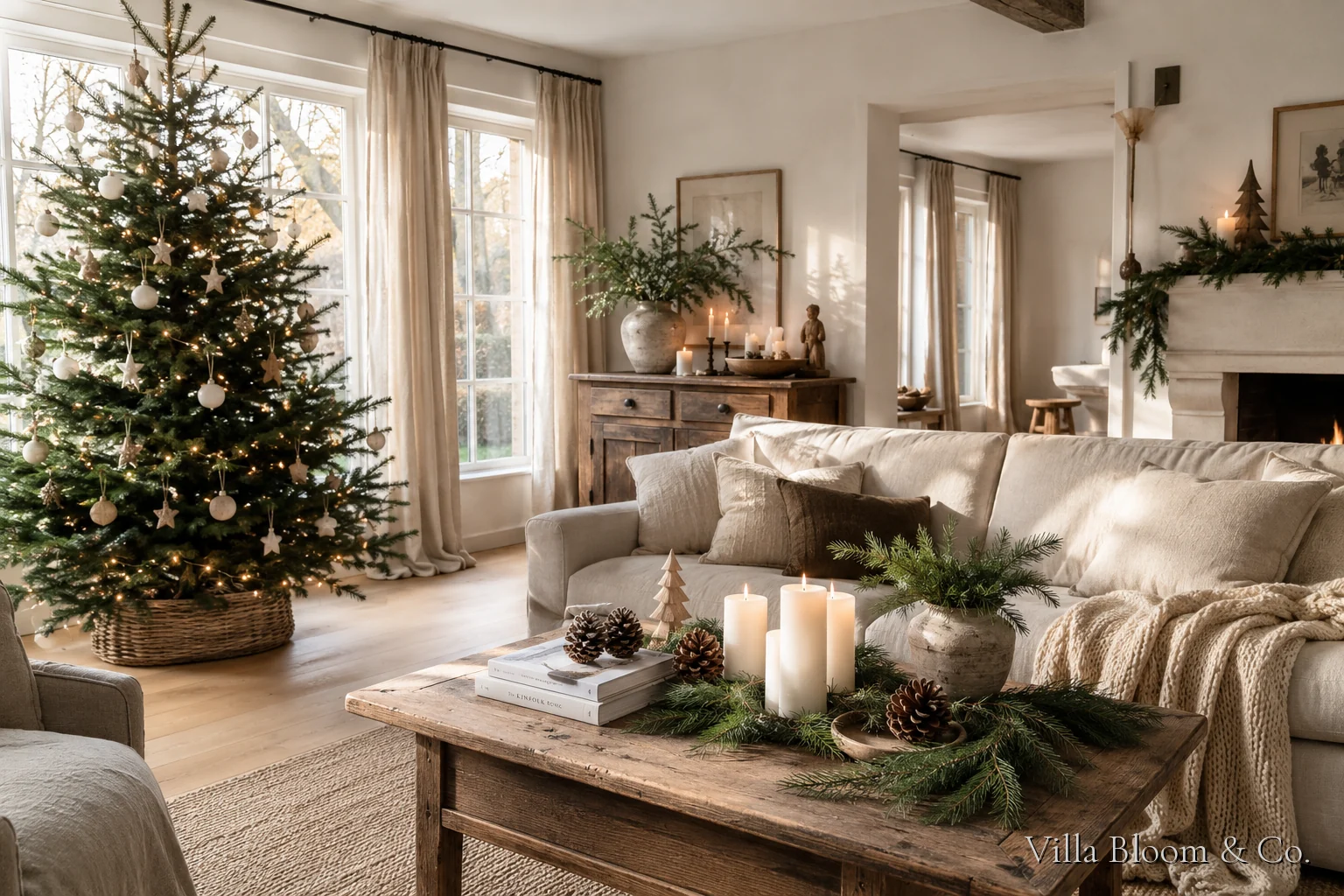
December is a curious month. Outside, everything goes quiet. The days are short, the light slants in low through the windows and is gone again by mid-afternoon. Everything about this time of year seems to call for retreat – a blanket, a pot of tea, an early night. And yet hardly any month is quite as full as this one.
Christmas parties, presents, baking, errands that simply must be done before Christmas. And on top of it all, the expectation that everything should be lovely in the end: the house, the food, the mood, the family. It’s a lot at once. Often we only notice how tired we really are somewhere around Boxing Day.
This post is a small invitation to do things a little differently this year. A little slower. A little quieter. And with an eye for the people for whom Christmas isn’t nearly as bright as it looks in the shop windows.
Why December is so exhausting
Part of it is simply nature: it’s dark. If you leave the house in the dark and come home in the dark, you barely see any daylight at all. Many people feel more tired, less motivated and a little more fragile in winter – that’s not a weakness, just a perfectly ordinary response to the season.
The other part is us. Few celebrations come with as many pictures attached as Christmas does. We carry around an idea of how it ought to be: harmonious, festive, everyone together, everyone happy. And every year we measure the real Christmas against that picture. Social media doesn’t help – there you only ever see the beautifully laid tables, never the row in the kitchen beforehand.
When reality and expectation drift far apart, pressure builds. And pressure makes us impatient, irritable and tired. It isn’t a personal failing. It’s a question of expectations – and those can be changed.
Slowing down isn’t laziness
Perhaps the most important thought for this December: you don’t have to do everything. You needn’t accept every invitation, bake every kind of biscuit or make every present by hand. Christmas doesn’t get lovelier the more you cram into it. Usually it’s the other way round.
A small exercise that can help: write down what really matters to you about Christmas. Not what one is supposed to do, but what means something to you. Often it’s only three or four things – a particular meal, a walk on Christmas morning, an evening with candles and music. Everything else is allowed to shrink or disappear altogether.
And plan in some empty spaces. Evenings with nothing on. One weekend in Advent without a programme. It feels odd at first, almost a little guilty. But it’s in exactly those empty hours that the thing we really want from Christmas quietly appears: peace.
A calm home helps you grow calm
Our surroundings affect us whether we like it or not. A room full of colour, blinking lights and decorations on every free surface is tiring for the eyes – and for the mind. A calm room, on the other hand, lets us breathe out.
That’s why it’s worth putting out less at once in December. Three places in a room where something is happening is almost always enough. The rest can stay empty. At first it feels like too little – after two days it feels right.
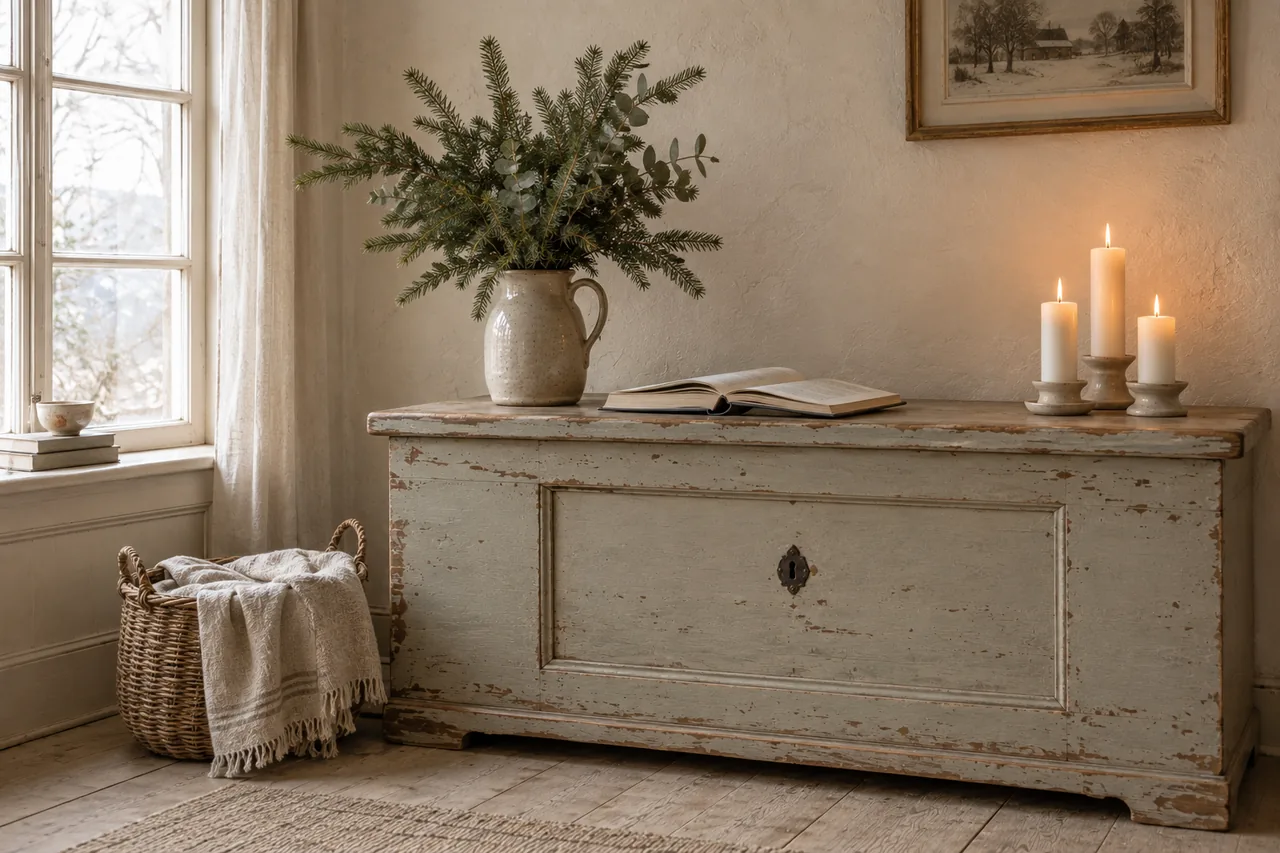
The colours help too. Red and gold take charge the moment they arrive. Natural linen, cream, greige, old wood and the warm yellow of candlelight, on the other hand, settle softly over a room instead of drowning it out. Green arrives on its own: fir sprigs in a jug last for weeks and smell wonderful the whole time.
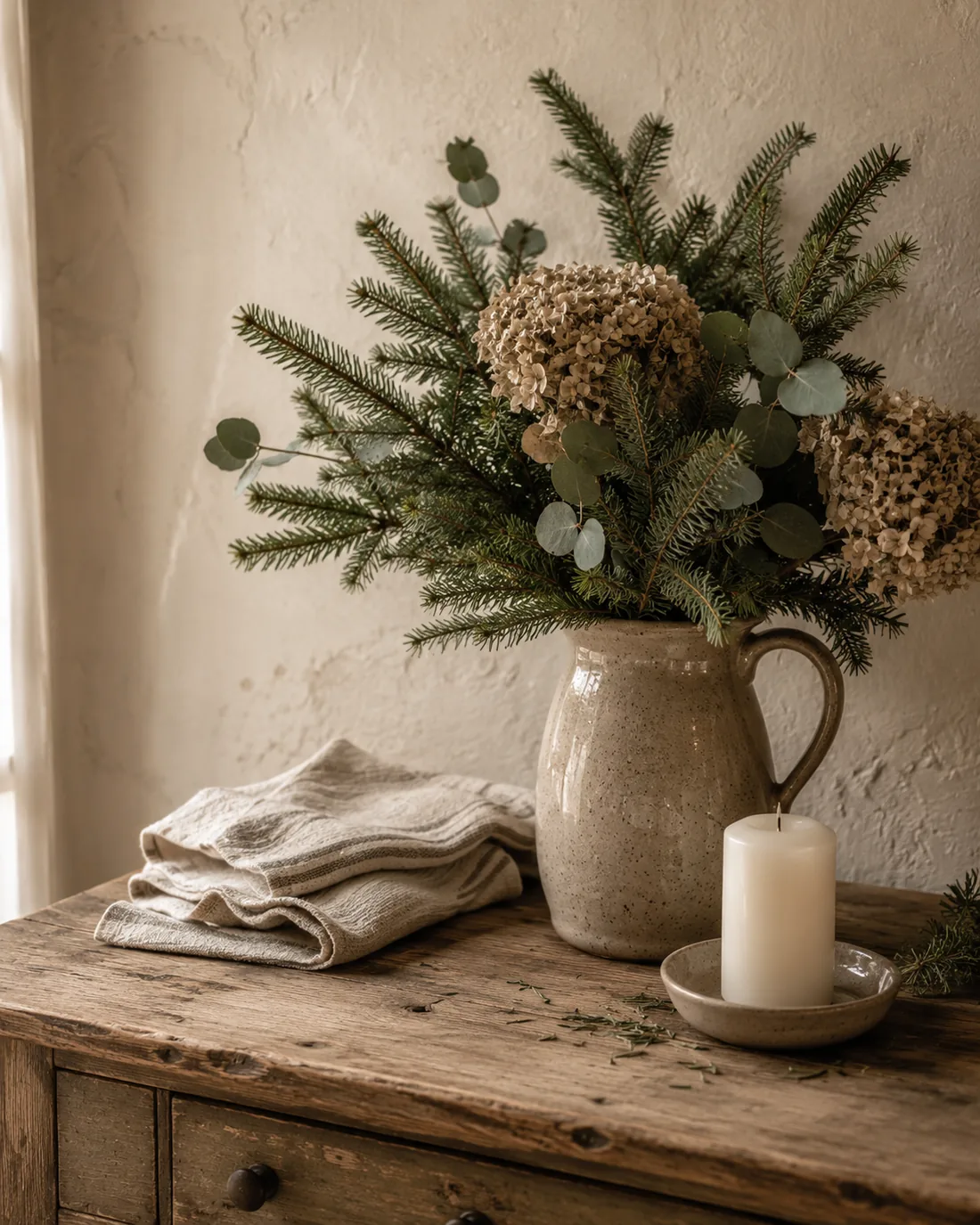
And then there’s the light. Harsh overhead light makes any room unforgiving in winter. Lots of small light sources at different heights – a lamp on the chest of drawers, one on the windowsill, a few candles on the table – create the kind of light you want to stay sitting in. That, really, is what December is all about.

Christmas isn’t a celebration for everyone
As full as December is for some, it is just as empty for others. For many people, the festive season is the loneliest time of the year.
There’s the elderly neighbour whose husband has died and whose children live far away. The colleague who, after a separation, is spending Christmas Eve without his children for the first time. The young woman who has only just moved to town and doesn’t know anyone yet. The nurse working shifts over the holidays. And everyone who has lost someone this year, for whom the empty chair at the table is louder than any carol.
Loneliness is especially hard at Christmas because everywhere shows the opposite: full tables, big families, hugs. If you’re on your own, you see it every day – in the adverts, on television, in the stairwell when the doorbell rings for everyone else.
We can’t change that for everyone. But we can look a little more closely.
Small gestures that mean more than you think
It doesn’t take grand gestures. Often it’s the tiniest things that show someone: you haven’t been forgotten.
- A card through the letterbox. Handwritten – two sentences are enough. For someone who hardly gets any post, it’s so much more than a card.
- Share a plate of biscuits. Ring the bell, hand it over, have a little chat. Maybe a conversation follows, maybe not – either is fine.
- Call instead of texting. Hearing a voice is quite different from reading a message. Especially for older people.
- Ask and mean it. “What are you doing over Christmas?” – and be ready for the answer, even if it’s “nothing much”.
- Lay one more place. An invitation for coffee on Boxing Day, for a walk, for a meal. Not out of pity, but because it’s nicer to be together.
- Be patient with the people who are working. The cashier just before closing time, the delivery driver at a run, the people in care homes and hospitals. A kind word costs nothing.
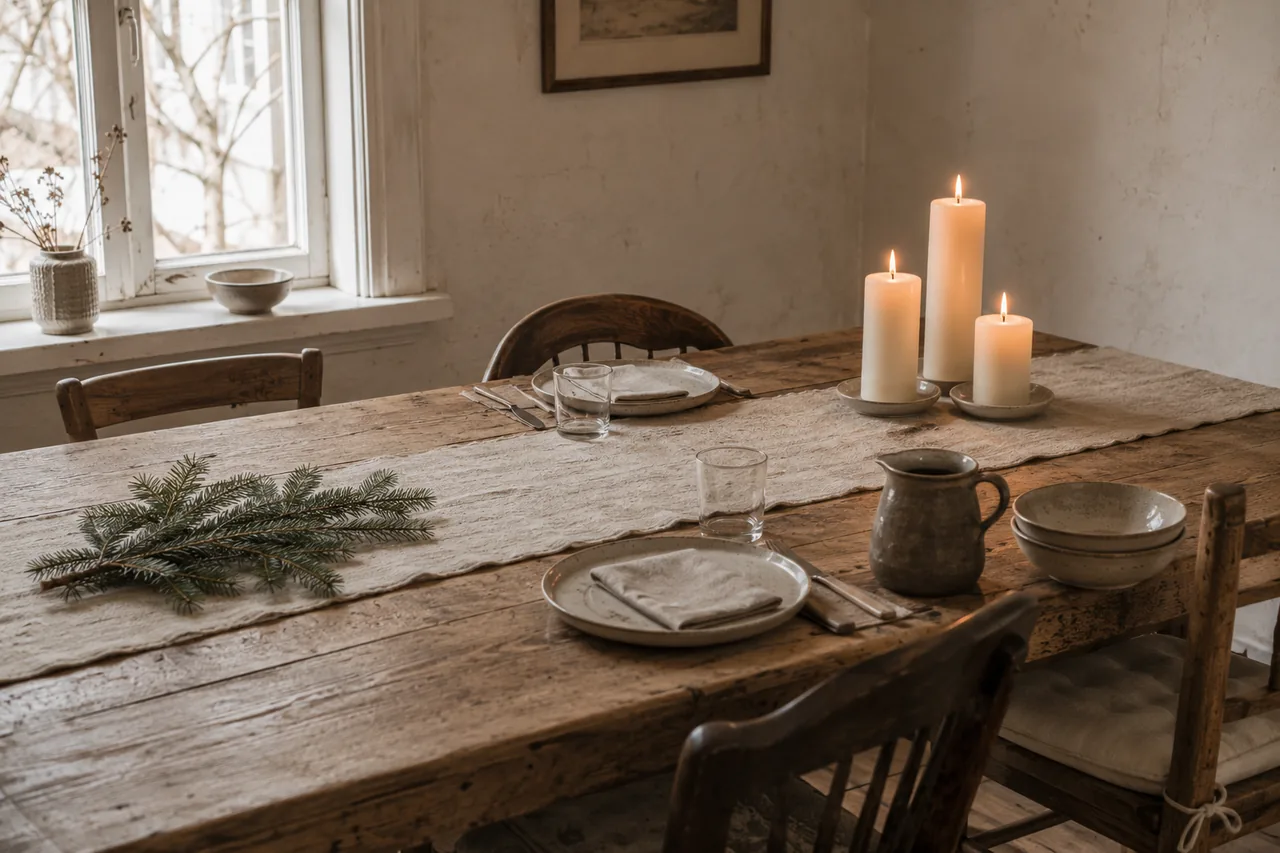
A laid table needn’t be elaborate for this. A length of linen, a few candles, something green, the good old china. More important than any table decoration is who sits around it.
Be kind – to yourself as well
Christmas brings together people who rarely see each other the rest of the year. That’s lovely, but it’s also tiring. Old roles come back, and so do old arguments. And everyone is tired.
It might help to decide something beforehand: not every remark needs an answer. Not every difficult conversation has to happen on Christmas Eve of all days. A walk in the fresh air can work wonders – for everyone involved.
And go easy on yourself. If the roast is a little dry, the present doesn’t fit or all you want to do on Christmas Day is sleep – then so be it. Christmas doesn’t have to be perfect to be good.
A light in the window
Windows are something special in December, because they work in two directions. From inside, we look out into the early dusk. And from outside, others look in.
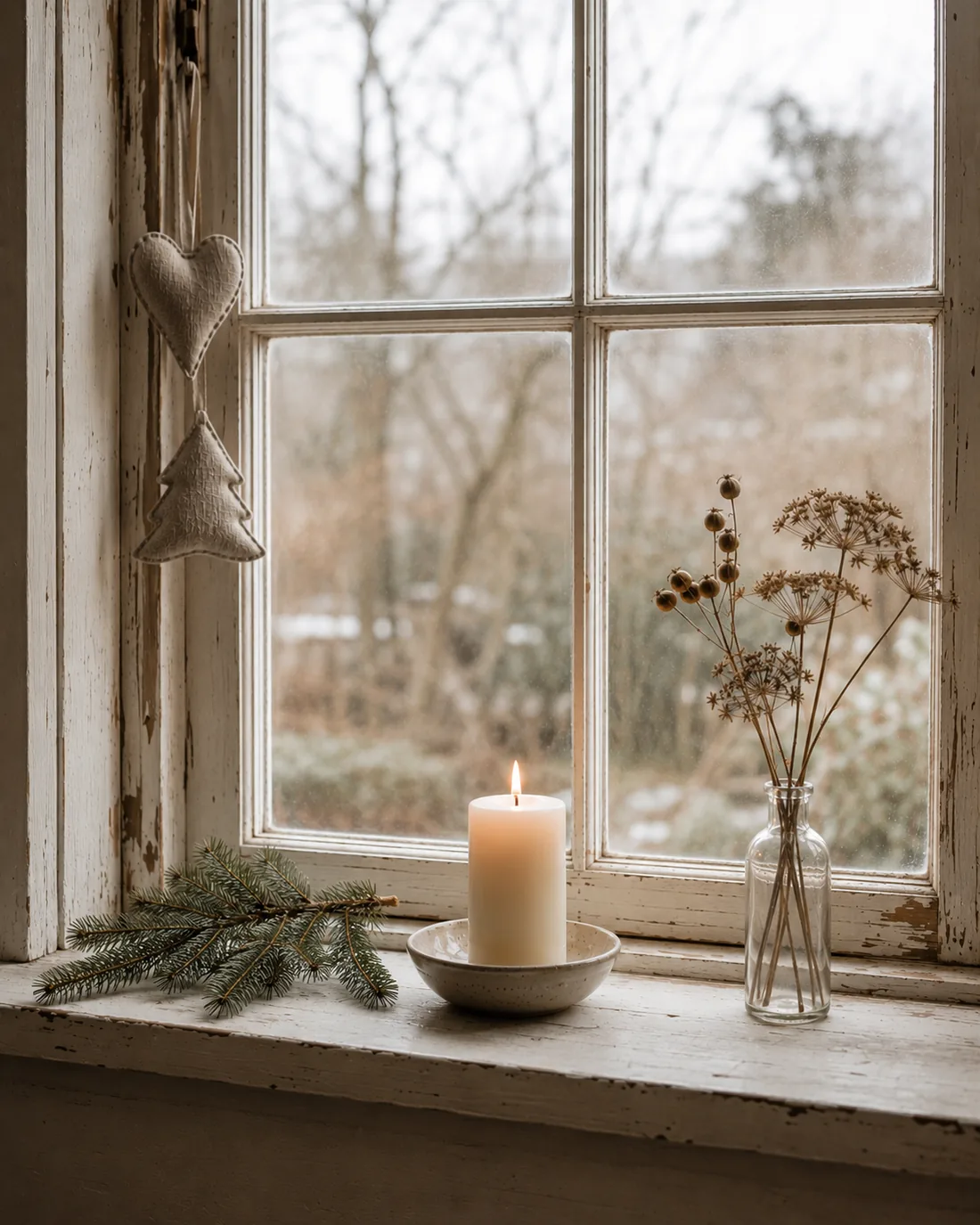
A candle on the windowsill, a sprig, two ornaments hanging in the frame – that isn’t only decoration for ourselves. It’s also a small greeting to everyone walking past in the evening. Anyone making their way home alone through dark streets sees those lights. A warmly lit window says, without a word: someone is here. You’re not entirely alone out there.
The tree can be simple
The same goes for the tree: it needs less than you’d think. Don’t fill every branch – leave gaps. A few kinds of decoration, repeated, look calmer than a colourful collection.
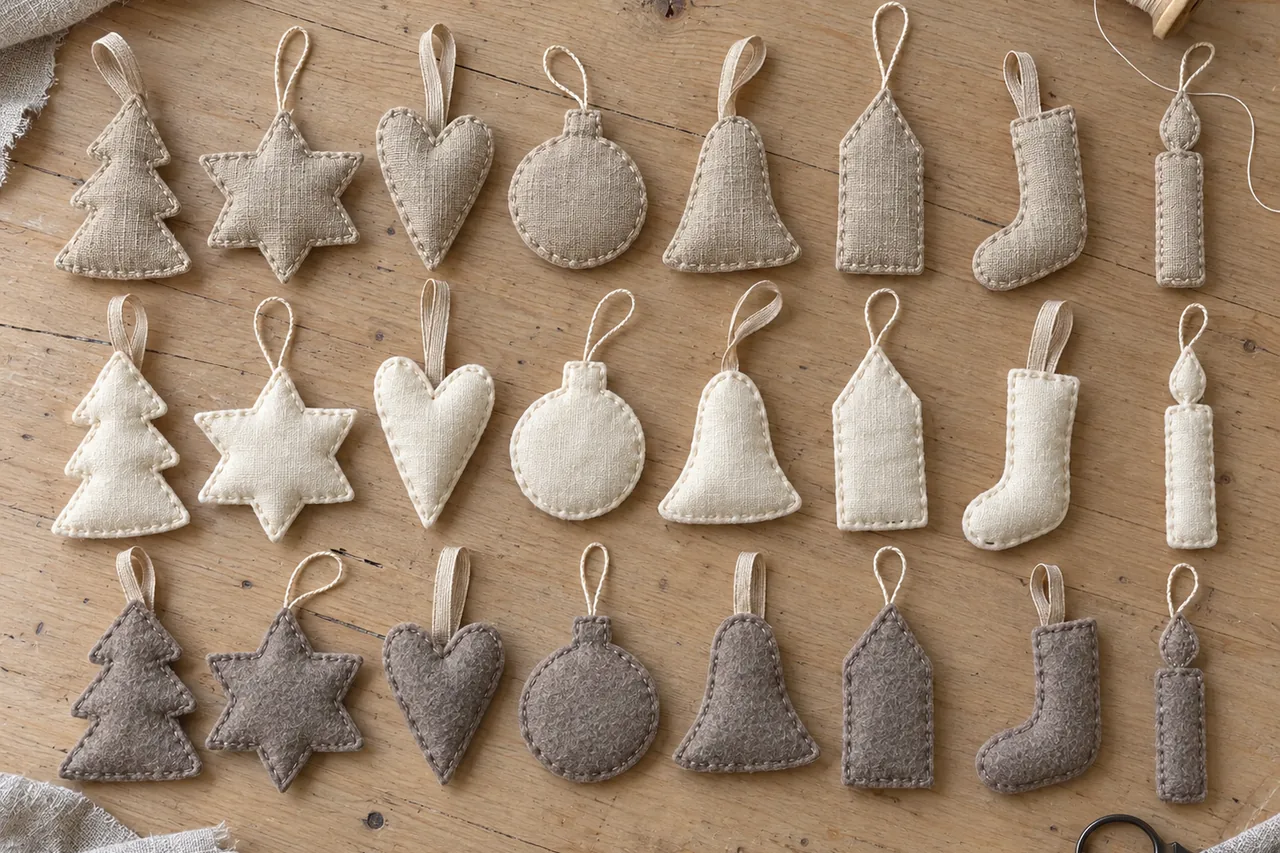
I find fabric ornaments especially lovely for this. They don’t glitter; instead they show their surface – the texture of linen, a little hand-stitched seam, the gentle irregularity of something handmade. And they don’t break if they fall. If you’d like to sew some yourself, you’ll find eight simple shapes among the linen Christmas ornaments, and to go with them the Christmas cushion “Fir” for the sofa.

Handmade things have another value, too: they’re a wonderful way to fill quiet evenings. And a sewn ornament, lovingly wrapped, is exactly the kind of present you can pop through the letterbox of someone who otherwise gets no post at all.
A place to arrive
The hallway is the first place you see when you come home – and the first place guests see. A wreath on the inside of the door, a bundle of sprigs on the coat hook: small gestures, but they say “welcome” every time someone steps inside.
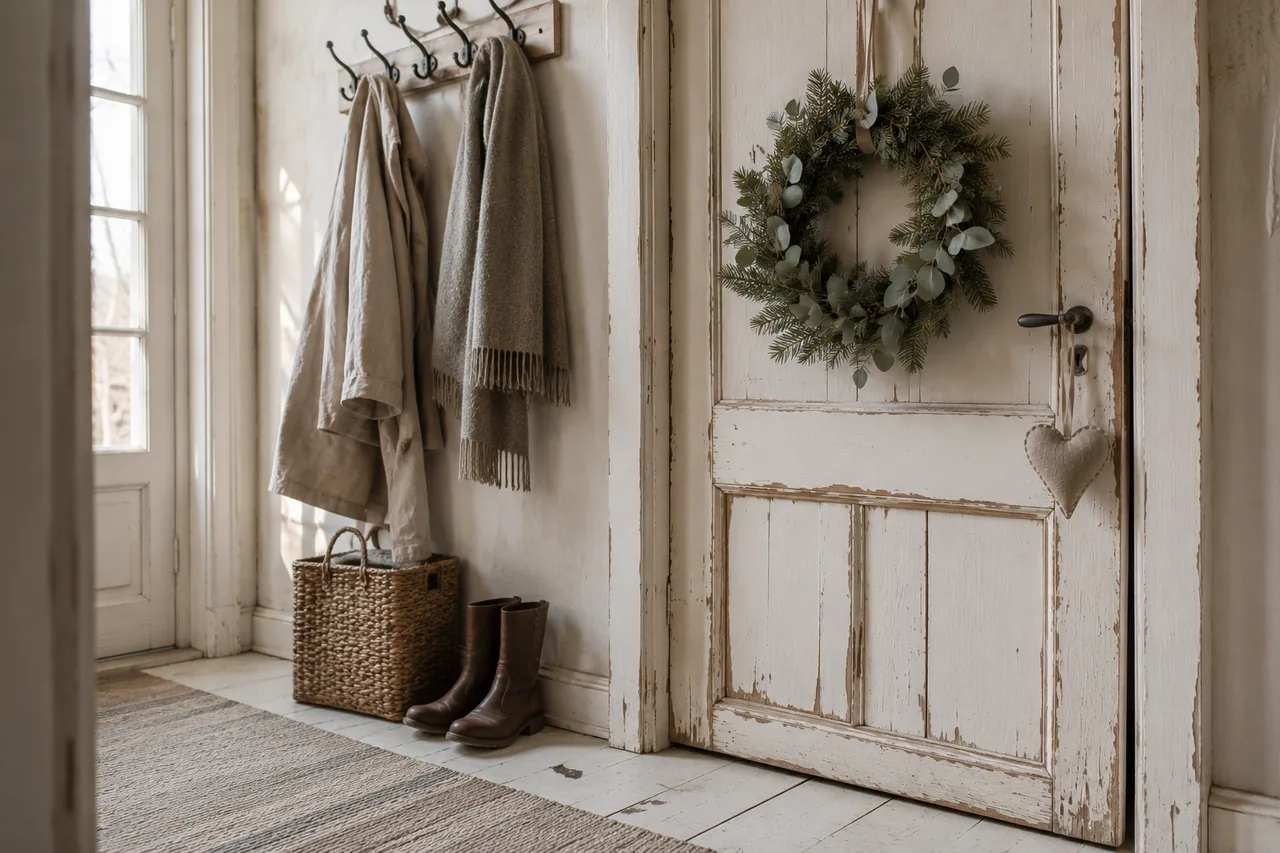
If you invite someone this December who would otherwise be alone, let them feel exactly that: here you can simply arrive. You needn’t bring anything, do anything or explain anything.
The box of memories
Almost every home has that box of Christmas decorations that gets opened again every year. And sometimes it holds things that are more than decoration: a grandmother’s ornament, a child’s first homemade piece, something from someone who is no longer here.
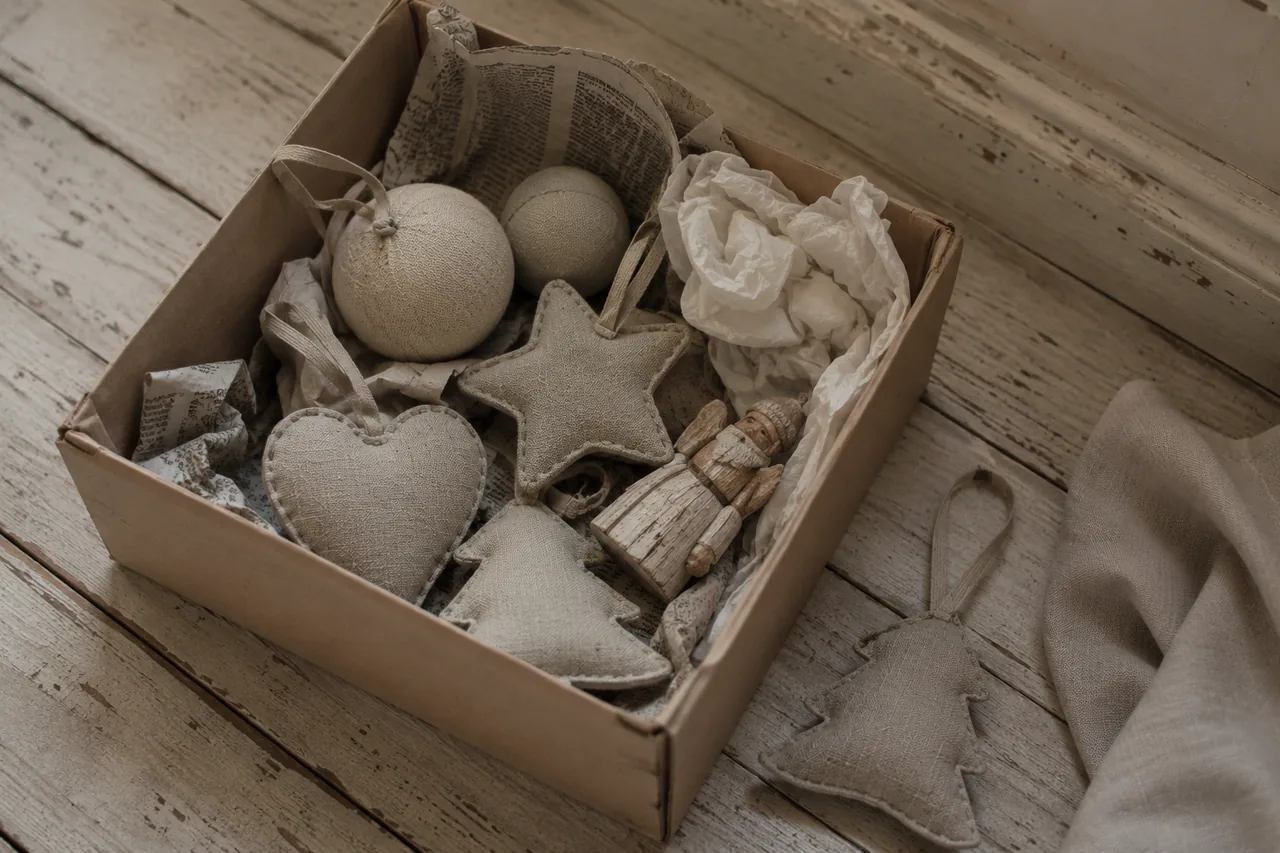
These things are allowed to stay, even if their colours don’t fit in anywhere. And the sadness that sometimes comes out of the box with them is allowed to be there too. Christmas isn’t only a celebration of joy; it’s also one of remembering. If you’re grieving someone, you don’t have to pretend over the holidays that everything is fine. An ornament, a candle, a moment of quiet for those who are missing – that has its place.
Not everything on the first Sunday of Advent
A common mistake: everything goes up in one day, and by mid-December Christmas has already become routine. It’s far nicer to let it grow. On the first Sunday of Advent, just the candles. A week later, the sprigs. Then the wreath. The tree only shortly before Christmas Eve.
That way, a little anticipation stays in the house all through December. And it suits what this month should really be about: not everything at once, but step by step, at your own pace.
If you’re on your own right now
Perhaps you’re reading this and thinking: I’m the neighbour. I’m the one sitting at home alone on Christmas Eve. Then I’d like to tell you: that’s nothing to be ashamed of. It’s the same for a great many people – far more than you can see from the outside.
Sometimes it helps to take the first step yourself – to ring a doorbell, to ask at a local church or community centre whether there’s an open Christmas lunch, or to volunteer for a few hours, perhaps at a food bank or a care home. Being needed is one of the best remedies for feeling alone.
And if it would help simply to talk to someone: even on Christmas Eve there are people at the end of the phone who are glad to listen – in Germany at the TelefonSeelsorge, in the UK at the Samaritans. You don’t need to be in a crisis. A conversation is reason enough.
And in January
When the holidays are over, the decorations go back into their box – anything made of fabric dry in a cotton bag, candle stubs into a jar, sprigs onto the compost. And anything you pick up while packing away and think “I don’t need this any more” is allowed to go.
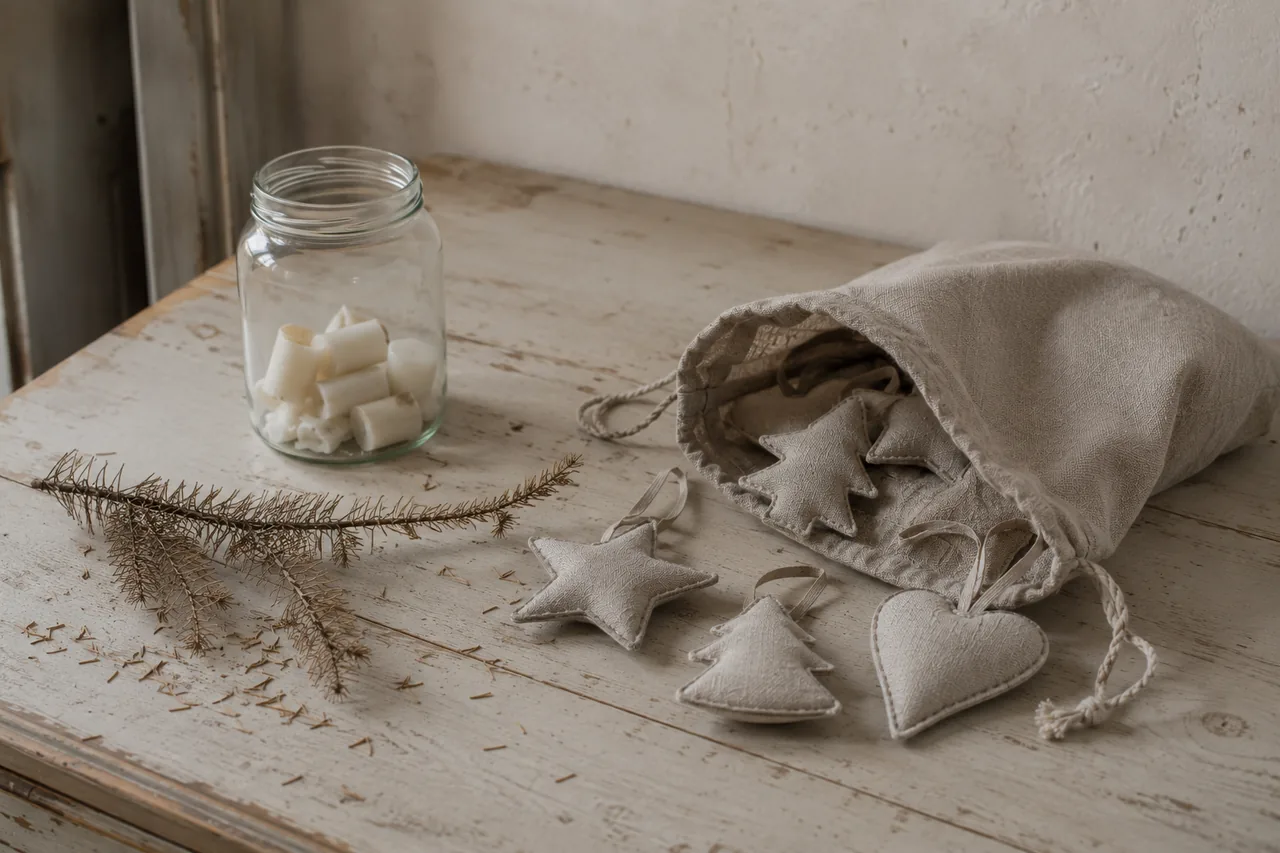
But perhaps you’ll take something out of December that doesn’t belong in the box: the card to the neighbour that you could just as well write in February. The phone call that needn’t wait until next Christmas. The invitation for coffee, just because.
To close
A quiet Christmas isn’t a question of decorations, nor of budget. It’s a question of attitude: wanting less, noticing more. Slowing down. Being kinder – to others and to yourself.
And perhaps, in the end, that’s the loveliest present we can give this December: time. A listening ear. A light in the window for those who are making their way alone.
– Jona

About the author
Jona · Villa Bloom & Co.
I write about country style, the garden, the terrace and cosy living – from genuine conviction and my own experience. Everything I recommend here I've tried myself. More about me →