DIY · Sewing · Christmas ·
Sewing Linen Christmas Ornaments 24 quiet pieces for the tree
Christmas decorations needn’t sparkle. Sometimes all it takes is a scrap of linen, a small handful of stuffing and a loop of ribbon – and there, on the branch, hangs something you’d happily hold in your hand. Eight simple shapes, three fabrics, not a speck of glitter: hand-sewn tree ornaments that are calm rather than colourful, Scandinavian rather than twee, and so easy to make that one quiet Advent afternoon is enough for several.
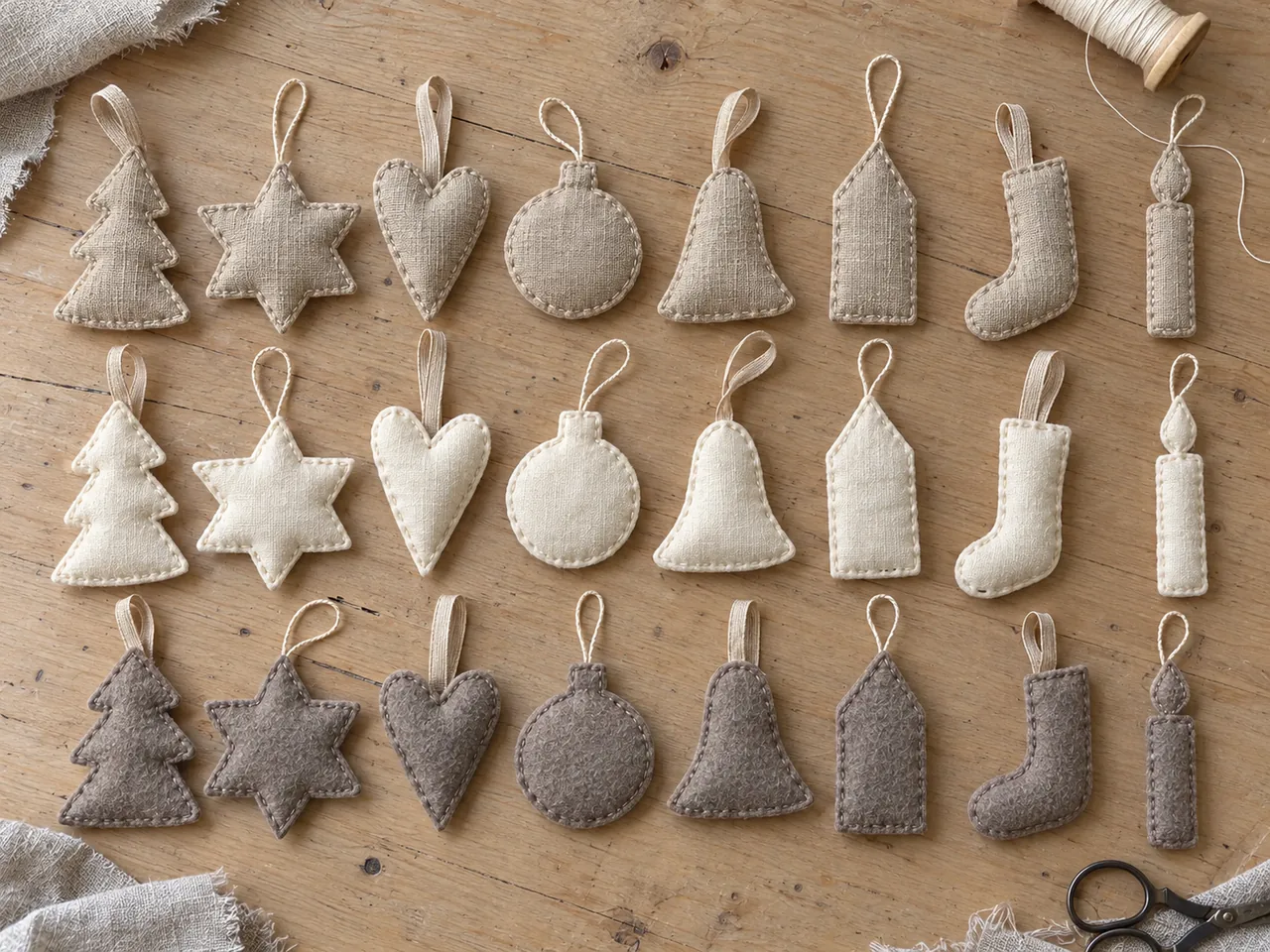
Eight shapes, three fabrics – 24 ornaments, enough for a whole tree.
In this post you’ll find out which shapes really work in fabric, which materials are nicest to sew, how the basic method works, and how to spread the finished ornaments around the house – on the tree, at the window, on a parcel. The complete instructions with every pattern are in the sewing magazine.
Why fabric ornaments?
Glass baubles are lovely, but they break, and after a few years every tree starts to look the same. Fabric ornaments have something else about them: they’re light, they don’t clink, they survive a house move in a shoebox and the attentions of a curious dog. And they carry something shop-bought decorations never will – the visible trace of the hand that stitched them.
There’s a practical reason, too: fabric ornaments need hardly any material. A scrap of about 12 × 24 cm is plenty for one. Anyone who sews has these leftovers lying about already – linen from the last cushion, a piece of felt, half a metre of ribbon. From that little scrap comes a piece of Christmas that returns year after year.
Eight shapes for a quiet tree
Not every Christmas shape works in fabric. Very fine details – antlers, fir sprigs with lots of needles, thin stars with sharp points – are almost impossible to turn and end up looking lumpy. The best shapes for sewn ornaments are clear, slightly elongated and have soft points. These eight have proved themselves:
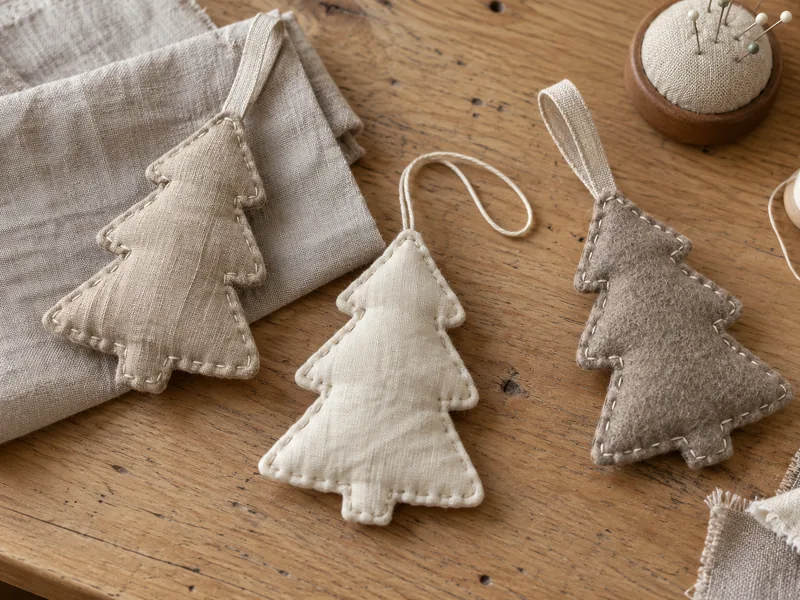
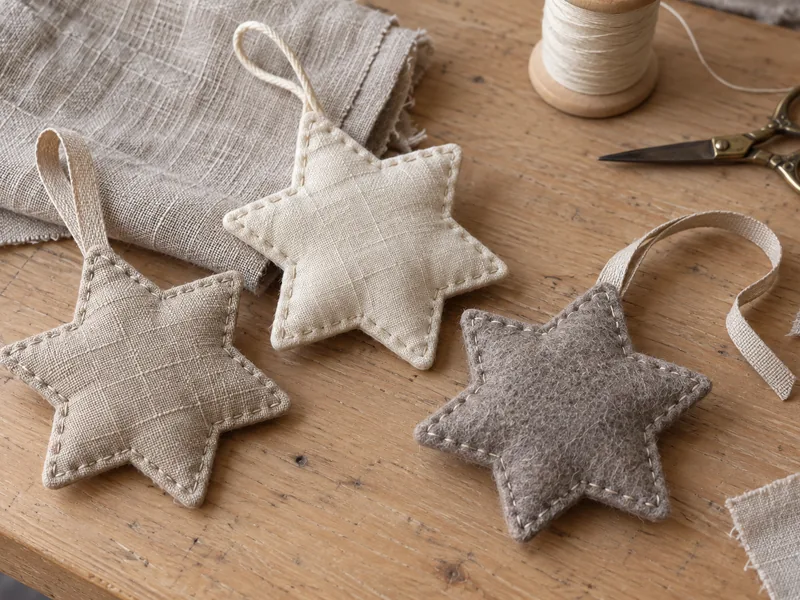
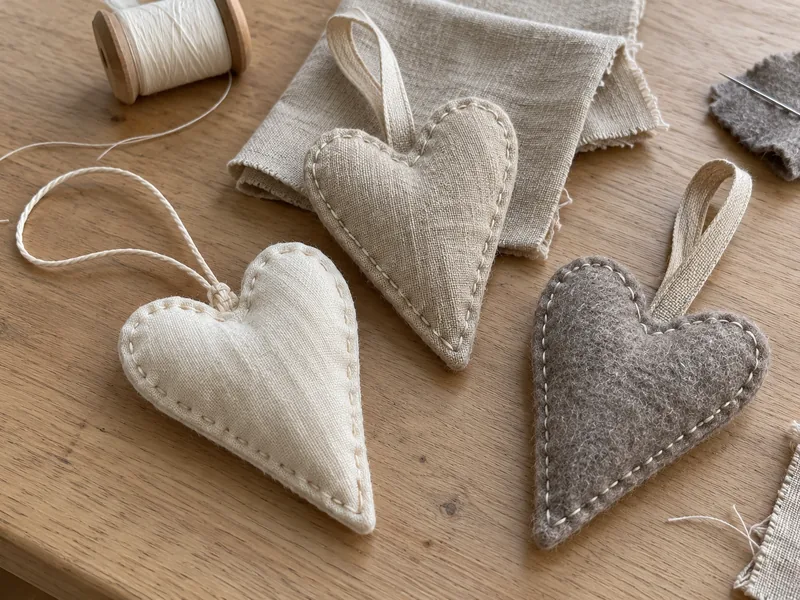
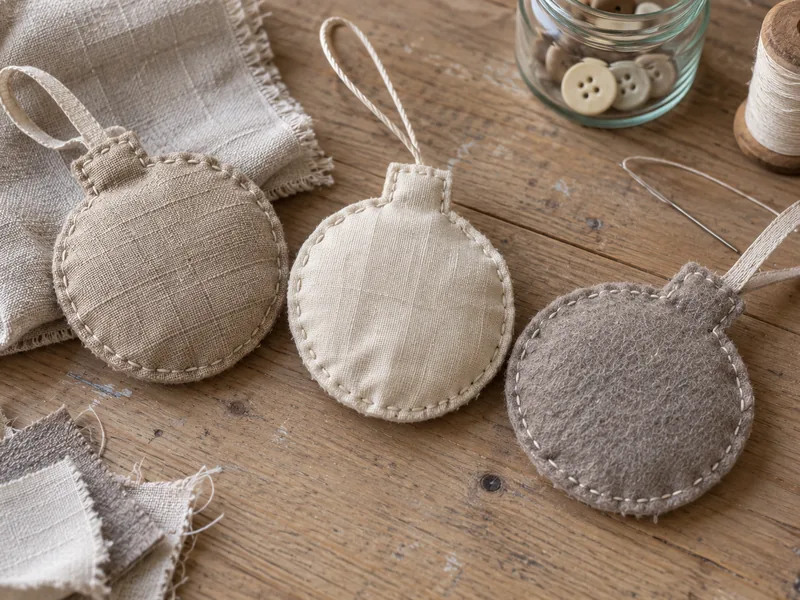
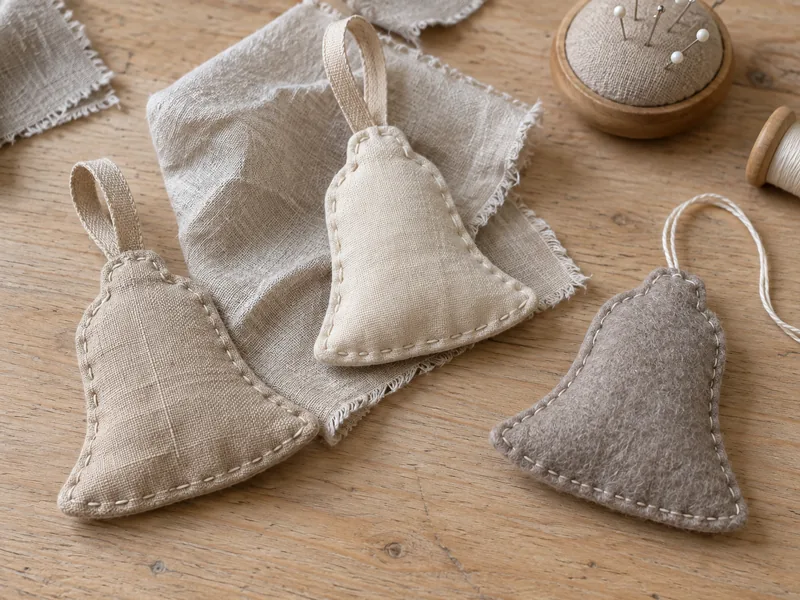
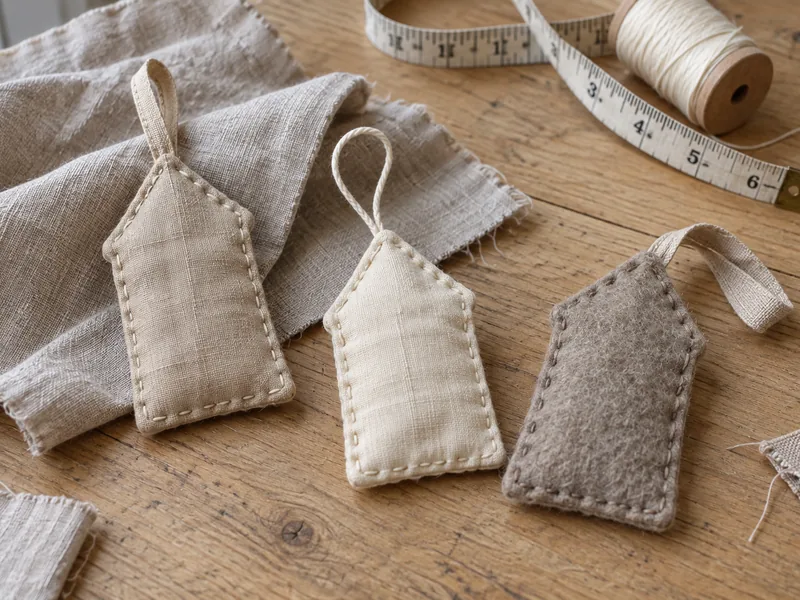
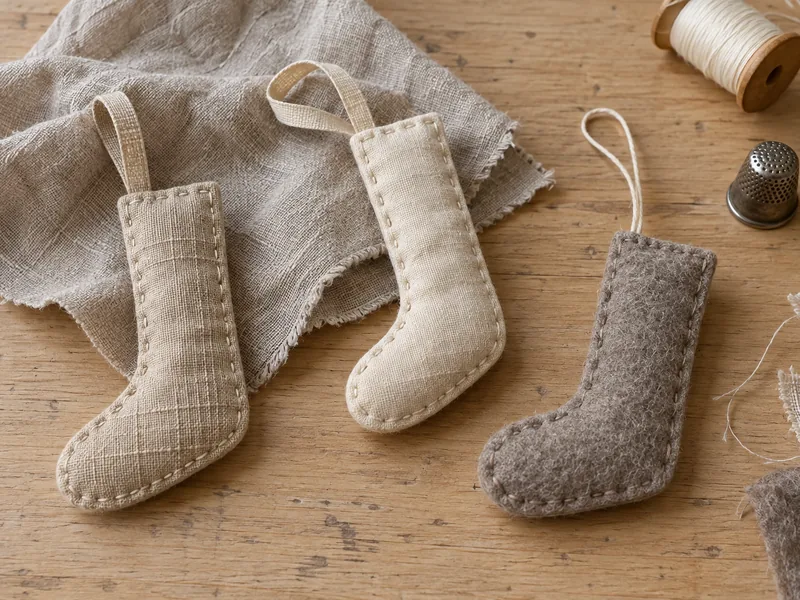
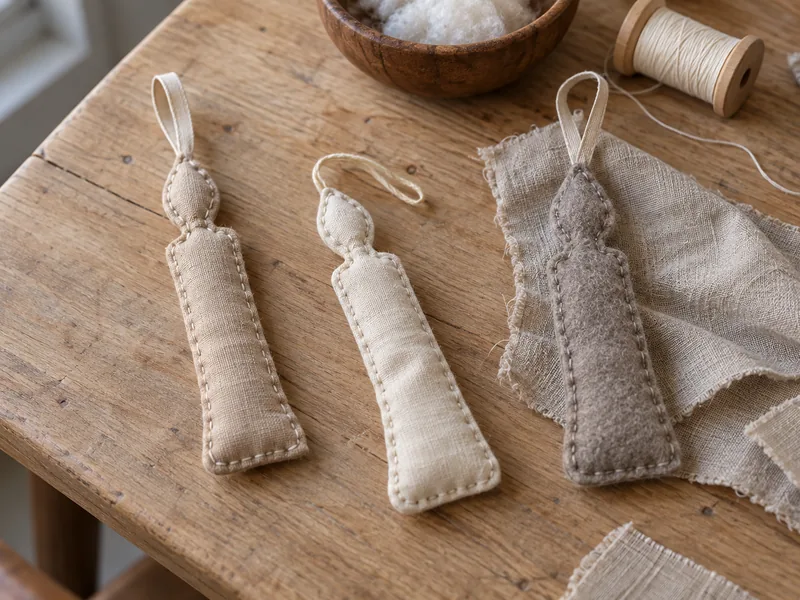
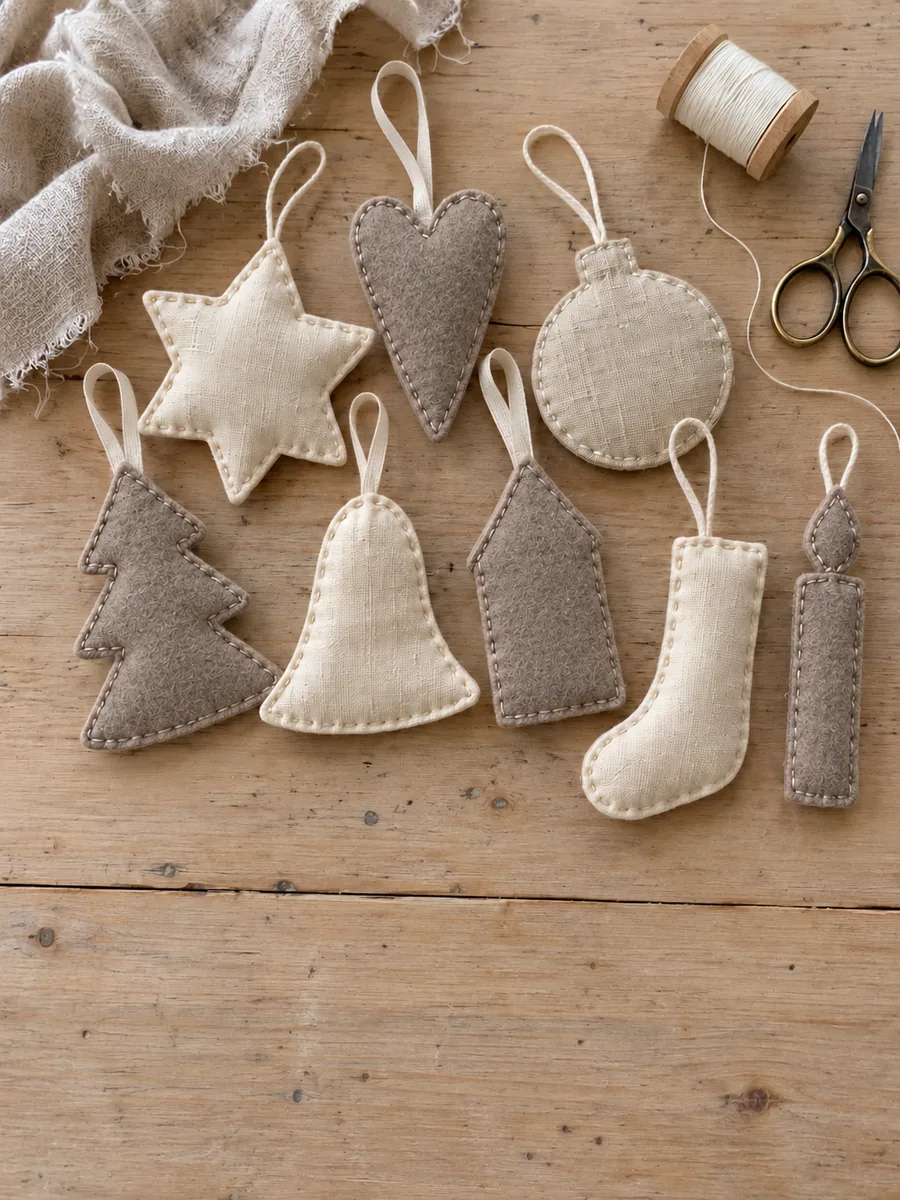
Tree – three tiers with shallow notches, the classic silhouette. Star – six soft, broad points; six rather than five, because broad points turn out far more neatly. Heart – slim and gently elongated, rather like an old wooden heart. Bauble – round, with a little cap cut in one piece. Bell – narrow at the top, softly flared at the bottom. House – slender, with a tall gable and no windows or door at all. Stocking – long and narrow, with a curved foot and no cuff. Candle – a slim taper with a small flame, all in one piece.
Animals and figures are deliberately left out. A reindeer, a gingerbread man or a little bird quickly tips a collection into the nursery. Objects and graphic shapes, on the other hand, feel calm and grown-up – more like old Scandinavian wooden decorations than a craft kit. All eight shapes are roughly 7 to 10 cm tall: easy to see on the tree, but still clearly ornaments rather than soft toys.
Three fabrics, one quiet palette
The collection works because the colours hold together. Instead of red and gold, there are three pale, matt fabrics:
Natural linen brings texture. Its slightly irregular surface looks the most alive on the tree.
Cream linen glows among the greenery – even in the evening, when only a few candles are lit.
Greige wool felt is the soft counterpart: matt, a little fluffy, calm. At around 1.5 mm thick it still turns easily and forms neat points. And because felt doesn’t fray, it forgives the odd small inaccuracy.
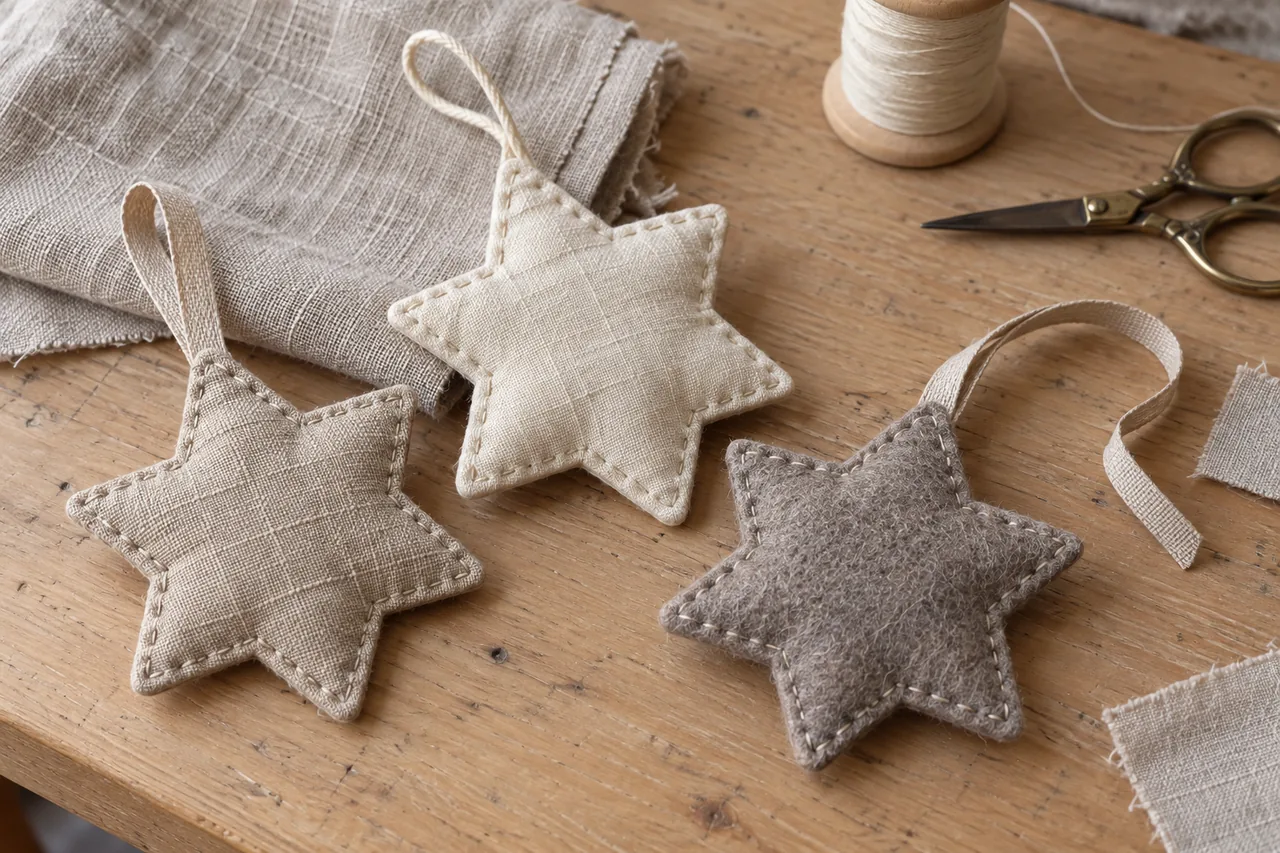
The same star in three fabrics: natural linen, cream and greige wool felt.
Each of the eight shapes in each of the three fabrics – that makes 24 ornaments, enough for a whole tree. The trick when hanging them: mix the fabrics rather than sorting them by colour. The tree then looks light and as if it had been decorated almost by chance.
Less suitable are very fine batiste, which lets every fibre of the stuffing show through, and thick craft felt over 2 mm, which is hard to turn at the points. Medium-weight, pre-washed linen and proper wool felt are the safe choice.
What you’ll need
The list is short, and most of it is probably already in your sewing box:
- Linen in natural and cream, plus greige wool felt – scraps are enough
- Linen tape or thin cotton cord for the loops, about 12 cm per ornament
- A little toy stuffing – just a small handful per ornament
- Sewing thread in cream and greige, plus embroidery thread for the decorative stitching
- A sewing machine, fabric scissors, small embroidery scissors, a marking pen, pins and a wooden stick for shaping
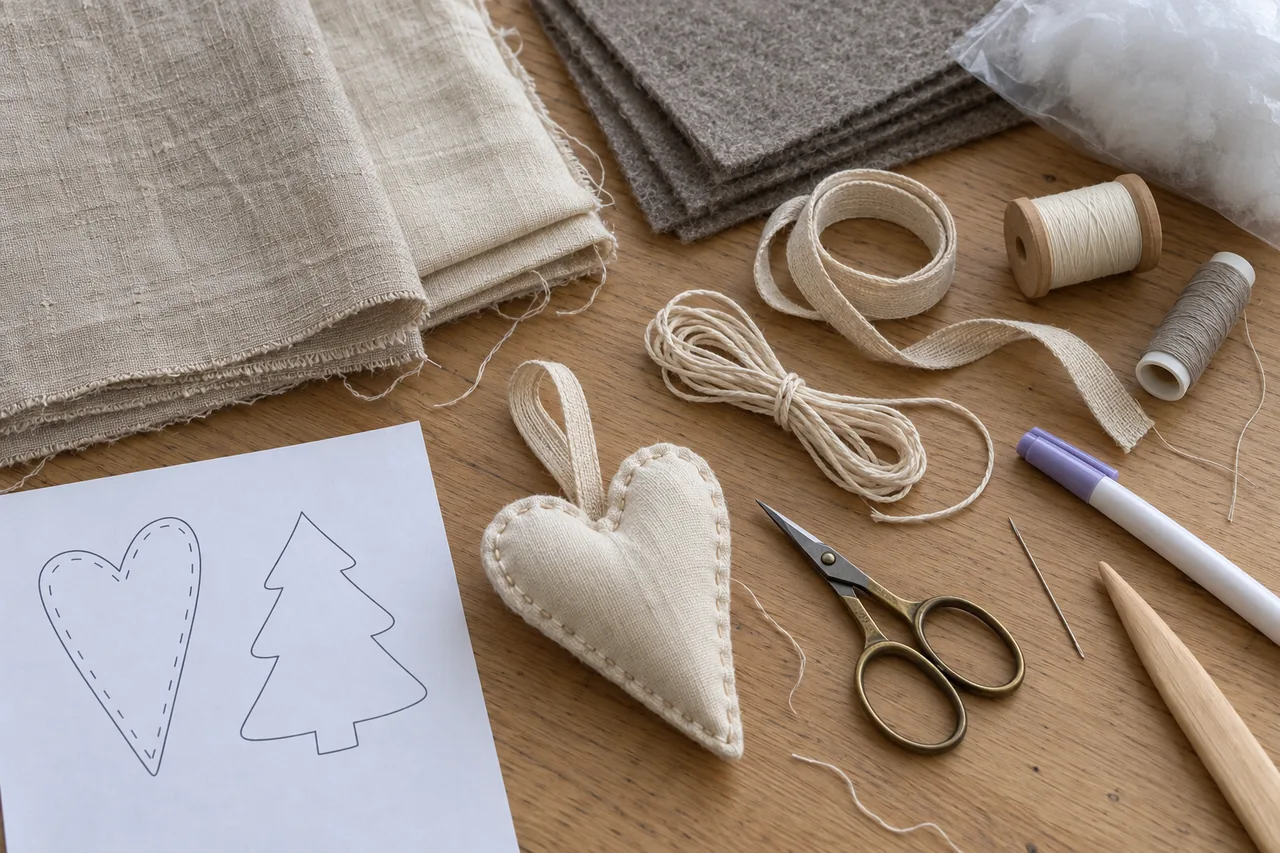
Linen, felt, tape, stuffing and thread – that’s really all.
A sewing machine is handy but by no means essential: the short seams are just as easy to sew by hand with small backstitches. That makes these ornaments a lovely project for an evening on the sofa.
The method: draw, sew, cut
The beauty of this kind of ornament is that every shape is sewn the same way. Master one and you can make them all. Here is the basic idea in three steps – the full instructions, with an illustration for every stage, are in the sewing magazine.
Sew first, cut afterwards. With shapes this small it pays to turn the usual order round: draw the shape onto the doubled fabric, sew exactly along the line, and only then cut it out with a narrow allowance. Nothing slips, and even star points and candle flames come out precisely.
The loop sews itself in. Before sewing, the tape is laid between the two layers of fabric with the loop pointing inwards. Once turned, it points outwards and sits firmly in the seam – no extra handwork required.
Only a little stuffing. The ornaments should stay soft and fairly flat. That way they hang calmly on the branch and turn gently in a draught, instead of looking like tiny cushions.
The decorative stitch – the little detail
What sets these ornaments apart from shop-bought ones is a row of small running stitches, about 5 mm from the edge, all the way round. On linen in cream thread; on felt tone on tone, with a touch of darker taupe. The stitches go through both layers, hold the stuffing in the centre and trace the outline of the shape.
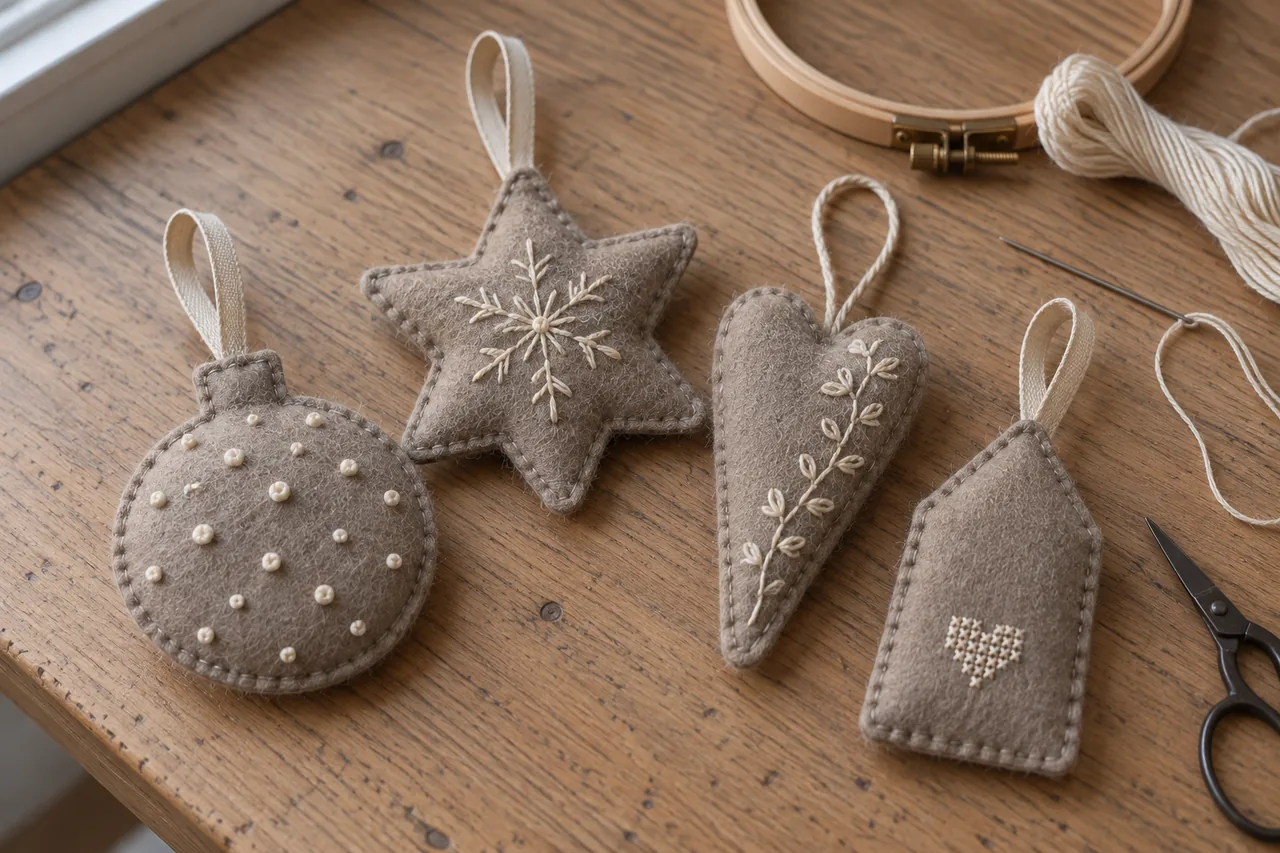
Small running stitches all round – it’s the little irregularities that show the hand.
The stitches needn’t all be the same length. It’s precisely those small irregularities that show a real hand was at work. And if you’d rather leave the decorative stitching out, that’s perfectly fine – simply stuff the ornament a little more fully, almost to the edge.
So much for the short version. If you’d like to sew the ornaments exactly as they hang in the pictures, the magazine Villa Bloom Christmas Collection No. 01 – 24 Tree Ornaments has everything technical – pattern sheets, steps and a guide to fabrics.
All eight shapes, ready to sew
- Full-size pattern sheets with sewing line, cutting line and decorative stitch
- Instructions in eight illustrated steps
- Materials list, fabric guide & common mistakes
- Ideas for embellishing · 40 pages · English & German
Ideas to take further
The ornaments are simple on purpose. If you like things a little more playful, give them one small detail – always in the same quiet colours: cream, natural, greige, mother-of-pearl.
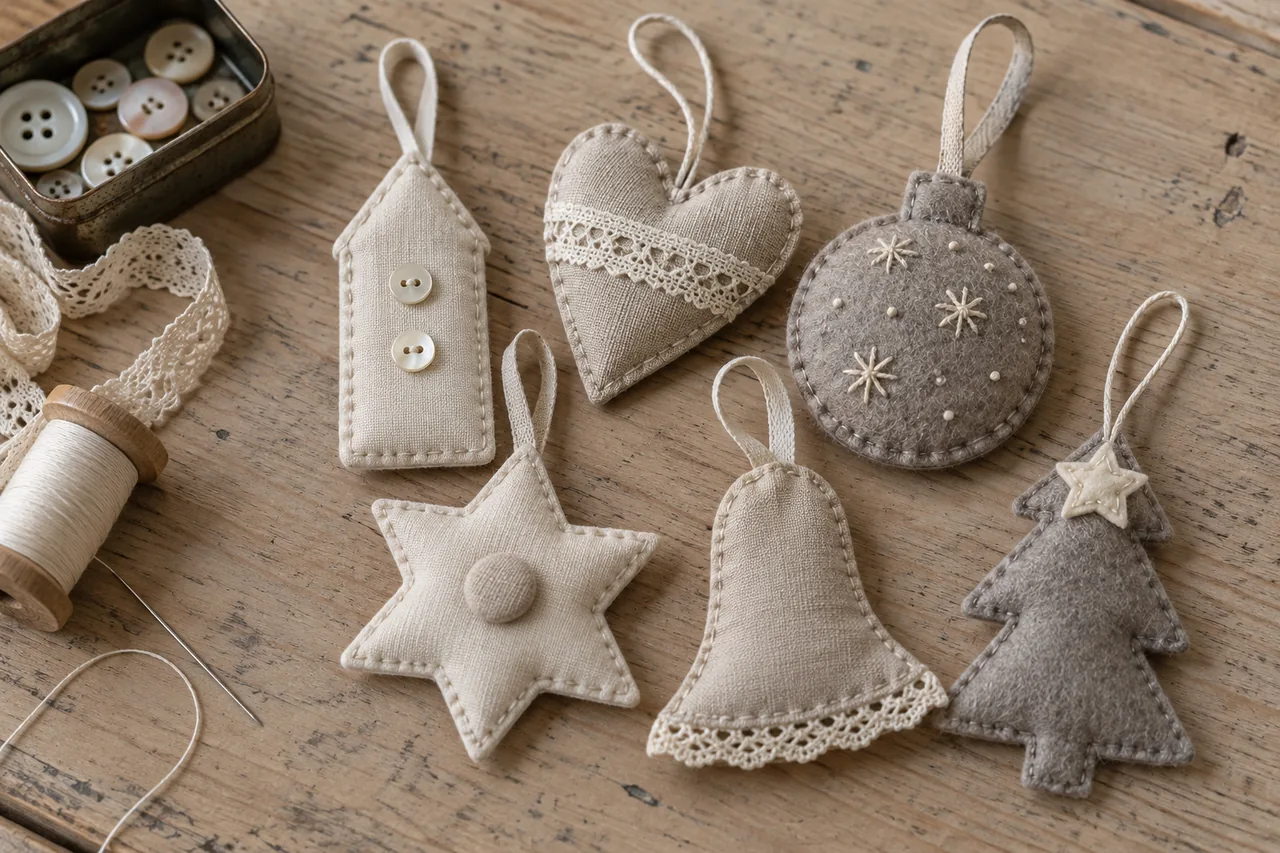
Buttons, lace, embroidery – small details in the same quiet colours.
- Mother-of-pearl buttons as little windows on the house, or in a row down the stocking.
- One large button in the centre of the bauble or the star – an old linen button is perfect.
- A strip of cotton lace across the heart, or as a trim along the bottom of the bell.
- Embroidery on felt: French knots like falling snow on the bauble, a snowflake on the star, a little trailing leaf on the heart.
- A felt star appliquéd at the top of the tree.
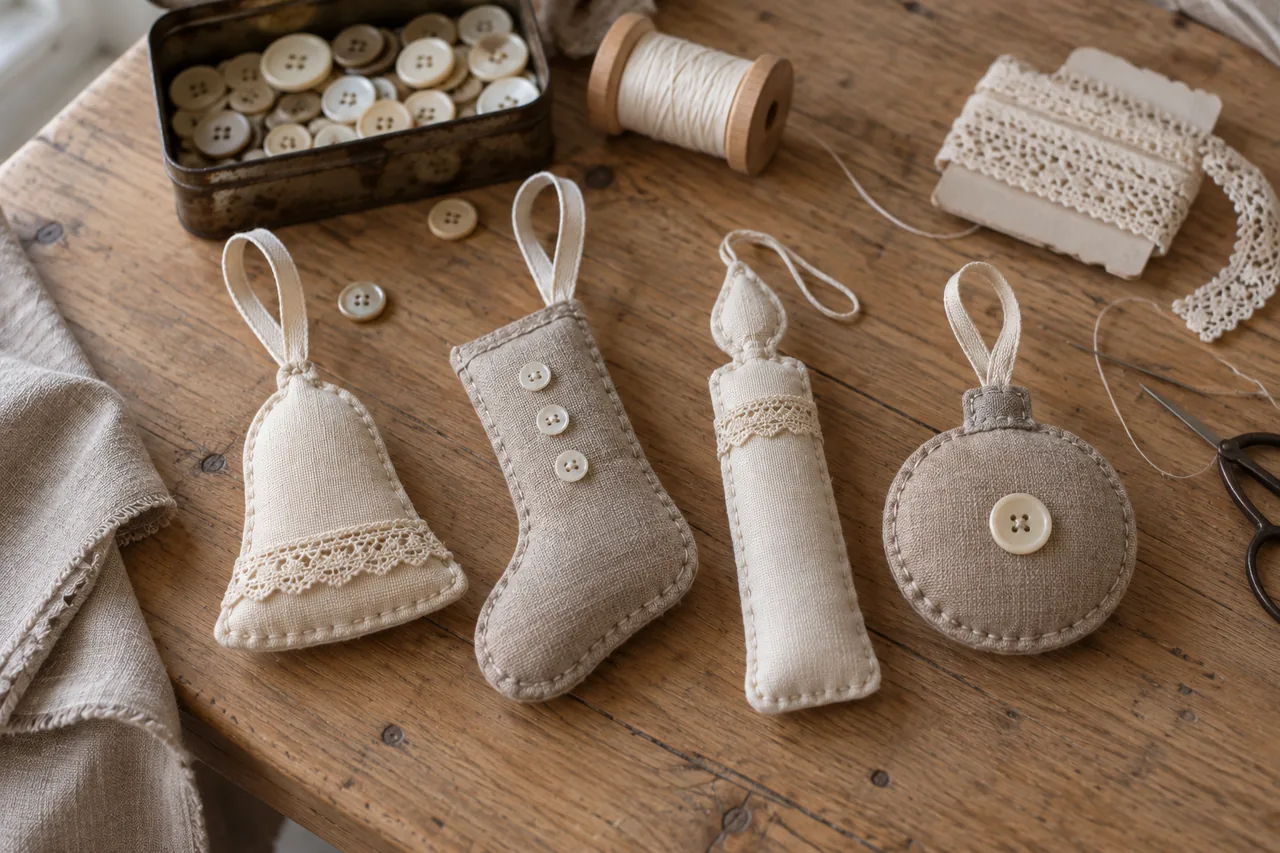
Mother-of-pearl and lace: two details that suit almost every shape.
One rule always applies: embroidery, lace and appliqué go on the front piece before the two layers are sewn together. That way every knot disappears inside later on. Only buttons are sewn on right at the very end.
Showing them off
On the tree – less is more. Hang the ornaments loosely and at different depths: some tucked further in, some out at the tips of the branches. A few gaps let the tree breathe. Without glittering fairy lights and glass baubles, a tree dressed only in fabric ornaments looks especially calm.
On a branch in a vase – one bare branch with three or four ornaments. That’s enough for a whole chest of drawers, and it can go up on the first Sunday of Advent, long before the tree arrives.
In a bowl – a shallow wooden bowl full of ornaments on the windowsill. It looks lovely even when they aren’t hanging.
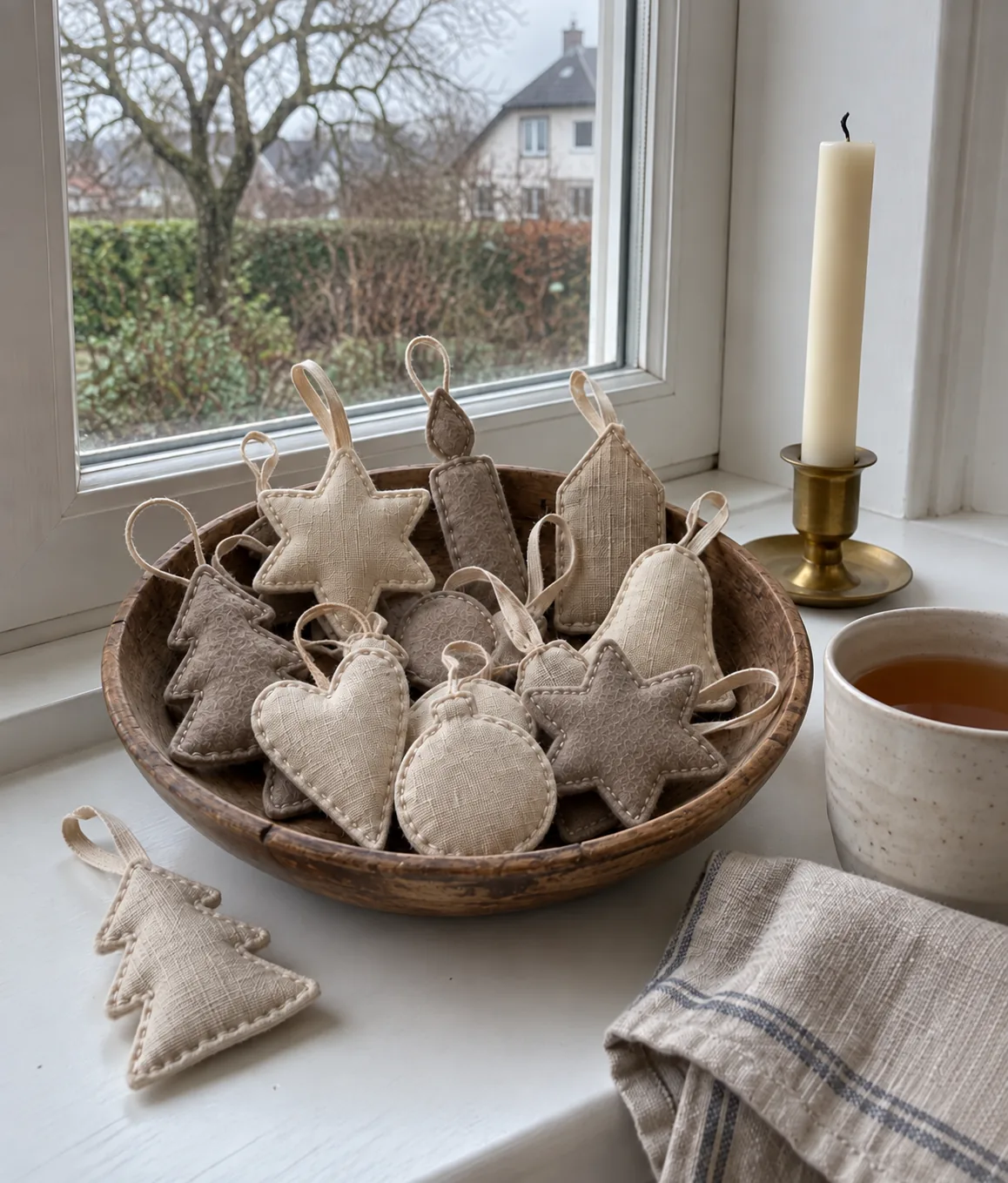
A bowl full of ornaments – lovely even when they aren’t hanging.
At the window – hung at different heights on a linen string in front of the glass, they turn slowly in the light.
On a parcel – an ornament instead of a bow, perhaps with an embroidered initial. It becomes a name tag, and it stays long after the paper has gone.
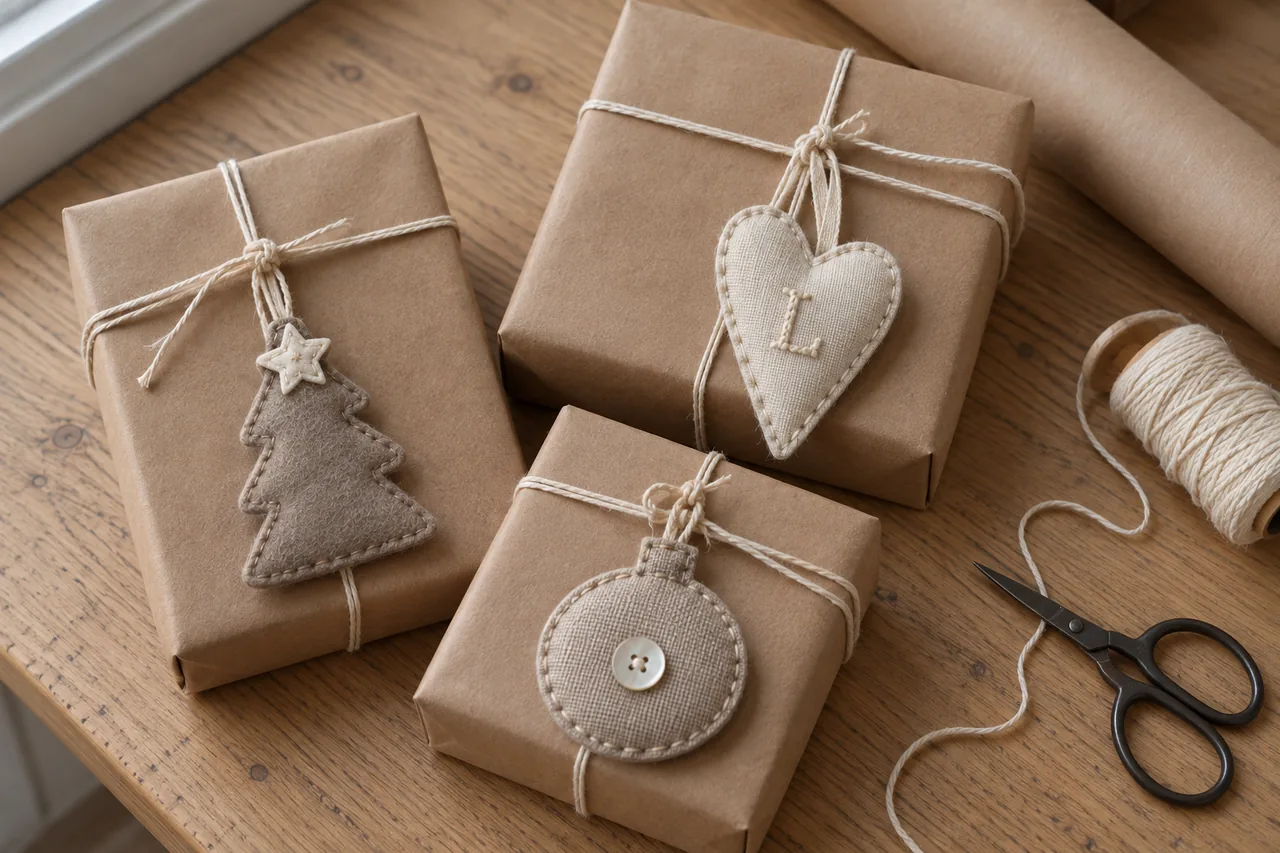
Instead of a bow: a little keepsake that stays long after the paper has gone.
At the table – one ornament beside each plate, in place of a name card. Your guests may take it home.
On the wreath and the door – two or three ornaments tucked among the branches of the Advent wreath, or a single star hanging from the door handle. For more ideas for a quiet Christmas, have a look at Christmas Decor in Country Style.
Care and storage
Fabric ornaments ask for very little. It’s best not to wash them, as the stuffing clumps – small marks can be dabbed away with a slightly damp cloth. After Christmas, pack them away dry in a cotton bag or a box lined with tissue paper, never in plastic, where linen turns musty. If the felt has gone a little fluffy, a lint roller will sort it out.
And one more note: these ornaments are decorations, not toys. Because of the stuffing and the small parts, they aren’t suitable for children under three.
Frequently asked questions
Where can I get the pattern for the ornaments?
All eight shapes, with full-size pattern sheets and the detailed illustrated instructions, are in the sewing magazine “Villa Bloom Christmas Collection No. 01 – 24 Tree Ornaments” in my Etsy shop – as an instant-download PDF in English and German.
Can a beginner sew fabric Christmas ornaments?
Yes. The shapes are flat and made from two pieces, and every one of them is sewn in exactly the same way. If you can sew a straight seam and a few hand stitches, you can make these.
Which fabric works best?
A medium-weight, pre-washed linen or linen blend, and wool felt about 1.5 mm thick. Very fine fabrics and thick craft felt are less suitable.
How big are the ornaments?
Roughly 7 to 10 cm, depending on the shape, plus a hanging loop of 4 to 5 cm at the top.
How long does one ornament take?
With the decorative hand stitching, around 45 to 60 minutes. Without it, rather quicker.
Can I use fabric scraps?
Absolutely – that is exactly what they are made for. A piece of about 12 × 24 cm is enough for one ornament.
May I sell the finished ornaments?
Yes, in small numbers, as long as you credit Villa Bloom & Co. by Jona as the source of the design.
24 Tree Ornaments – the sewing magazine
Eight shapes, three fabrics, one quiet tree. With full-size pattern sheets, illustrated instructions and ideas for embellishing – an instant-download PDF in English and German.
View it on Etsy now →Perhaps the first one will be hanging on a branch by the first Sunday of Advent. And perhaps there’ll be one more every year.
– Jona

About the author
Jona · Villa Bloom & Co.
I write about country style, the garden, the terrace and cosy living – from genuine conviction and my own experience. Everything I recommend here I've tried myself. More about me →
You might also like