Recipes · Autumn · Weeknight suppers ·
Healthy autumn recipes for weeknights ten suppers in 30 minutes
When it's already getting dark at six and the day has been long, supper shouldn't be one more task on the list. These ten autumn dishes are on the table in half an hour – made with whatever the season has to offer, and without anyone ending the evening staring at a mountain of pans.
Last updated: 2026-11-12
 Pin it
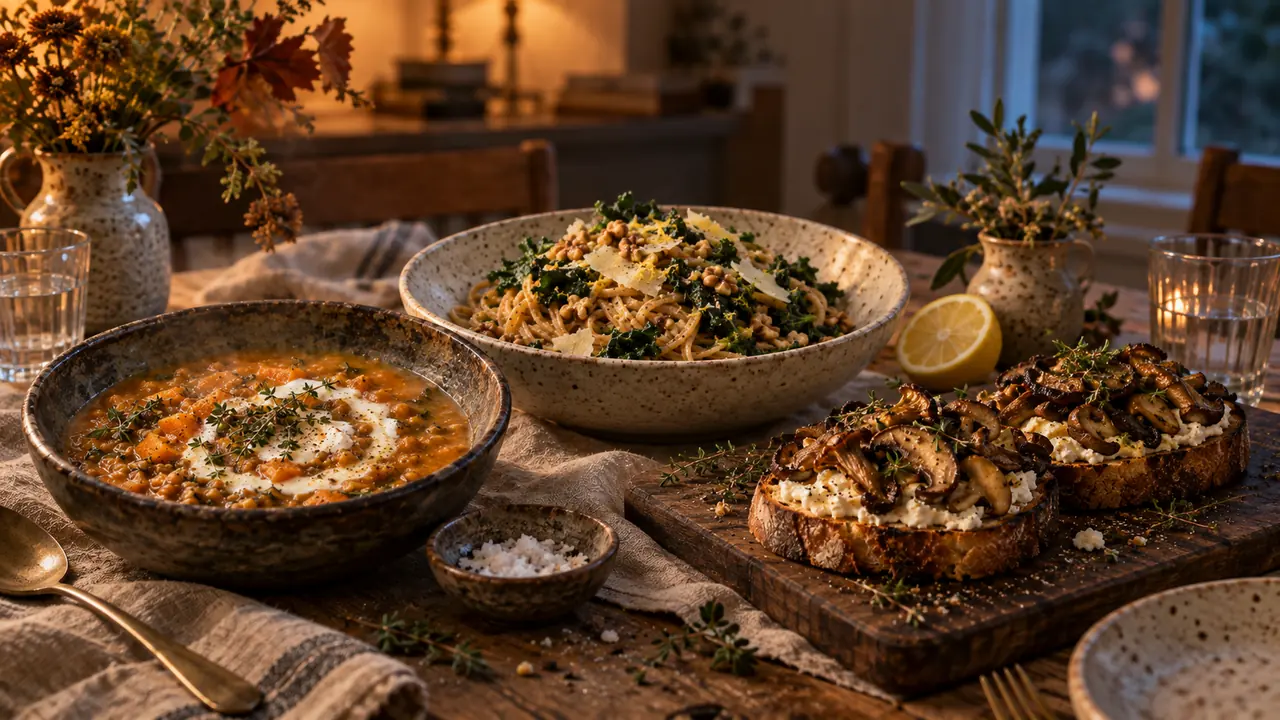
Three of the ten: lentils with squash, kale pasta and mushrooms on toast – less than an hour and a half of work between them.
Why that half hour feels harder in autumn than in summer
Summer cooking is rarely a problem. A salad, some bread, a tomato that's already perfect raw – it hardly takes an idea at all. Autumn asks for more: squash wants cutting, root vegetables cooking, cabbage trimming. And because of that, weeknight suppers in October end, remarkably often, with something nobody really wanted.
Yet it isn't the vegetables that are the trouble, it's the method. Three simple habits shorten almost any autumn dish:
High heat instead of a long time. At 220 °C, roast vegetables are done in 25 minutes; at 180 °C they take 45. Switch the oven on while you're still taking your coat off and the preheating time is a gift.
Cutting small is quicker than cooking long. Squash in wedges two centimetres thin needs a third of the time of chunky cubes. Savoy cabbage cut into fine ribbons wilts in four minutes.
Pulses from a jar are no compromise. Chickpeas, white beans and lentils from the store cupboard are, once rinsed, every bit as good as home-cooked ones – and they're the reason a quick supper still fills you up.
What's more, on a Tuesday evening healthy doesn't mean smaller, it means more nourishing. Plenty of vegetables, a pulse or an egg, a good fat and a little acidity to finish. All ten recipes are built on that pattern.
The ten recipes each one in half an hour
All quantities are for 2 servings; every dish can be doubled to serve four without the time increasing noticeably.
1. Roast vegetable tray bake with chickpeas and tahini-lemon sauce
30 minutes · 8 of them hands-on
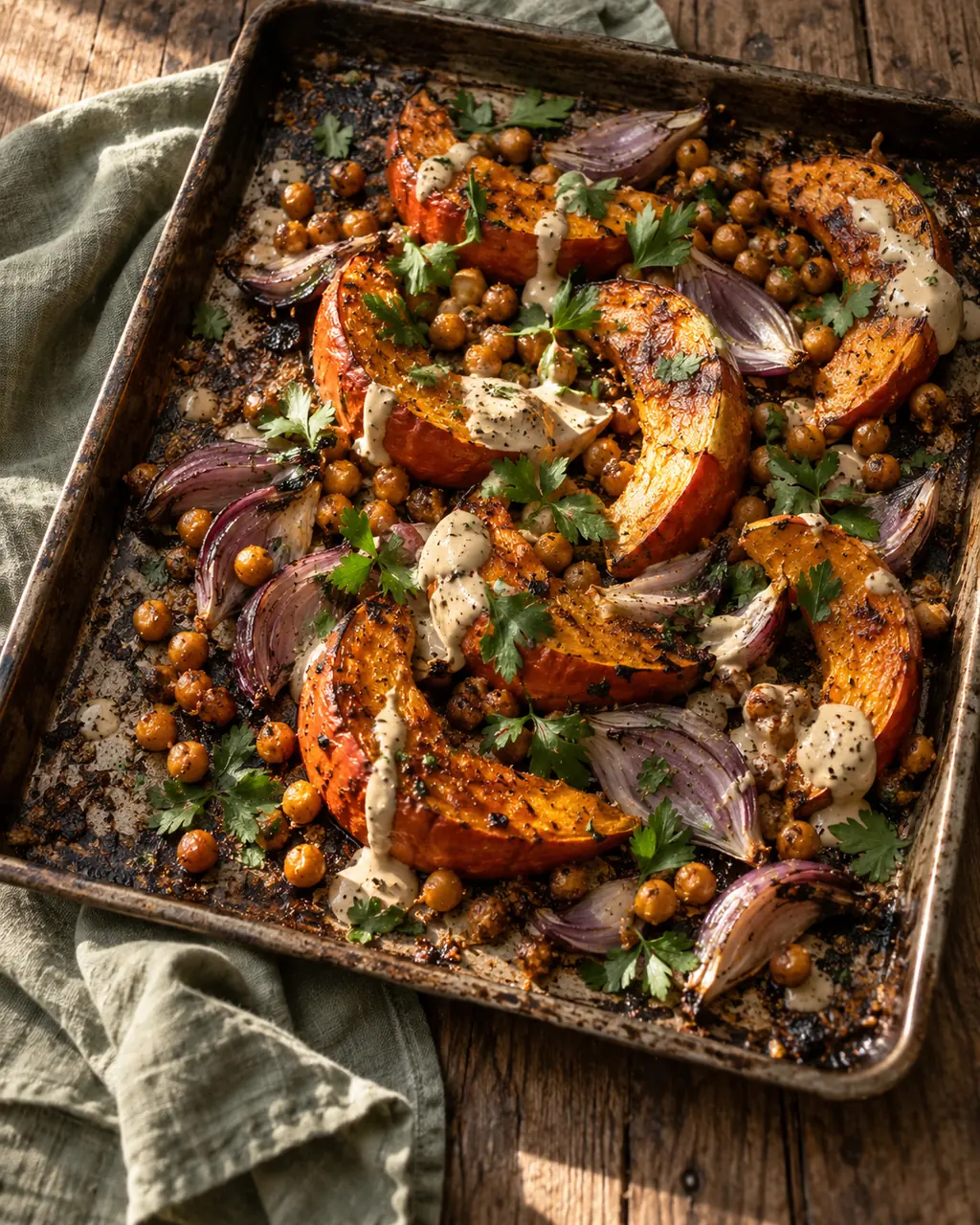
The dish that asks the least of your attention: tray in the oven, stir the sauce, done.
Ingredients for 2 servings
- 400 g Hokkaido (red kuri) squash, skin on, in thin wedges
- 2 red onions, cut into eighths
- 1 jar chickpeas (250 g drained weight), rinsed
- 3 tbsp olive oil
- 1 tsp ground cumin
- ½ tsp smoked paprika
- Salt, pepper
- 2 tbsp tahini
- Juice of ½ lemon
- 3 tbsp water
- 1 small garlic clove, grated
- 1 handful flat-leaf parsley
1. Preheat the oven to 220 °C conventional.
2. Toss the squash, onions and chickpeas on a baking tray with the oil, cumin, paprika, salt and pepper. Spread them out in a single layer – if everything is piled up, it steams instead of roasting.
3. Roast for 22–25 minutes, turning once halfway through.
4. Meanwhile, stir together the tahini, lemon juice, water and garlic. The mixture first turns thick and then creamy again – that's just as it should be. Season with salt.
5. Drizzle the vegetables with the sauce and scatter over the parsley.
Tip: Leftovers are lovely cold the next day with a spoonful of yoghurt – a better lunch than most canteens will give you.
2. Wholewheat pasta with kale, walnuts and lemon
20 minutes
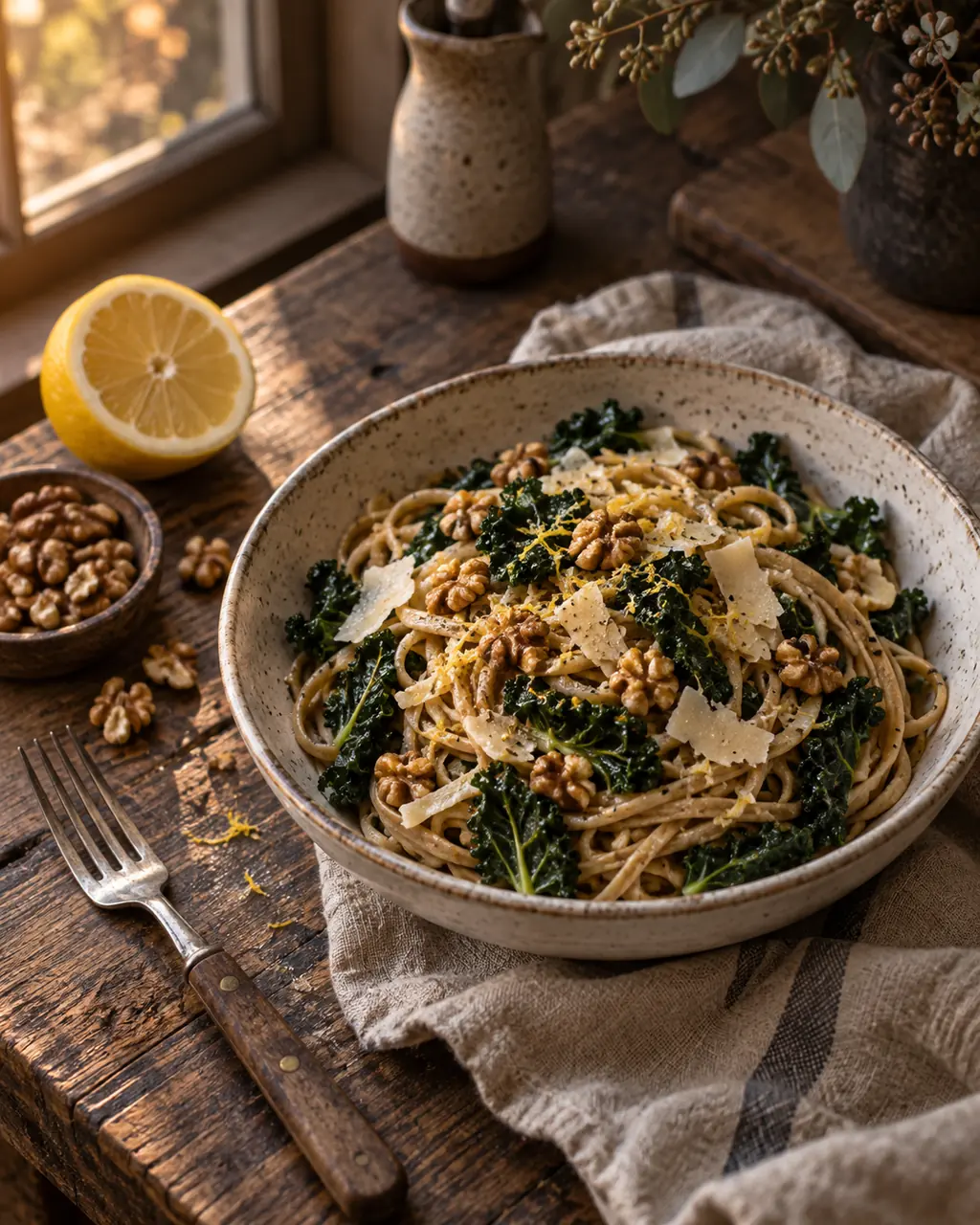
Kale doesn't need hours. Cut into fine ribbons and tossed briefly in oil, it softens in a few minutes and keeps its colour.
Ingredients for 2 servings
- 250 g wholewheat spaghetti or linguine
- 200 g kale, stripped from the stalks, in ribbons
- 60 g walnut halves
- 3 tbsp olive oil
- 2 garlic cloves, sliced
- 1 unwaxed lemon (zest and juice)
- 40 g Parmesan or a mature mountain cheese, grated
- Salt, pepper, a pinch of chilli flakes
1. Cook the pasta in plenty of salted water according to the packet. Save a cup of the cooking water.
2. Toast the walnuts in a dry frying pan until they smell fragrant, then tip them out and chop roughly.
3. Heat the oil in the pan, let the garlic sizzle briefly, add the kale and cook for 4–5 minutes, turning, until it wilts.
4. Drain the pasta and toss it with the kale and a little cooking water until everything is glossy.
5. Fold in the lemon zest and juice, the cheese, walnuts and chilli. Season generously with pepper.
Tip: From November, Savoy cabbage works instead of kale – it's milder and needs a minute less again.
3. Red lentils with squash, yoghurt and mint
25 minutes
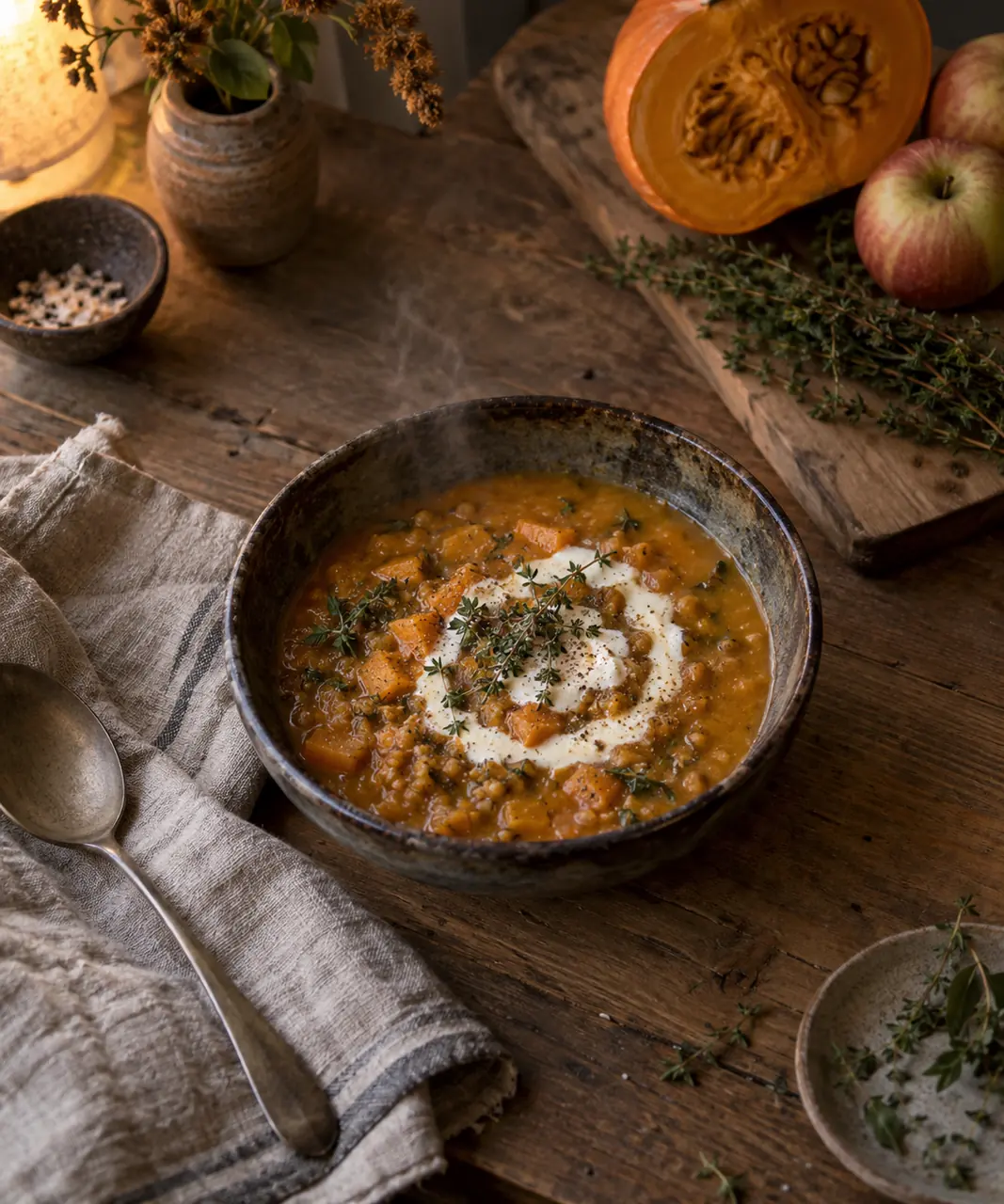
Red lentils are the quickest pulse of all: in twelve minutes they collapse into a silky base that carries everything else.
Ingredients for 2 servings
- 150 g red lentils
- 300 g squash, in small cubes
- 1 onion, diced
- 2 cm fresh ginger, grated
- 1 tsp turmeric, 1 tsp cumin
- 500 ml vegetable stock
- 2 tbsp oil
- 150 g yoghurt
- 1 handful mint or 3 sprigs thyme
- Salt, juice of ½ lemon
1. Soften the onion in the oil until translucent, then add the ginger and spices and toast for 30 seconds.
2. Add the squash and lentils and pour over the stock.
3. Cover and simmer for 12–15 minutes, until the lentils have collapsed and the squash is soft. Season with salt and lemon.
4. Ladle into deep bowls, swirl over the yoghurt and top with the herbs.
Tip: If you like, toast a spoonful of pumpkin seeds in a pan – it adds the crunch that would otherwise be missing.
4. Thyme mushrooms on toasted bread
20 minutes
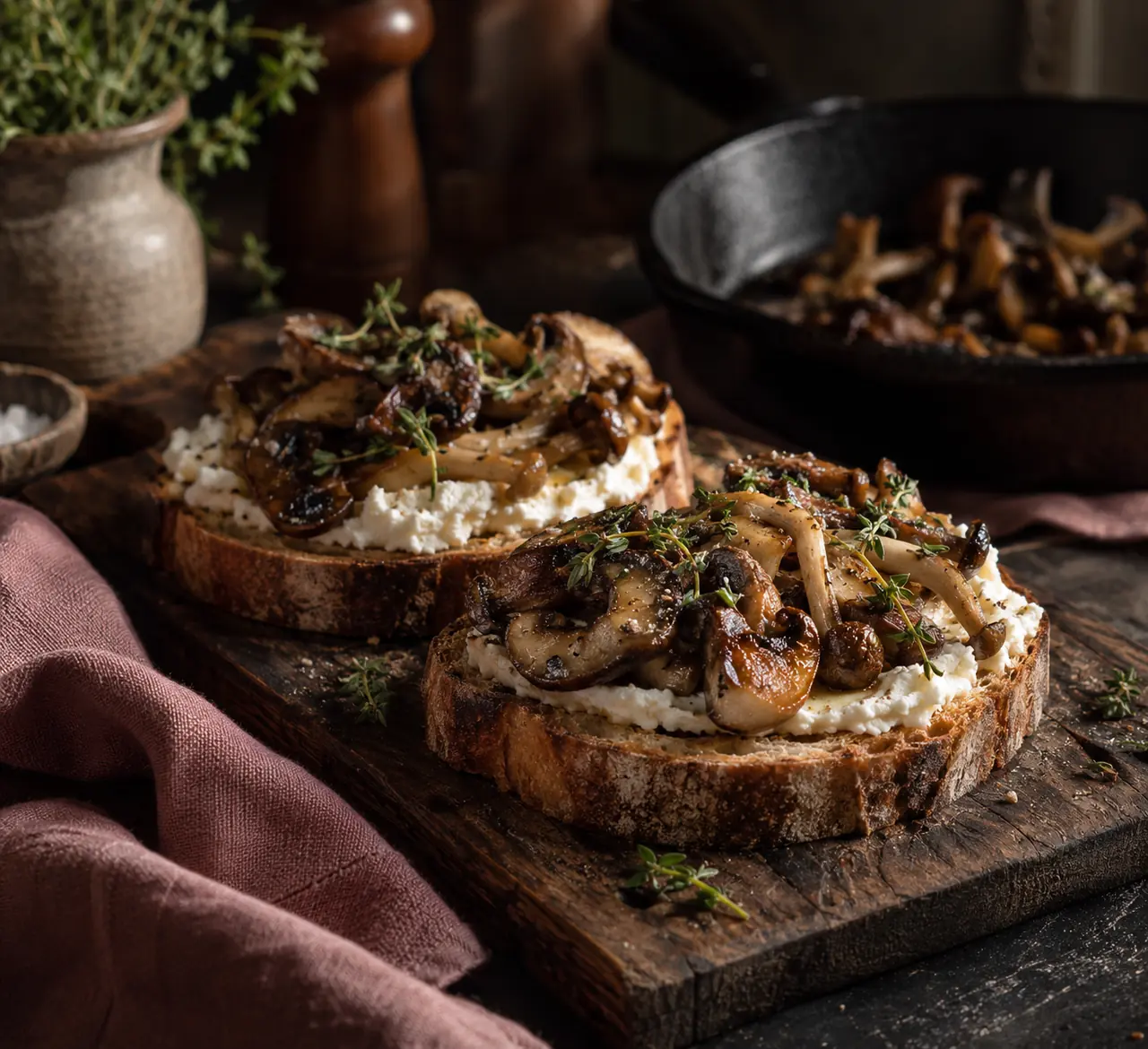
The quickest dish on the list – and the one where the quality of the ingredients matters most.
Ingredients for 2 servings
- 400 g mixed mushrooms (chestnut mushrooms, king oyster, oyster mushrooms)
- 2 tbsp olive oil, 1 tbsp butter
- 2 garlic cloves, chopped
- 3 sprigs thyme
- 4 slices of hearty sourdough bread
- 100 g ricotta or cream cheese
- Salt, pepper, a little lemon zest
1. Wipe the mushrooms clean with a cloth rather than washing them. Slice the large ones, halve the small ones.
2. Get the pan really hot, add the oil and fry the mushrooms in a single layer – don't stir until they've taken on some colour. Only then turn them and add salt.
3. Add the butter, garlic and thyme and toss for a minute.
4. Toast the bread, spread it with ricotta and pile the mushrooms on top. Finish with lemon zest and pepper.
Tip: Salt only after browning. Salted too early, mushrooms release their water and stew in their own juices.
5. Autumn shakshuka with squash and chickpeas
25 minutes
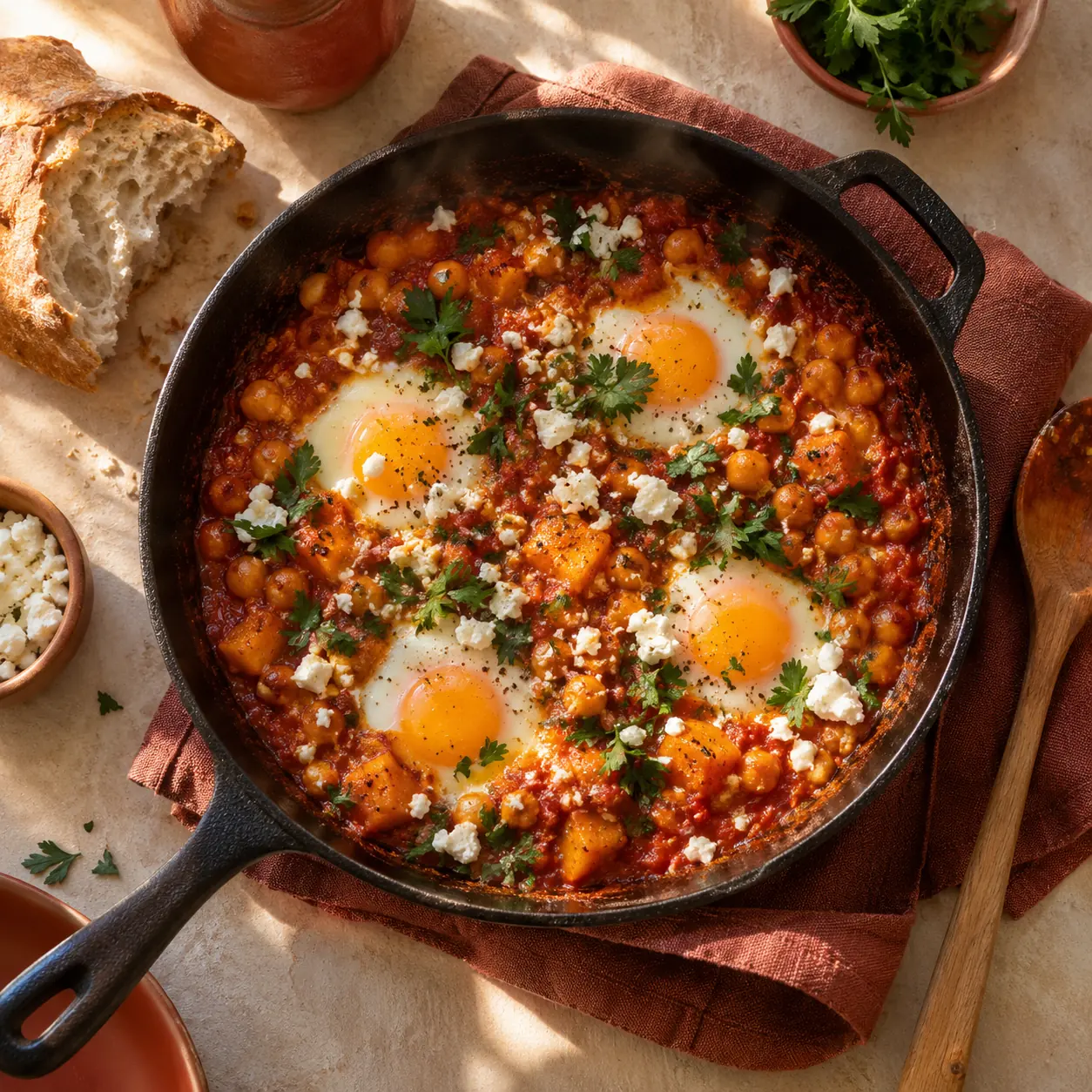
Eggs in tomato sauce are a classic of quick cooking – with squash and chickpeas they become a filling autumn supper.
Ingredients for 2 servings
- 300 g squash, in small cubes
- 1 onion, 1 red pepper, diced
- 1 tin chopped tomatoes (400 g)
- 1 small jar chickpeas (150 g drained weight), rinsed
- 1 tsp sweet paprika, ½ tsp cumin
- 4 eggs
- 2 tbsp olive oil, salt, pepper
- Parsley, 50 g feta (optional)
1. Fry the onion and pepper in the oil for 3 minutes, add the squash and fry for another 3 minutes.
2. Add the spices, then the tomatoes and chickpeas, and season with salt. Simmer uncovered for 10 minutes.
3. Press four hollows into the sauce and slide an egg into each. Cover and cook for 6–8 minutes, until the whites are set and the yolks still soft.
4. Serve with parsley and crumbled feta, with bread alongside.
6. Tray bake with fennel, apple and salmon
30 minutes
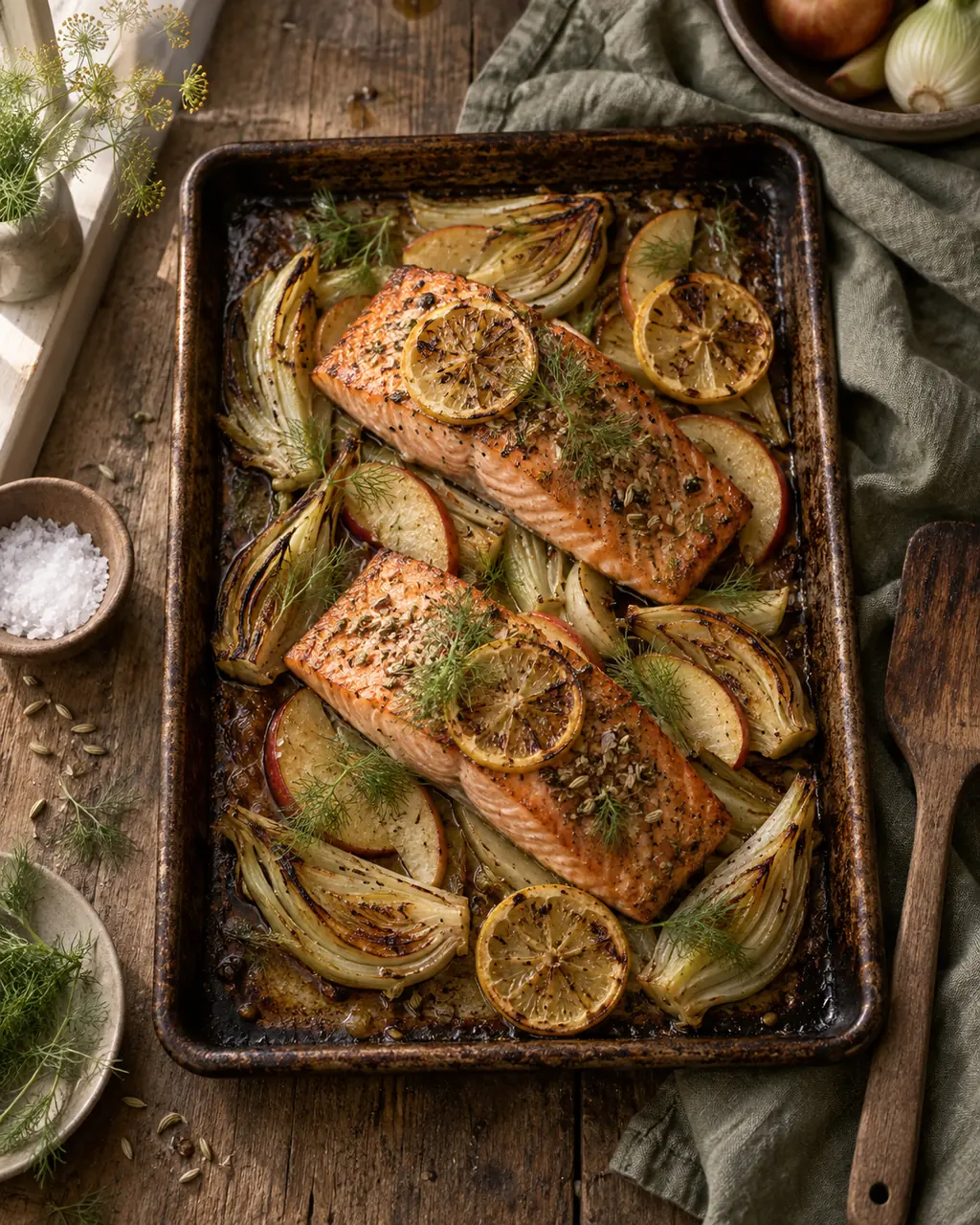
The fennel and apple cook beneath the fish – one single tray, no frying pan.
Ingredients for 2 servings
- 2 fennel bulbs, in thin wedges (keep the fronds)
- 1 tart apple, in wedges
- 2 salmon fillets of 150 g each (or 200 g smoked tofu for the vegetarian version)
- 3 tbsp olive oil
- 1 tsp fennel seeds, lightly crushed
- ½ lemon, sliced
- Salt, pepper
1. Preheat the oven to 200 °C. Toss the fennel, apple, oil, fennel seeds, salt and pepper on the baking tray.
2. Roast for 15 minutes.
3. Take the tray out, lay the fish on top, season with salt and cover with the lemon slices.
4. Roast for a further 10–12 minutes, until the salmon is only just translucent in the middle. Scatter over the fennel fronds.
Tip: Smoked tofu only goes onto the tray for the last 8 minutes, otherwise it dries out.
7. Brussels sprouts and potato hash with egg
30 minutes
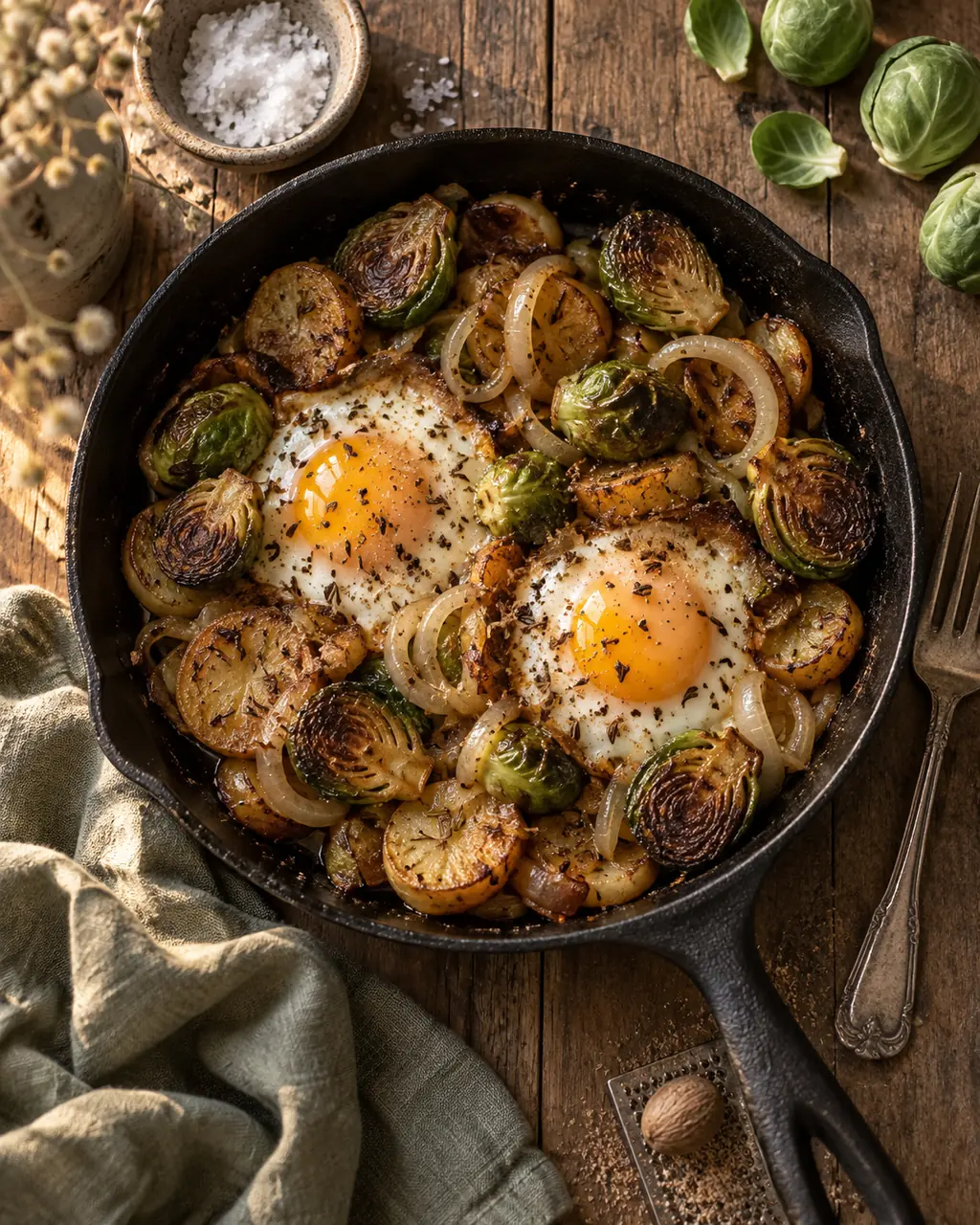
Brussels sprouts halved and fried cut side down have nothing in common with the overcooked sprouts of memory: nutty, dark on the outside, tender-crisp within.
Ingredients for 2 servings
- 400 g waxy potatoes, thinly sliced
- 300 g Brussels sprouts, trimmed and halved
- 1 onion, in rings
- 3 tbsp oil
- 1 tsp caraway seeds (whole)
- 2 eggs
- Salt, pepper, nutmeg
1. Par-boil the potato slices in salted water for 6 minutes, drain and let them steam dry.
2. Heat the oil in a large frying pan, lay the sprouts in cut side down and leave them untouched for 4 minutes.
3. Add the potatoes, onion and caraway and fry for 10 minutes, turning now and then, until everything has taken on colour. Season.
4. Push aside two hollows, crack the eggs into them, cover and let them set for 4 minutes.
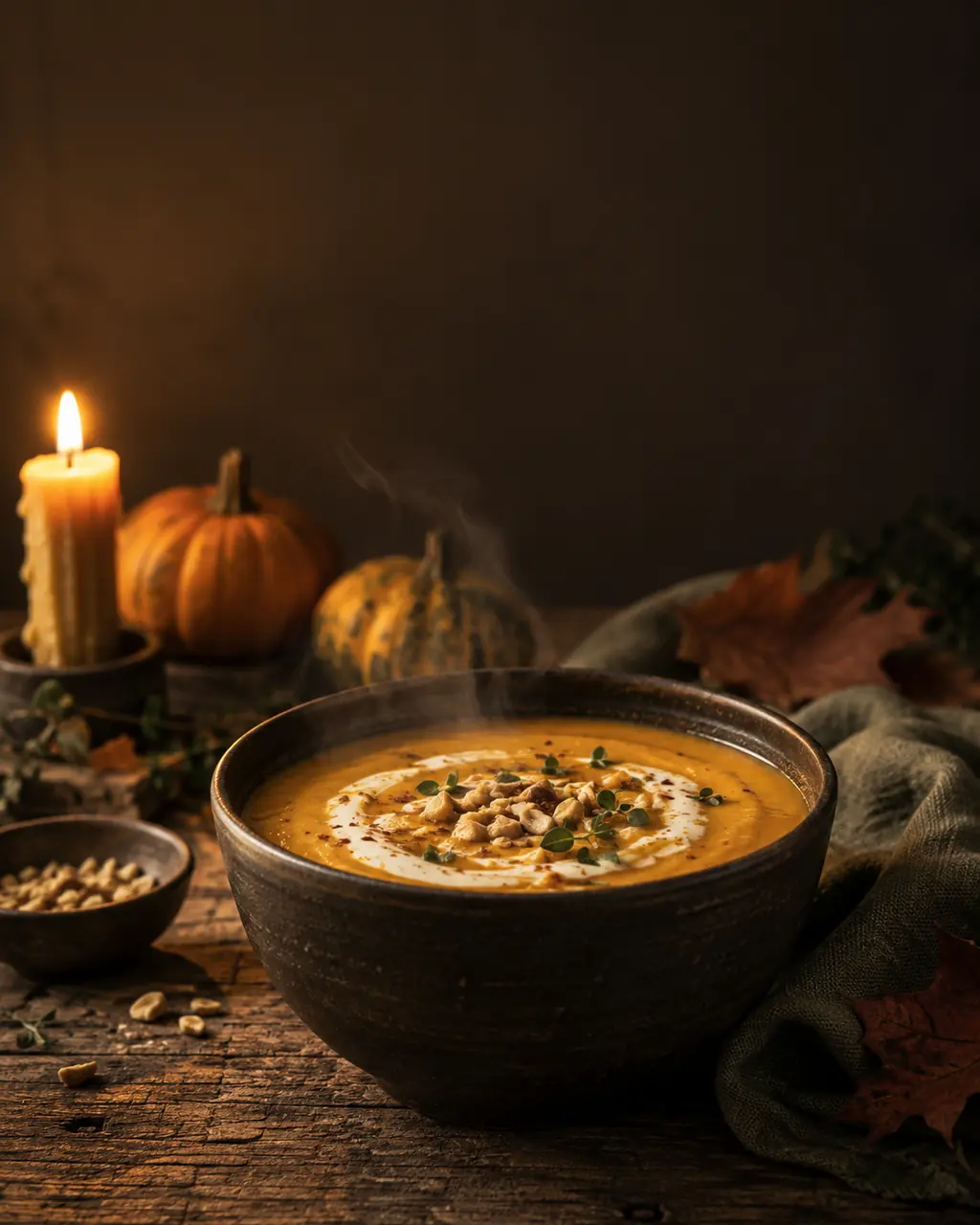
8. Sweet potato soup with ginger and peanut
25 minutes
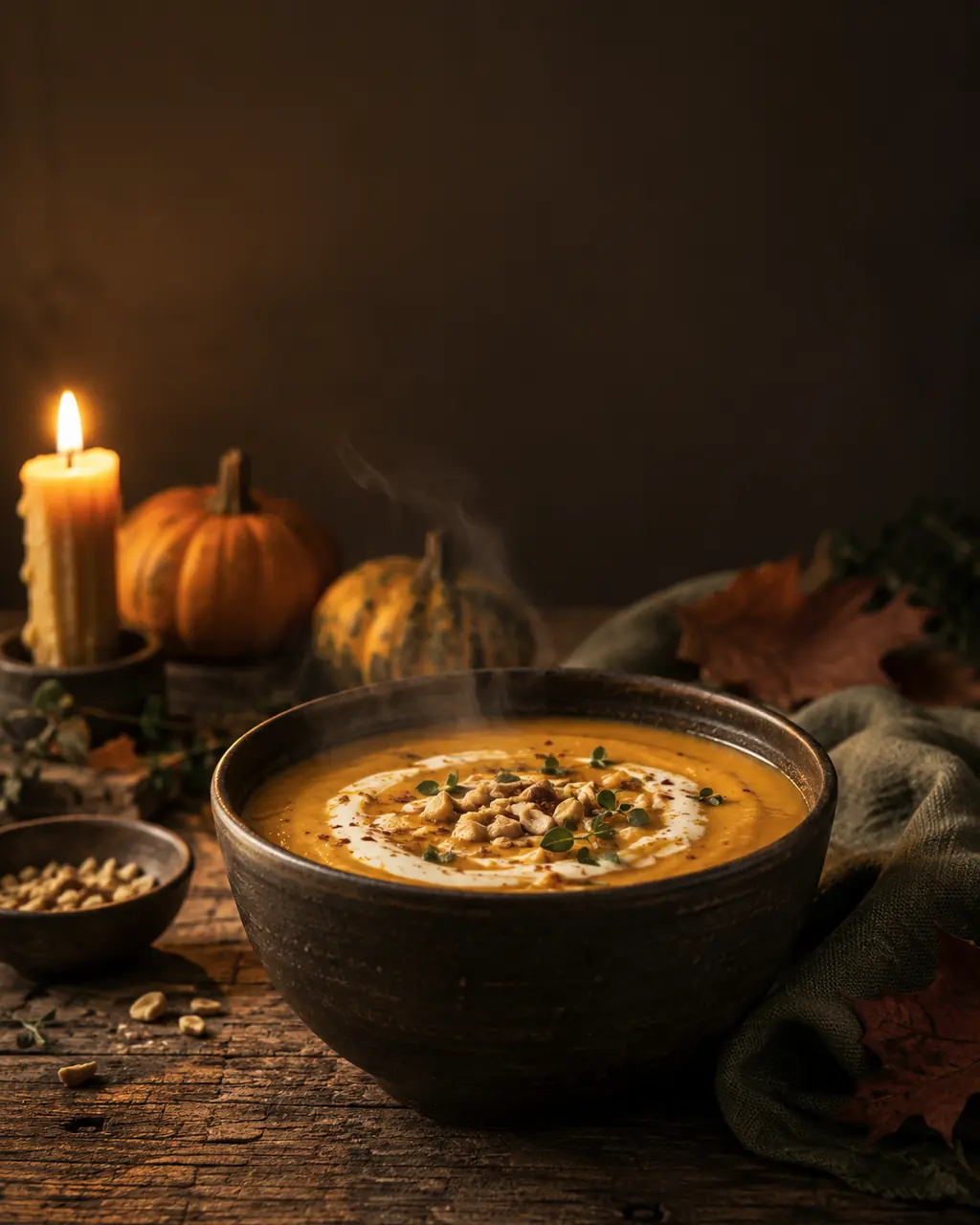
Diced small, sweet potato needs only 15 minutes – and the peanut butter turns a simple soup into a proper supper.
Ingredients for 2 servings
- 600 g sweet potatoes, in 1.5 cm cubes
- 1 onion, 2 cm fresh ginger, 1 garlic clove
- 700 ml vegetable stock
- 2 tbsp peanut butter (no added sugar)
- 100 ml coconut milk
- 1 tbsp oil, salt, lime juice
- Toasted peanuts and coriander to serve
1. Finely chop the onion, ginger and garlic and soften them in the oil.
2. Add the sweet potatoes, pour in the stock and simmer for 15 minutes until soft.
3. Stir in the peanut butter and coconut milk and blend until smooth. Season with salt and lime.
4. Scatter with peanuts and coriander.
9. White beans with Savoy cabbage, rosemary and garlic bread
20 minutes
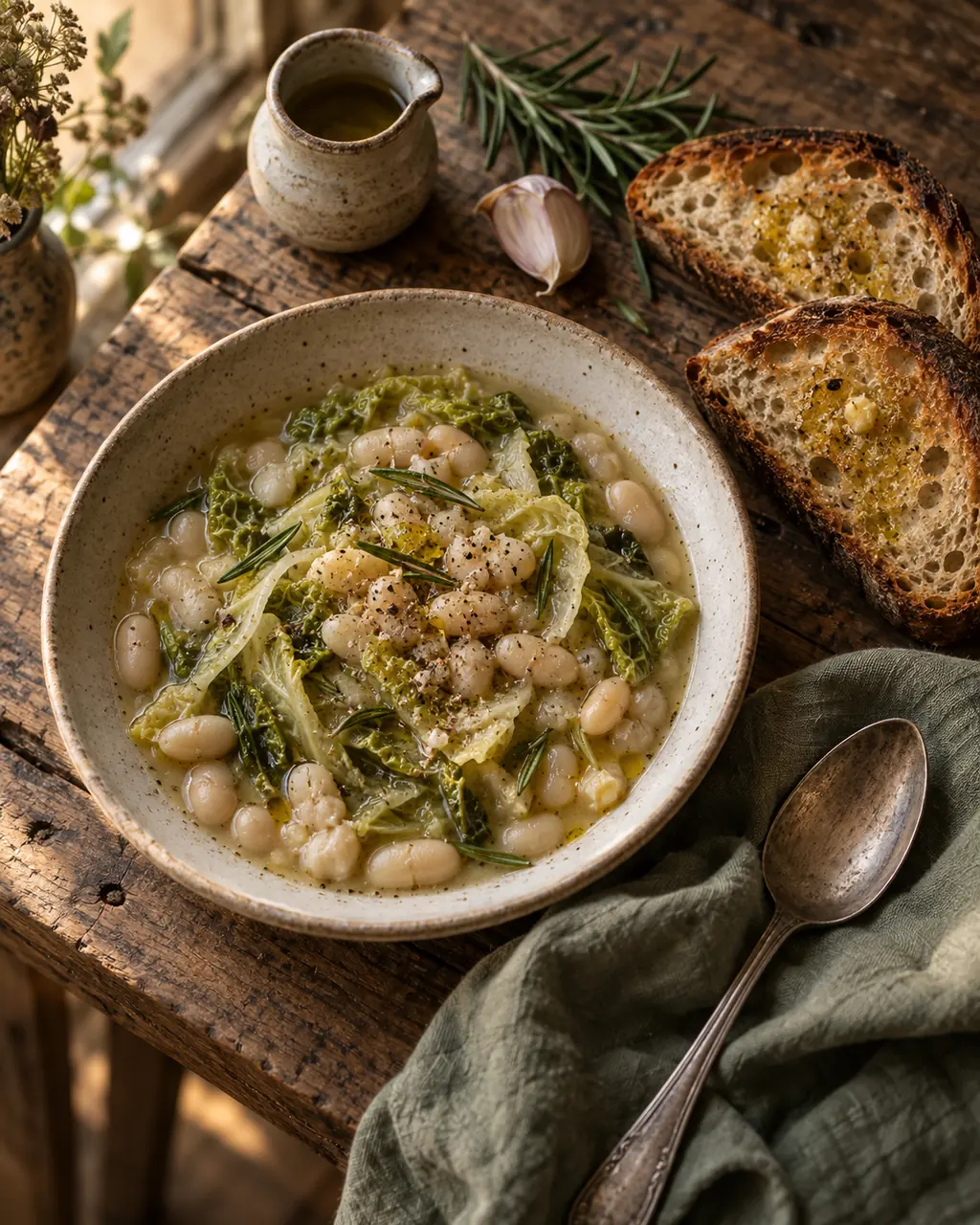
A stew without the stewing time – the beans are already cooked, and the cabbage needs only minutes.
Ingredients for 2 servings
- 300 g Savoy cabbage, in fine ribbons
- 2 jars white beans (250 g drained weight each), rinsed
- 1 onion, 2 garlic cloves
- 2 sprigs rosemary, needles finely chopped
- 200 ml vegetable stock
- 3 tbsp olive oil, salt, pepper
- 4 slices of bread, 1 garlic clove for rubbing
1. Soften the onion and garlic in the oil, then add the rosemary.
2. Add the cabbage and cook for 3 minutes, turning.
3. Add the beans and stock and simmer for 8 minutes. Crush a third of the beans against the side of the pan – that thickens the sauce.
4. Toast the bread, rub it with the halved garlic clove, drizzle with a thread of olive oil and serve alongside.
10. Buckwheat bowl with beetroot, pear and feta
25 minutes
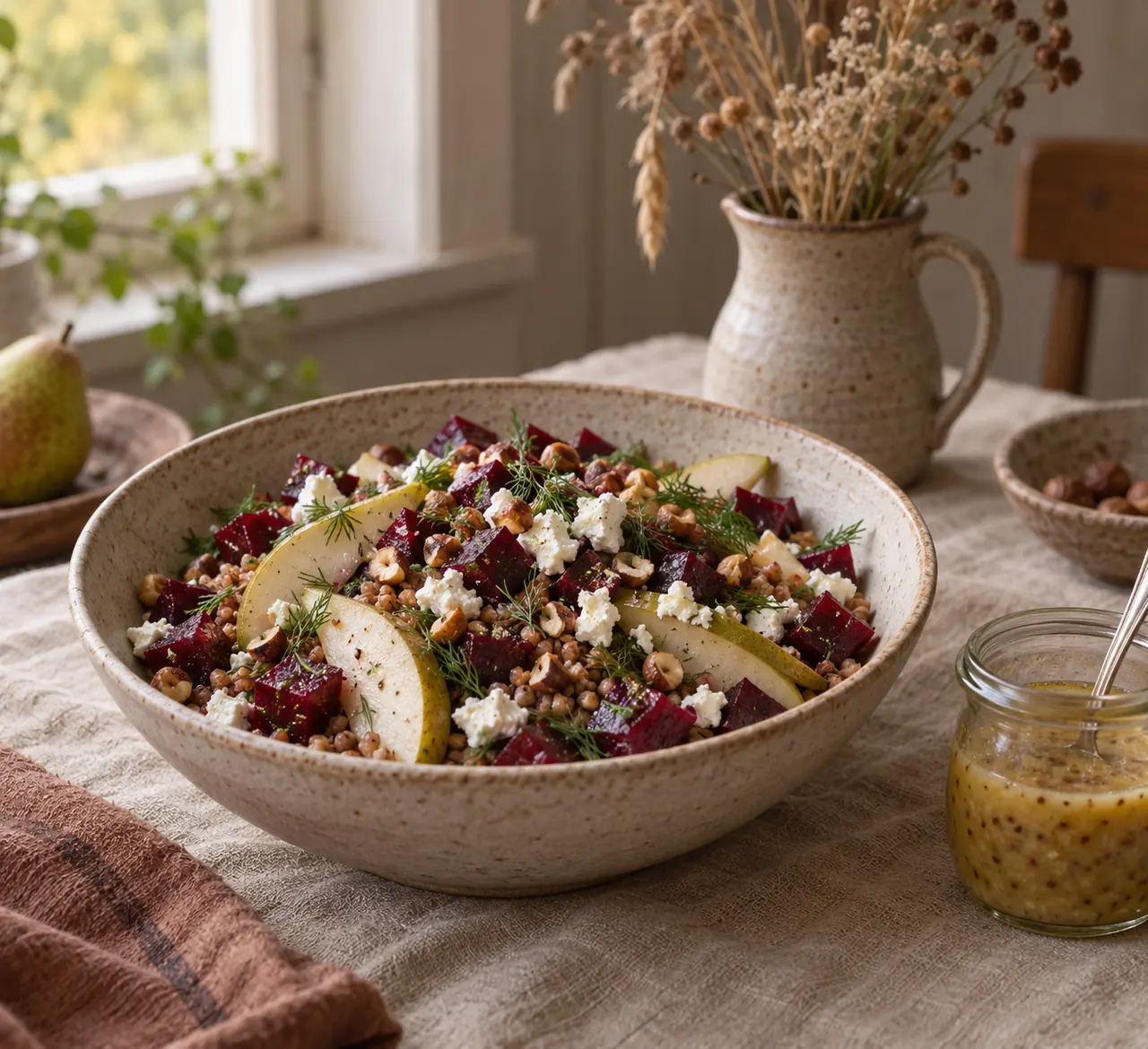
The only raw ingredient is the pear – and it's exactly what makes the difference.
Ingredients for 2 servings
- 150 g buckwheat
- 250 g ready-cooked beetroot, diced
- 1 firm pear, in wedges
- 80 g feta
- 40 g hazelnuts, toasted and chopped
- 2 tbsp olive oil, 1 tbsp cider vinegar, 1 tsp mustard, 1 tsp honey
- Salt, pepper, a few sprigs of dill
1. Cook the buckwheat in twice its volume of salted water for 12–15 minutes, drain and let it steam dry.
2. Whisk the oil, vinegar, mustard, honey, salt and pepper into a dressing.
3. Toss the buckwheat, still lukewarm, with half the dressing, then fold in the beetroot.
4. Arrange the pear wedges, feta, hazelnuts and dill on top and pour over the rest of the dressing.
Tip: Beetroot stains everything – fold it in at the very end, otherwise the whole bowl turns pink.
Post from the Villa
New recipes, guides and sewing magazines
A few times a year, never in a rush – and now in English too.
What saves the store cupboard in autumn
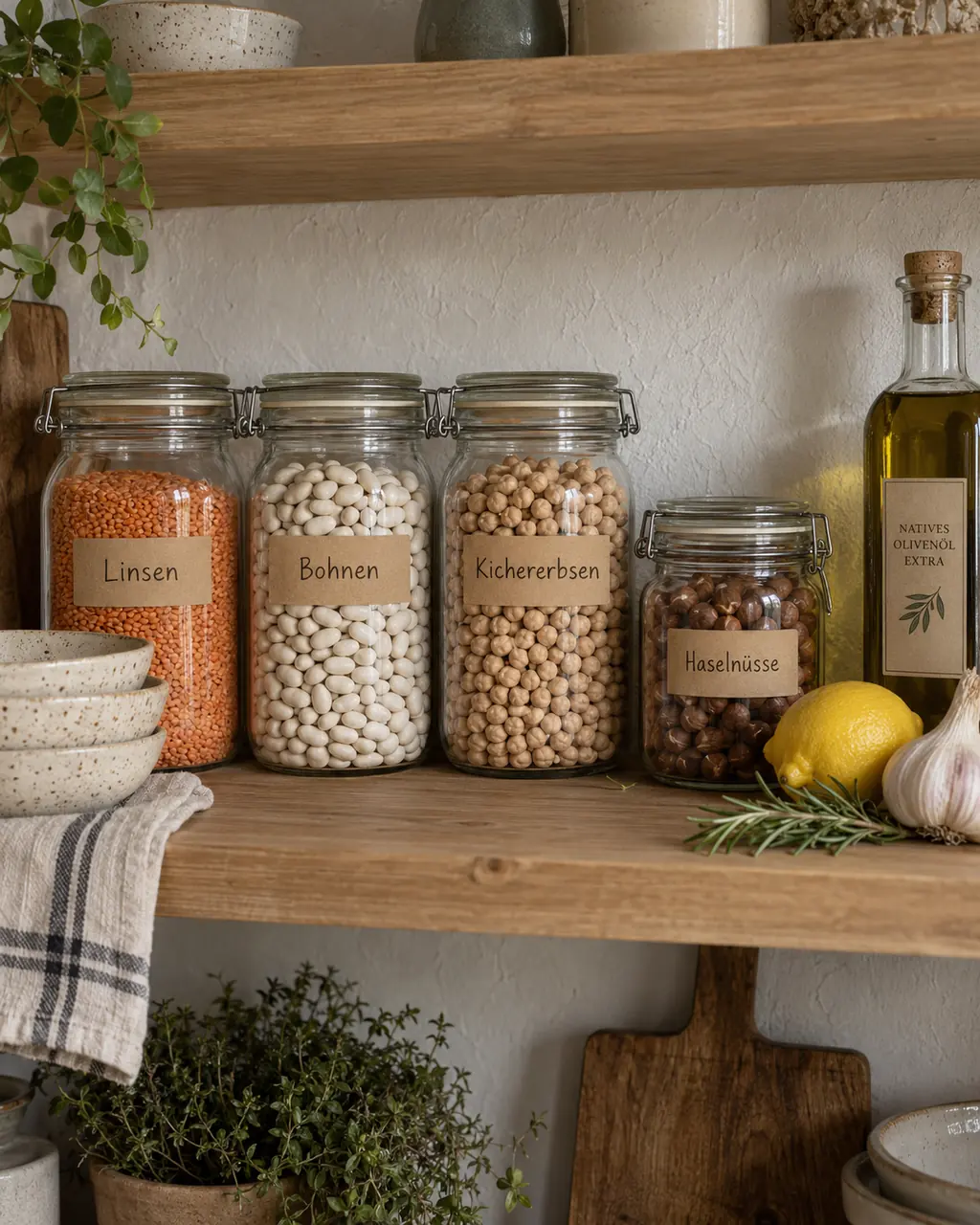
Look through these ten dishes and you'll spot a short shopping list behind them. With these things in the house, something is possible on almost any evening, without anyone having to go shopping first:
- Chickpeas, white beans and red lentils
- A tin of chopped tomatoes
- Tahini or peanut butter
- Walnuts, hazelnuts, pumpkin seeds
- A lemon, a good vinegar, mustard
- Eggs
- Onions, garlic, potatoes
All you then need fresh is whatever is in season: squash, cabbage, mushrooms, root vegetables, apples and pears.
Three things to do at the weekend that save time during the week
Meal prep doesn't have to mean filling twelve boxes on a Sunday. Three small things are enough:
Cook grains ahead. Buckwheat, millet or brown rice keep for three days in the fridge and take twelve minutes off any dish.
Toast nuts once. A panful, cooled and tipped into a jar – enough for a week.
A dressing in reserve. Oil, vinegar, mustard, honey and salt shaken in a screw-top jar keeps for two weeks and suits a bowl, roast vegetables and salad alike.
Frequently asked questions answered briefly
How do I really manage it in 30 minutes?
The oven goes on first of all, before you even start chopping. Water for pasta or grains goes on straight away too. Most of the time lost in weeknight cooking is waiting time that could have been run in parallel at the start.
Are pulses from a jar as good as home-cooked ones?
For everyday cooking, yes. Rinsing removes much of the salt and the compounds that sit heavily in the stomach. In flavour, beans from a jar are often even better than dried ones, because they're more evenly cooked.
Can I make the dishes vegan?
Nine out of ten, yes. Feta can be replaced with toasted pumpkin seeds or nutritional yeast, yoghurt with an unsweetened plant-based version, ricotta with puréed white beans and lemon. For the salmon tray bake, the tofu alternative is right there in the recipe.
Why do my roast vegetables go soft instead of crisp?
Usually for two reasons: the temperature is too low and the tray too full. From 200 °C upwards and in a single layer, vegetables roast; below that, they steam. If in doubt, use two trays.
What do I do with leftovers?
Almost everything here tastes good the next day, cold or lukewarm. Roast vegetables, beans and bowls are even better after a night in the fridge. Only the egg dishes are eaten the same evening.
Read on when you'd like a little more
If these everyday dishes leave you wanting something bigger: the Autumn Kitchen (in German) gathers the season's more elaborate recipes, among them the pumpkin focaccia and the chestnut risotto with porcini (both in German). When guests are coming, the autumn menu for guests (in German) takes you through a whole evening in which almost everything can be prepared ahead – and for a relaxed get-together there's my autumn party food, a buffet that's ready before the doorbell rings. And as Advent draws near, there's Christmas baking waiting too: soft Elisenlebkuchen and a quark stollen without yeast.
Villa Bloom & Co. · Newsletter
Post from the Villa& a little country-house happiness
A few times a year I write to you: new posts, seasonal decorating, recipes and sewing patterns – never in a rush and never any spam. You can unsubscribe at any time with a single click.

About the author
Jona · Villa Bloom & Co.
I write about country style, the garden, sewing and cosy living. What I sew, bake and do in the garden myself, I describe from my own experience. Much of what you'll find here is inspiration – ideas I find beautiful and love to pass on. Some of the mood images were created with the help of AI. More about me →