Recipes · Christmas baking ·
Baking quark stollen moist, without yeast
When the first stollen of Advent appears on the table, thickly dusted with icing sugar and still smelling faintly of butter, Christmas isn't far away. You cut a slice, then another – and notice how quickly a stollen gets smaller.
Jump to: The recipe · Step by step · Tips · When something goes wrong · Storing · Variations
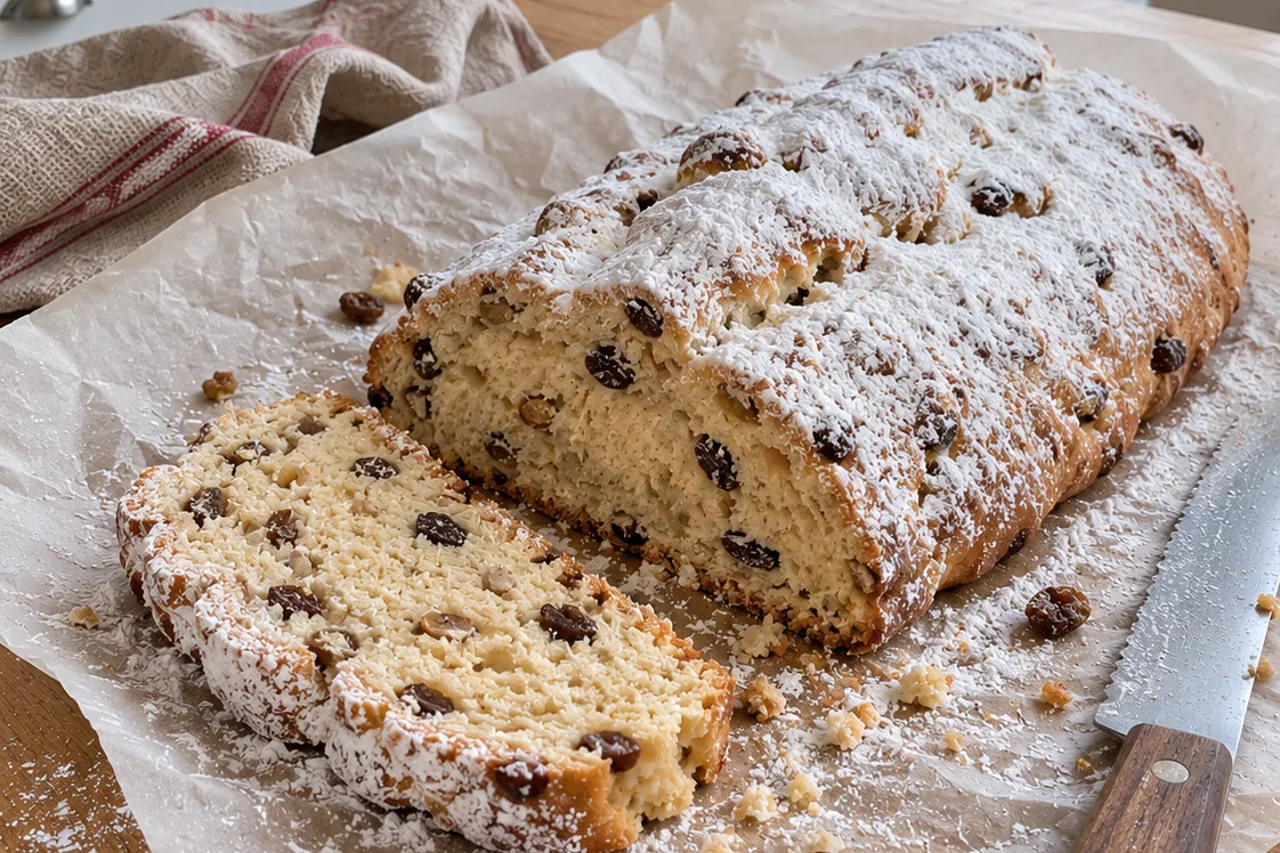
I bake this quark stollen every year. My recipe is written on a squared scrap of paper, and it is gloriously uncomplicated: no yeast, no proving, no weeks of waiting. All the ingredients are kneaded together by hand, baked for an hour, brushed with butter and dusted with icing sugar. That's all there is to it.
Here you'll find the recipe step by step, made with fresh lemon and orange zest – or, when time is short, ready-grated zest from a sachet – along with tips on shaping and storing it, and ideas for adapting the stollen to your own taste.
From this series
Christmas bakingrecipes for Advent
Most of the other recipes in this series are in German for now – the English versions will follow.
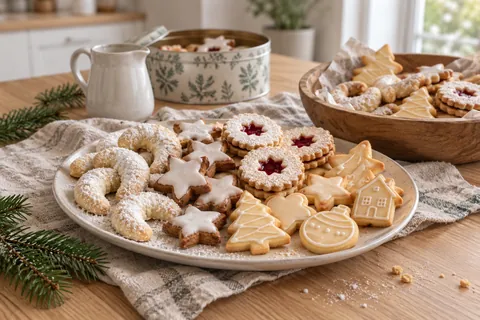
Christmas biscuits: 4 classics
Vanillekipferl, Spitzbuben, cinnamon stars and butter biscuits – with a baking plan. Read the recipe →
Baking quark stollen
Moist, made without yeast and without weeks of ripening.
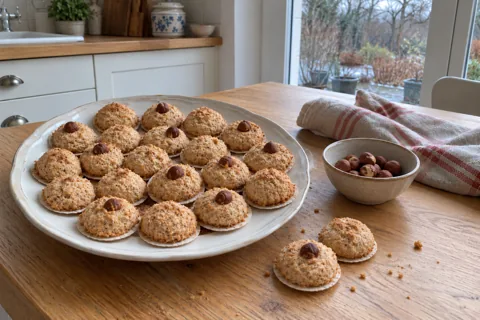
Baking hazelnut macaroons
Quick to make and perfect for leftover egg whites. Read the recipe →
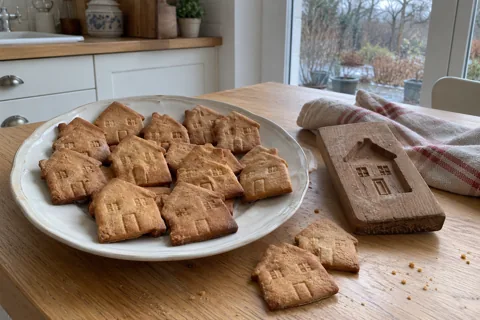
Baking spekulatius at home
Spiced and crisp – with or without a wooden mould. Read the recipe →
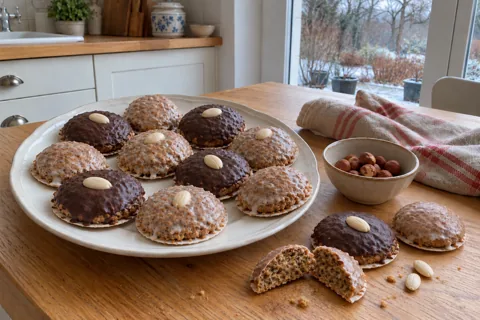
Baking Elisenlebkuchen
Soft, moist and made entirely without flour. Read the recipe →
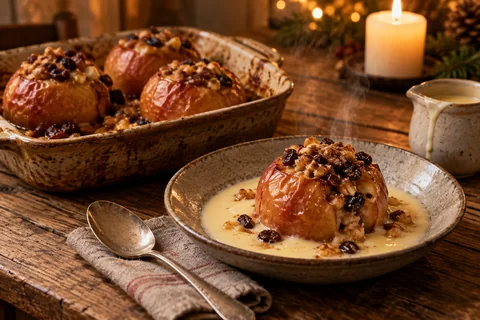
Baked apple with marzipan
Straight from the oven, with warm vanilla sauce. Read the recipe →
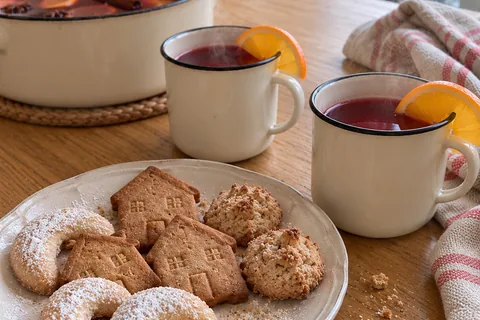
Making children's punch
Warm, fruity and entirely alcohol-free. Read the recipe →
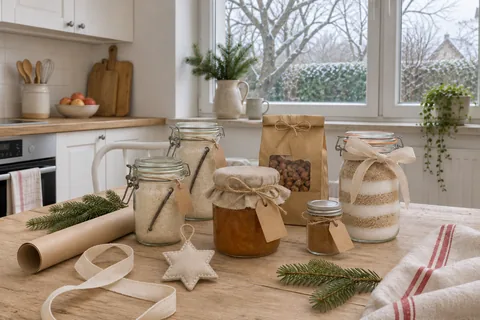
Gifts from the kitchen
Five little jars to give away. Read the recipes →
What makes a quark stollen baking powder instead of yeast
The classic Christmas stollen is a yeasted bake. The dough has to rise several times, the fruit is soaked well in advance, and after baking the stollen needs a few weeks' rest before its flavour has fully developed. That's wonderful, but it's also a small project you have to plan for early in November.
A quark stollen takes a different path. Instead of yeast, baking powder makes the dough rise. The quark – a soft, fresh German curd cheese – keeps it moist and gives it a gently fresh note that goes beautifully with raisins, nuts and citrus. Because nothing has to prove, the dough is ready in no time and goes straight into the oven. And because a quark stollen doesn't need weeks to mature, it tastes just as it should only a few days after baking.
That makes it the ideal stollen for anyone with no experience of yeast dough, for spontaneous Advent weekends – and for everyone who would rather take on a little less in December.
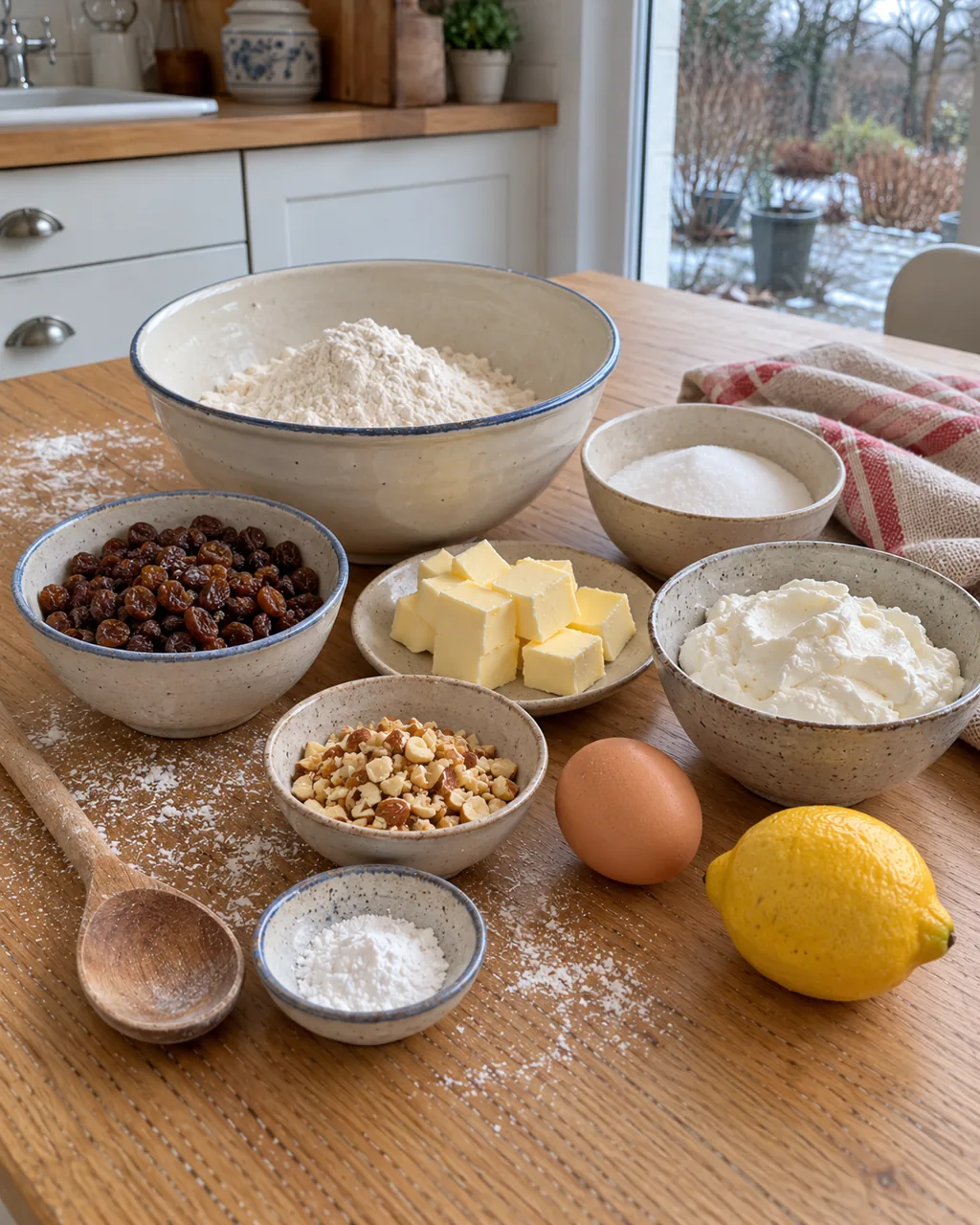
The recipe for one large stollen
Makes 1 large stollen (about 30–35 cm) · about 20 min. to prepare · Baking: 160 °C fan, preheated, lower third of the oven, about 60 minutes
For the dough
- 500 g plain wheat flour, German type 405 (for the dough)
- 1 ½ sachets baking powder (about 22 g, German sachets of 15 g each)
- 250 g soft butter
- 500 g low-fat quark
- 250 g caster sugar
- 2 sachets vanilla sugar (16 g)
- 2 eggs (medium)
- 200 g raisins
- 250 g walnuts, roughly chopped
- finely grated zest of 1 unwaxed lemon and 1 unwaxed orange
- 250 g plain wheat flour, type 405 (for kneading in)
Instead of fresh zest (when time is short)
- 1 sachet ready-grated lemon zest (6 g, e.g. Finesse by Dr. Oetker)
- 1 sachet ready-grated orange zest (6 g, e.g. Finesse by Dr. Oetker)
To finish
- 100 g butter, melted, for brushing
- 5 tbsp icing sugar for dusting
Step by step kneaded by hand
- Preheat the oven. Preheat the oven to 160 °C fan and line a baking tray with baking paper.
- Set out the dry ingredients. Tip the first 500 g of flour onto the worktop or into a large bowl and mix it with the baking powder. Press a well into the centre.
- Add the rest of the dough ingredients. Put the soft butter in pieces, the quark, sugar, vanilla sugar, eggs and the grated lemon and orange zest into the well. If you're using the sachets instead, add their contents now.
- Knead by hand. Knead everything together with your hands into a dough. To begin with it's soft and sticky – that's exactly as it should be.
- Work in the raisins and walnuts. Scatter the raisins and chopped walnuts over the dough and knead them in briefly until they're evenly spread.
- Knead in the remaining flour. Sprinkle the second 250 g of flour over the worktop a little at a time and knead it in completely. After that the dough no longer sticks and is easy to shape. Don't knead for longer than you need to – a quark dough turns tough if it's overworked.
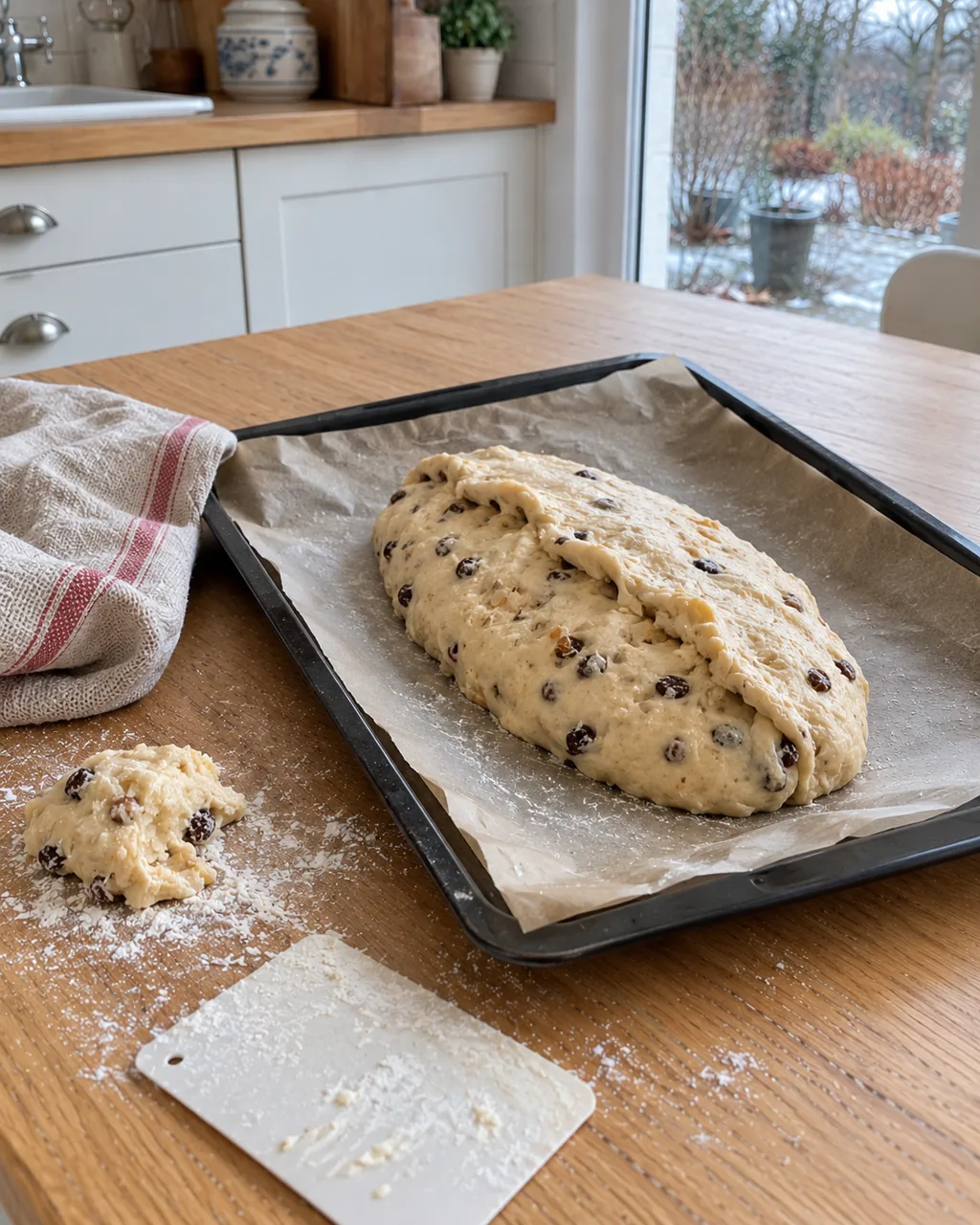
- Shape the stollen. Shape all the dough into one large, long oval loaf about 30 to 35 cm long. For the classic stollen shape, press a groove along its length, a little off centre, with a rolling pin or the side of your hand, then fold the narrower part over the wider one. This creates the little ridge that tells you at a glance it's a stollen. Lay the stollen on the baking tray.
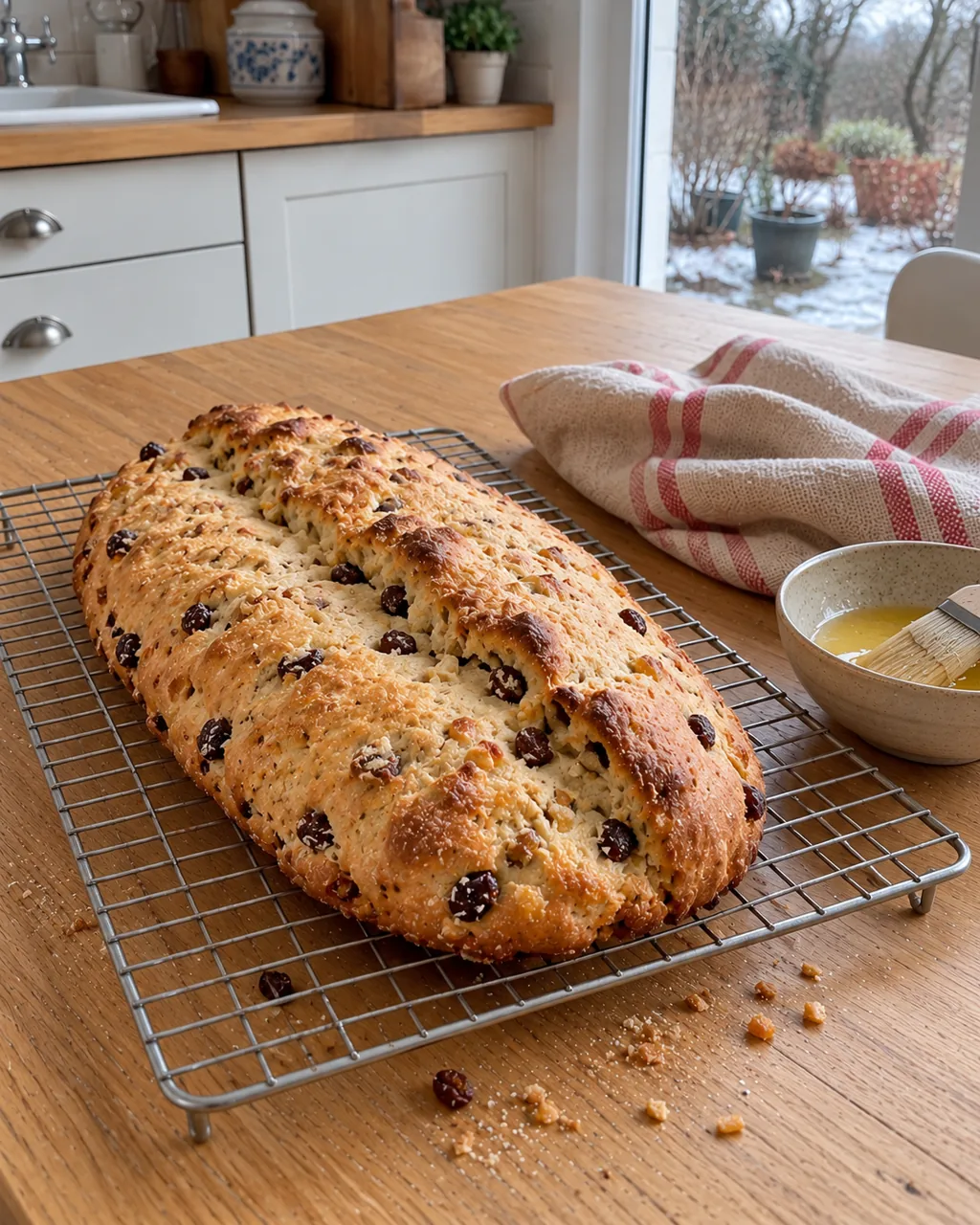
- Bake. Bake in the lower third of the preheated oven for about 60 minutes. If the top browns too much before the time is up, simply lay a sheet of baking paper or foil loosely over it.
- Brush with butter. Take the stollen out of the oven and, while it's still hot, brush it all over with the 100 g of melted butter. The butter soaks in, keeps the stollen moist and helps the icing sugar to cling later on.
- Leave to cool and dust. Leave the stollen to cool completely, then dust it thickly with the 5 tbsp of icing sugar through a fine sieve.
Tips for a stollen that turns out well little tricks
Let the butter get properly soft. Unlike shortcrust pastry, here the butter should be soft so that it combines well with the quark. Best to take it out of the fridge an hour beforehand.
Drain very wet quark. If there's a lot of liquid sitting on top of the quark, pour it off first. Otherwise the dough needs more flour and becomes firmer.
Check with a skewer. Every oven bakes a little differently. Towards the end of the baking time, push a wooden skewer into the thickest part: if no damp dough clings to it, the stollen is done.
Soak the raisins beforehand. If you like, soak the raisins in a little orange juice the evening before and drain them well before using. They become especially plump and juicy.
Keep topping up the icing sugar. Over time, the icing sugar soaks into the stollen. My tip: every now and then, simply sift a little fresh icing sugar over it – then the stollen looks lovely right down to the last slice.
Grate only the thin outer zest. With the lemon and orange, grate only the coloured layer; the white pith beneath tastes bitter. Use unwaxed fruit, since the zest is eaten too, and wash it in hot water first.
How to tell the dough is right soft, but easy to shape
A quark dough behaves differently from a yeast dough, and that can be unsettling the first time. These signs will help:
- At first it's very sticky. While only the first 500 g of flour is in the dough, it sticks to your hands and the worktop. That's normal and no reason to use more flour than the recipe says.
- Once the rest of the flour is in, it's soft but easy to shape. When all 750 g has been worked in, the dough feels like a soft shortcrust: it hardly sticks any more, can be shaped into a loaf and holds its shape if you leave it for a moment.
- The surface may be a little uneven. Raisins and walnuts push their way to the outside, and small cracks from folding can simply stay.
- It's done when the skewer comes out dry. Push a wooden skewer into the thickest part – if no damp dough clings to it, the stollen is baked through.
When something goes wrong quick help
The dough is still sticky even with all the flour in. Usually the quark was very wet or the butter almost liquid. Put the dough in the fridge for half an hour – cold, it's much easier to shape. Only if it's still sticky after that, knead in an extra 1 to 2 tbsp of flour.
The stollen spreads as it bakes. The dough was too warm or too soft. It helps to chill the shaped stollen for 20 to 30 minutes before baking. If you like, you can also set a stollen frame or a doubled strip of foil loosely around the loaf so that it keeps its shape.
Dark outside, not yet done inside. The top is getting too much heat. Cover the stollen loosely with baking paper or foil as soon as it's a lovely golden brown, and finish baking it. Next time, it helps to bake it properly in the lower third of the oven.
The stollen has turned out dry. Usually it was in the oven too long or wasn't wrapped well enough. Brush it generously with the melted butter straight after baking and wrap it airtight once it has cooled – that way it stays moist.
The underside is too dark. Slide a second baking tray under the first. The double layer protects the base from too much heat.
Fresh zest or from a sachet? both work
Citrus belongs in a stollen – in this recipe, though, not as candied citron and orange peel but as zest. It tastes loveliest of all with the freshly grated zest of an unwaxed lemon and an unwaxed orange: it brings a bright, fresh flavour to the dough, and you won't notice any little pieces as you eat.
When time is short, or there's no unwaxed fruit in the house, ready-grated lemon and orange zest from a sachet works too – the kind you'll find on the baking shelf.
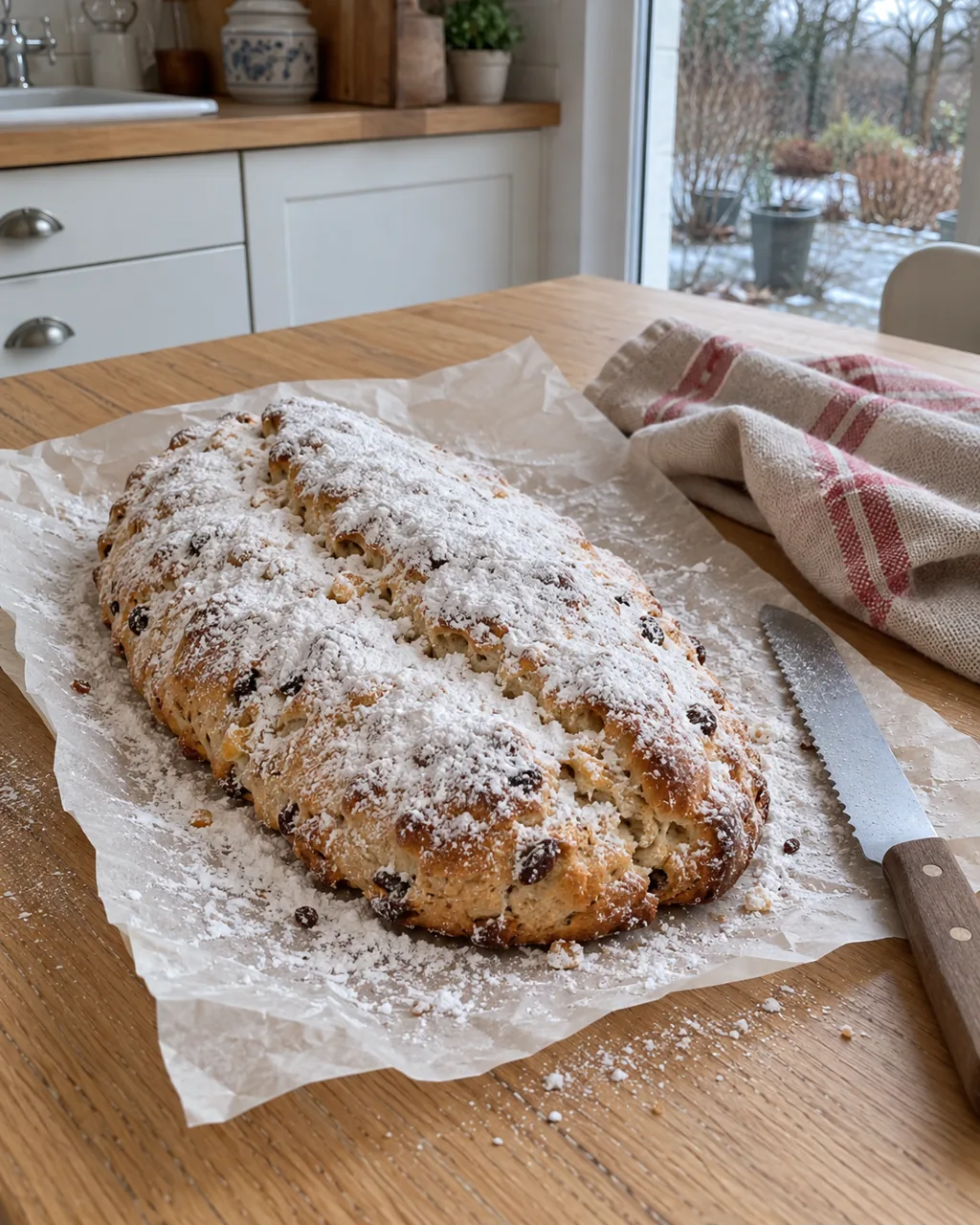
Storing and slicing so it stays moist
A quark stollen tastes best in the first two weeks after baking. To keep it moist:
- Wrap it well. Wrap the completely cooled stollen in baking paper or greaseproof paper and then in foil, or lay it in an airtight tin.
- Keep it cool and dry. A cool room, a larder or an unheated spare room is ideal.
- Refresh the icing sugar. Because the icing sugar soaks in, simply dust it again before serving.
- Cut it from the middle. Rather than starting at one end, cut the stollen through the middle, slice off as much as you need and push the two halves firmly back together. That way the cut faces don't dry out.
- Freeze it. Quark stollen freezes well, ideally well wrapped and without icing sugar. Let it thaw in good time and only dust it afterwards.
If you'd like a fresh stollen for the holidays, it's best baked in mid-December. If you want a nibble during Advent too, simply plan a second baking day – or freeze one half.
Variations for your stollen just as you like it
The basic recipe is a good starting point for your own ideas:
- Almonds instead of walnuts. Chopped or flaked almonds make the stollen milder and more traditional.
- Other dried fruit. Instead of raisins, dried cranberries, chopped apricots or figs work well.
- With a marzipan centre. Lay a roll of marzipan (about 200 g) in the groove before you fold the dough over.
- Spices. A pinch of cinnamon, cardamom or nutmeg gives the dough more of a Christmas flavour.
- Two smaller stollen. The dough weighs about 2.3 kg in total. Halved, that makes two stollen of about 1.15 kg each and roughly 20 to 25 cm long – ideal for giving away. Both fit side by side on one tray if you leave a good hand's width between them. The baking time is shorter; check with a skewer from about 40 minutes to see whether they're done.
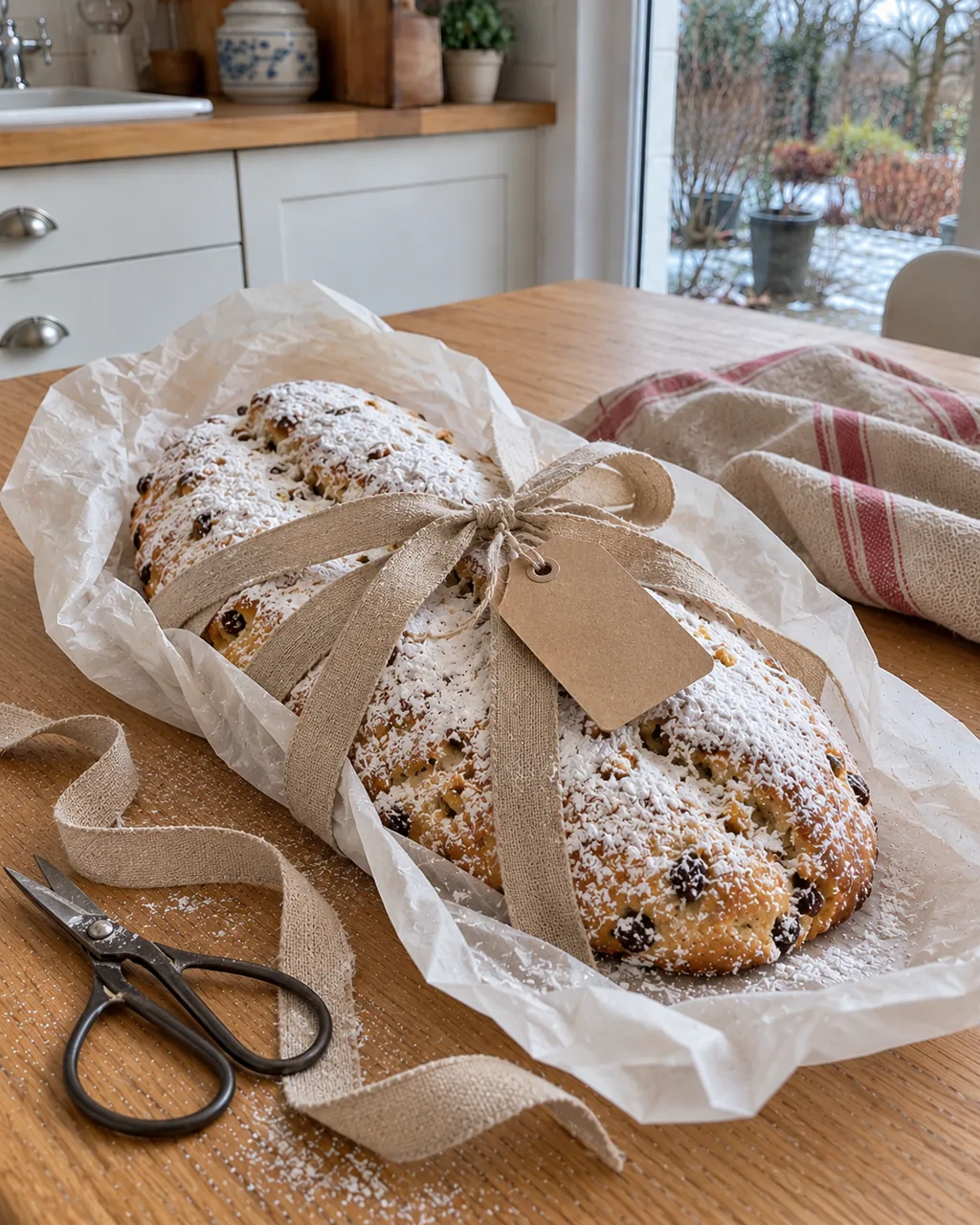
Giving stollen as a gift wrapped in paper
A home-baked stollen is one of the loveliest gifts of Advent. Wrapped in baking paper, tied with a length of linen ribbon or twine and given a little label, it needs no further packaging. If you like, tuck the recipe in too – handwritten on a small card.
For anyone with a nut allergy, a note about the walnuts belongs with it, and if you're expecting guests with intolerances, you can bake a small portion with no nuts at all.
Goes well with for the Advent plate
On the Advent plate, the stollen happily keeps company with the classics from the biscuit tin: Christmas biscuits – four classics with a baking plan (in German), and with soft Elisenlebkuchen, the German nut gingerbread made without flour. If you'd like to sew something for the tree while the stollen rests, you'll find eight quiet shapes in Sewing linen Christmas ornaments. How to lay the table for the holidays in a calm, atmospheric way is in my post on setting a country-style Christmas table (in German).
Frequently asked questions answered short & clear
What is the difference between quark stollen and yeasted stollen?
A yeasted stollen is made with yeast, has to rise several times and needs a few weeks to mature after baking. A quark stollen rises with baking powder, is quick to make and tastes good after only a few days. It is moister and a little fresher in flavour, but in return it doesn't keep quite as long.
How long does a quark stollen keep?
About two weeks, well wrapped and stored somewhere cool. That's when it tastes best. For longer, it can be frozen.
Can I freeze the stollen?
Yes. It's best frozen well wrapped and without icing sugar; let it thaw in good time and only dust it afterwards.
Can I use ready-grated zest instead of fresh?
Yes. Instead of the grated zest of an unwaxed lemon and an unwaxed orange, you can use one sachet each of ready-grated lemon and orange zest.
Why has my stollen turned out dry?
Usually it was in the oven too long or too much flour went into the dough. Check with a skewer towards the end of the baking time and brush the stollen generously with melted butter straight after baking. Wrapped well, it stays moist.
A cosy Advent to you – Jona
Free for you · Newsletter
A linen starfor your tree
Sign up for my letter and the pattern for my linen star is yours as a gift – a full-size PDF with instructions, sewn in a single evening. After that I'll write to you a few times a year about new posts, seasonal decorating and sewing patterns. You can unsubscribe at any time with a single click.

About the author
Jona · Villa Bloom & Co.
I write about country style, the garden, sewing and cosy living. What I sew, bake and do in the garden myself, I describe from my own experience. Much of what you'll find here is inspiration – ideas I find beautiful and love to pass on. Some of the mood images were created with the help of AI. More about me →