Recipes · Christmas Baking ·
German Christmas Cookies four classics that never let you down
There is a moment every year when a kitchen smells different from usual. Outside it is already dark by half past four, a bowl of cold butter sits on the worktop, a spoon dusted with icing sugar lies somewhere nearby, and from the oven drifts that scent of vanilla and toasted almonds. That is all it takes for a house to smell of Advent.
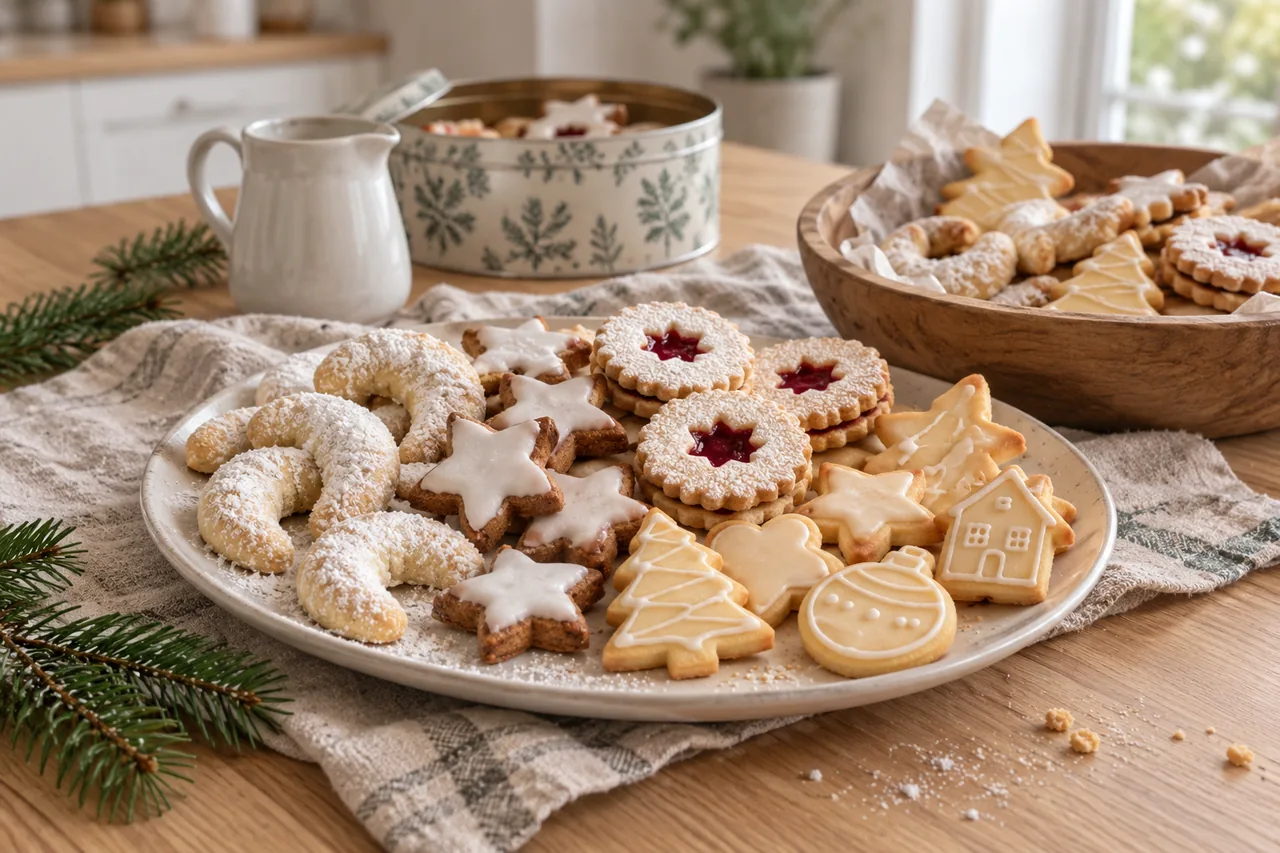
Christmas biscuits needn’t be complicated. The ones that turn up on almost every German biscuit plate became classics precisely because they rely on a handful of good ingredients: butter, flour, sugar, nuts and eggs. What makes them special isn’t a clever recipe, but the calm with which you bake them.
In this post you’ll find four kinds that complement each other beautifully – and even pass each other their ingredients. Bake Vanillekipferl and Spitzbuben, and you’ll have exactly as many egg whites left over as you need for Zimtsterne. There is also a baking plan for an unhurried weekend and a little guide to which biscuits belong in which tin.
This post is the heart of the Christmas Baking series. On the German side of the blog there are more recipes to go with it, each with its own step-by-step guide – among them a moist quark Stollen made without yeast, hazelnut macaroons for leftover egg whites, spiced Spekulatius and Elisenlebkuchen, the flourless gingerbread from Nuremberg. These recipes are in German for now.
Straight to the recipes: Vanillekipferl · Spitzbuben · Zimtsterne · Butter biscuits · Baking plan
Before you begin five things that make any Christmas baking easier
Keep the butter properly cold. Shortcrust stays tender when the butter stays cold as you knead. Cut it into small cubes and work quickly. If the dough turns sticky, simply pop it back in the fridge for half an hour.
Let the dough rest overnight. Almost every shortcrust dough can be made the evening before. Wrapped well, it keeps in the fridge for two to three days. That splits the work and makes the baking day itself far calmer.
Baking paper rather than butter on the tray. Biscuits bake more evenly on baking paper and lift off without breaking. Reusable baking mats work just as well.
Choose conventional heat. In a fan oven, biscuits bake faster but darken a little at the edges. For pale kinds such as Vanillekipferl or Zimtsterne, conventional top-and-bottom heat is the safer choice – one tray at a time.
Every oven is different. The baking times in the recipes are a guide. Start checking at the shortest time. As soon as the edges take on a hint of colour, most kinds are done – they firm up as they cool.
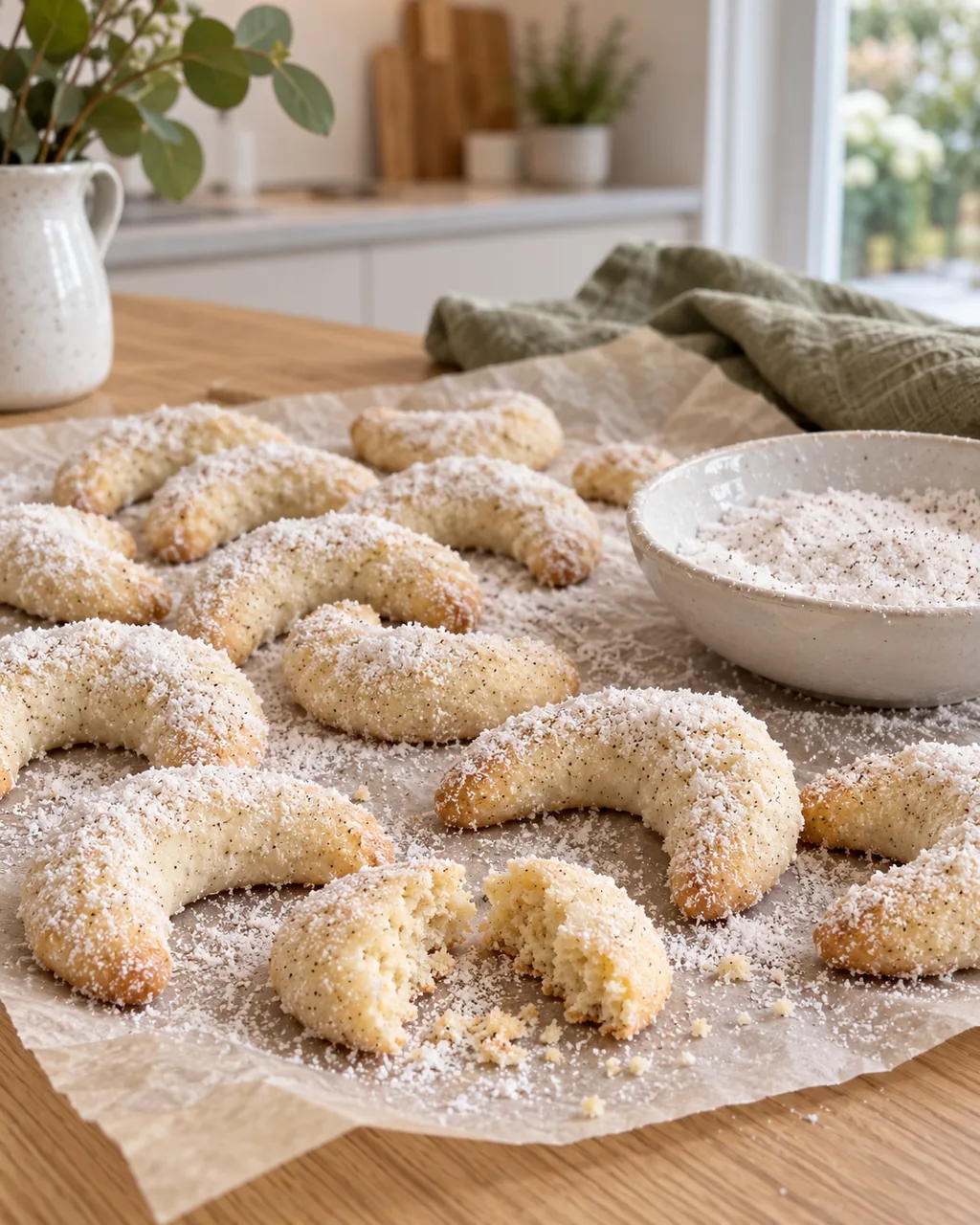
1 · Vanillekipferl vanilla crescents – tender, pale and crumbly
They are the most delicate of the classics and all but melt on the tongue. The secret lies in the ground almonds – and in letting the crescents stay pale.
Preparation approx. 40 min · Chilling at least 1 hr · Baking 10–12 min per tray (approx. 3 trays)
Makes about 60
- 250 g plain flour (all-purpose flour)
- 200 g cold butter
- 100 g ground almonds (blanched)
- 80 g caster sugar
- 2 egg yolks (medium eggs)
- seeds of 1 vanilla pod
- 1 pinch of salt
For rolling
- 50 g icing sugar
- 2 sachets vanilla sugar (8 g each) – or 16 g caster sugar rubbed with the seeds of ½ vanilla pod
Method
- Mix the flour, almonds, sugar, vanilla seeds and salt in a bowl. Add the cold butter in cubes and both egg yolks. Keep the egg whites in a screw-top jar in the fridge – you’ll need them later for the Zimtsterne.
- Quickly bring everything together by hand into a smooth dough. Shape into two logs, wrap and chill for at least an hour.
- Preheat the oven to 175 °C / 350 °F (conventional, top and bottom heat). Cut small pieces from the dough, about 11 g each, roll them into finger-thick ropes 5 to 6 cm long, roll the ends a little thinner and bend them into crescents.
- Lay them on a tray lined with baking paper, leaving a little space between them, and bake for 10 to 12 minutes. The crescents should stay pale; only the tips may turn lightly golden.
- Mix the icing sugar and vanilla sugar. Let the crescents cool for two to three minutes – straight from the oven they break – then roll them gently in the sugar while still warm.
A small tip: Rather than shaping each crescent on its own, roll all the pieces to the same length first. Crescents of equal size bake more evenly.
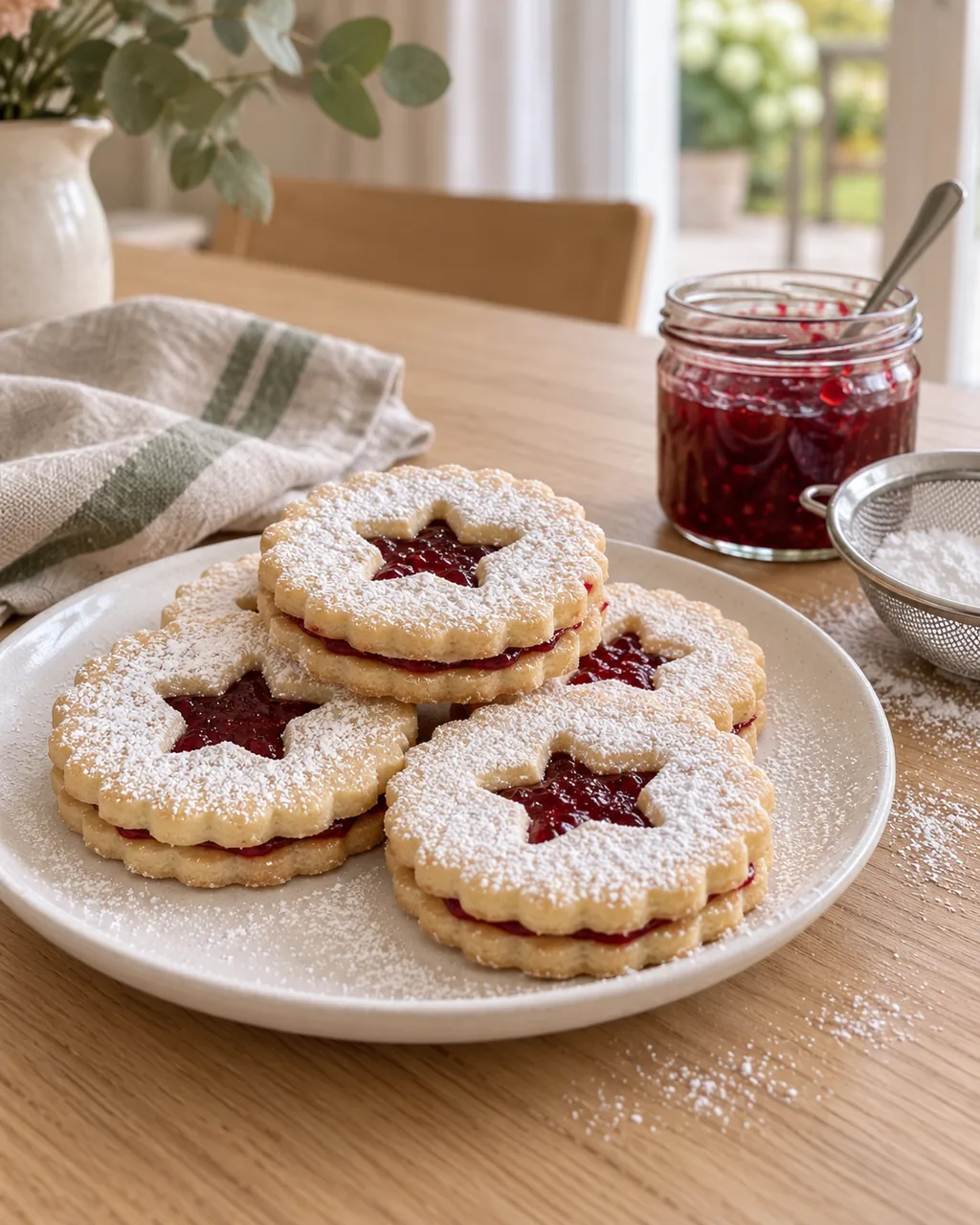
2 · Spitzbuben jam sandwich biscuits with a little red window
Two thin shortcrust biscuits, a layer of red jelly in between and a veil of icing sugar on top. Spitzbuben look festive on any plate and taste best once they have had a day or two to mellow.
Preparation approx. 45 min · Chilling at least 1 hr · Baking 8–10 min per tray (approx. 2–3 trays) · best left to mellow for 1–2 days
Makes about 30 (sandwiched)
- 250 g plain flour (all-purpose flour)
- 175 g cold butter
- 75 g caster sugar
- 100 g ground almonds
- 1 egg yolk
- 1 sachet vanilla sugar (8 g) – or ½ tsp vanilla extract
- 1 pinch of salt
- 150 g redcurrant jelly (or raspberry jelly)
- icing sugar for dusting
Method
- Mix the flour, almonds, sugar, vanilla sugar and salt, add the cubed butter and the egg yolk and knead into a smooth dough. Add the egg white to the others in the jar.
- Press the dough flat, wrap and chill for an hour.
- Preheat the oven to 180 °C / 355 °F (conventional). Roll the dough out in batches between two sheets of baking paper until it is 2 to 3 mm thin.
- Cut out round or fluted biscuits of about 5 cm. In half of them, cut a small hole or a tiny star from the centre – these will be the lids.
- Bake the biscuits for 8 to 10 minutes, until the edges show the faintest colour. Leave to cool on the tray.
- Dust the lids generously with icing sugar. Warm the jelly briefly in a small pan and stir until smooth, put a dab on each base and set the lids on top.
A small tip: Always sift the icing sugar onto the lids first and sandwich them afterwards. That way the jelly in the window stays beautifully red and glossy.
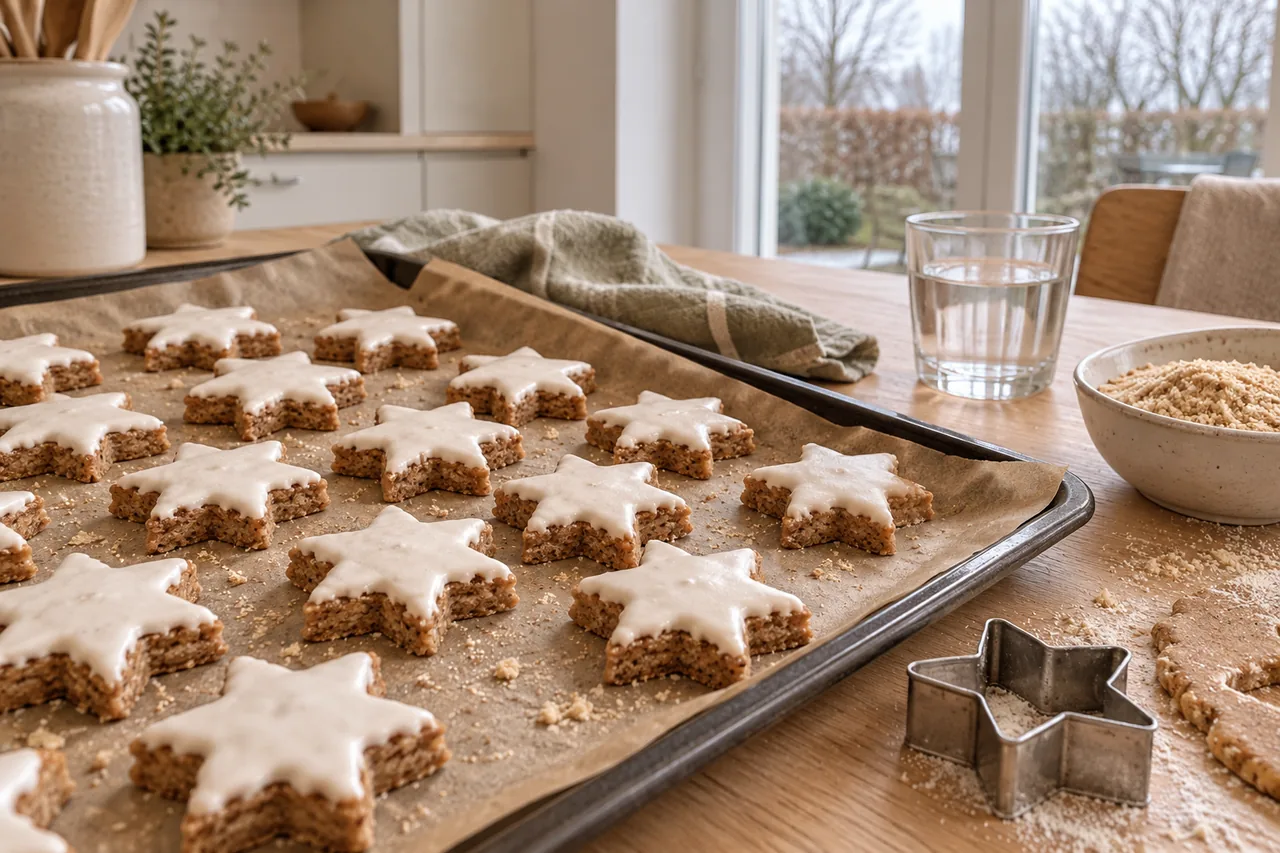
3 · Zimtsterne cinnamon stars – the kind that rewards patience
Zimtsterne ask for the most patience – and give the most back. The recipe uses no flour at all. If you are baking for someone with coeliac disease, do still choose ingredients clearly labelled gluten-free and work on a clean surface. You’ll need three egg whites – exactly what is left over from the Vanillekipferl and Spitzbuben.
Preparation approx. 45 min · Drying 1–2 hrs (or overnight) · Baking 8–10 min per tray (approx. 2 trays)
Makes about 40
- 3 egg whites (medium eggs)
- 1 pinch of salt
- 250 g icing sugar
- 1 squeeze of lemon juice
- 400 g ground almonds (skin on, or mixed with blanched)
- 1 heaped tsp ground cinnamon
Method
- Whisk the egg whites with the salt until very stiff. Sprinkle in the icing sugar a little at a time and keep whisking until the mixture is firm and glossy. Finally, stir in the lemon juice.
- Take out five to six heaped tablespoons of the mixture and set them aside, covered – this will be the glaze.
- Knead the cinnamon and about 350 g of the almonds into the rest. The dough will be sticky; that is just as it should be. Work in the remaining almonds little by little until it can be shaped.
- Roll the dough out between two sheets of baking paper or cling film to about 1 cm thick. Cut out stars, dipping the cutter into cold water every now and then so nothing sticks.
- Lay the stars on a tray lined with baking paper and spread them thinly with the glaze, using a small knife or a brush, right into the points.
- If you have time, leave the stars to dry in the air for one to two hours (or overnight). The glaze will stay especially smooth.
- Bake in the preheated oven at 150 °C / 300 °F (conventional) for 8 to 10 minutes. The glaze should stay white and the stars still soft inside – they firm up as they cool.
A small tip: Zimtsterne grow harder in the tin over time. If they have become too firm, you can lay a slice of apple in the tin for a day – but do take it out again afterwards. Left longer, the stars turn too moist and the apple may go mouldy.
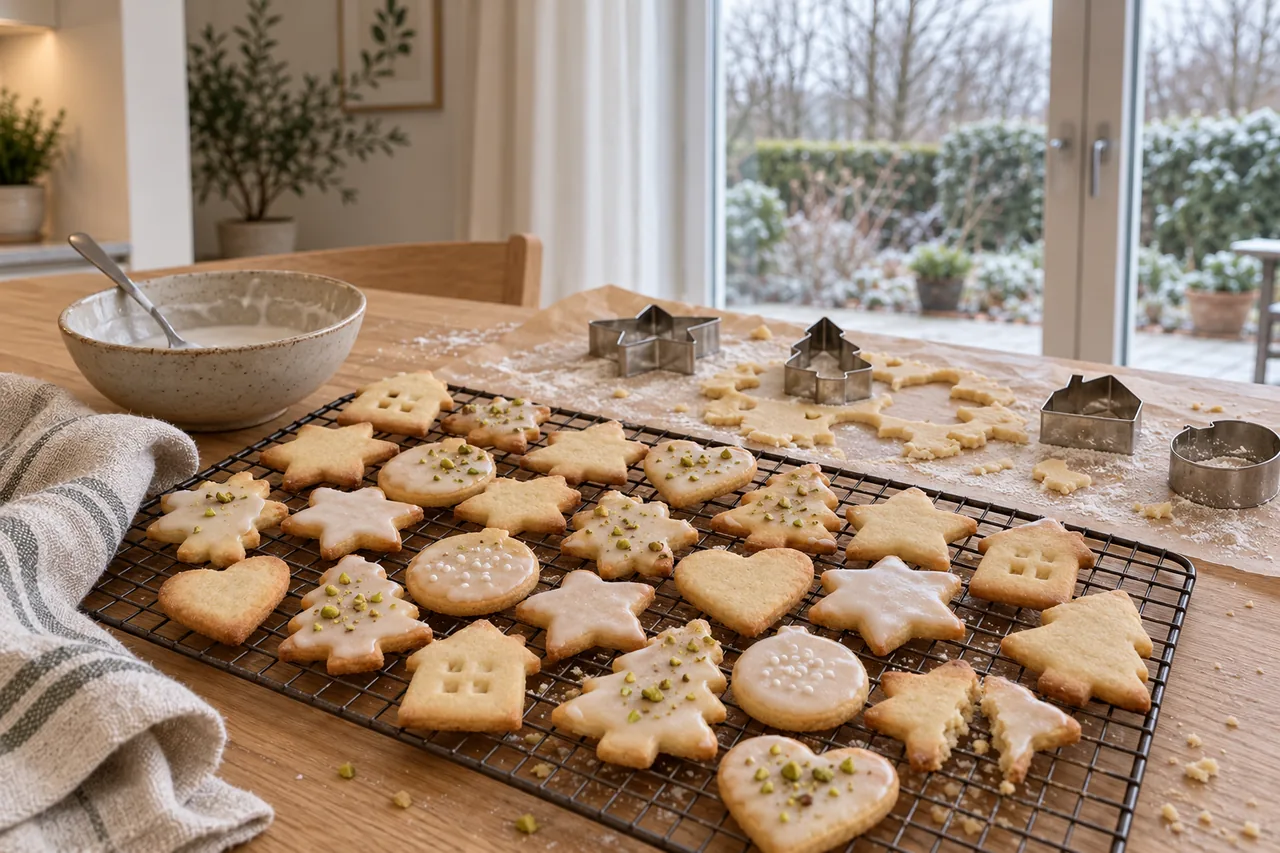
4 · Butter Biscuits for Cutting Out simple, and made for playing
The simplest recipe of all, and the one you can play with most. Butter biscuits are lovely plain, with a whisper of icing or simply scattered with pearl sugar. And this is the recipe where little hands can help, too.
Preparation approx. 30 min plus decorating · Chilling at least 1 hr · Baking 8–10 min per tray
Makes about 2 trays
- 300 g plain flour (all-purpose flour)
- 200 g cold butter
- 100 g caster sugar
- 1 egg (medium)
- 1 sachet vanilla sugar (8 g) – or ½ tsp vanilla extract
- 1 pinch of salt
- grated zest of ½ unwaxed lemon (optional)
For the icing (optional)
- 150 g icing sugar
- 2 to 3 tbsp lemon juice or water
Method
- Quickly knead all the dough ingredients into a smooth dough, press flat, wrap and chill for at least an hour.
- Preheat the oven to 180 °C / 355 °F (conventional). Roll the dough out in batches on a lightly floured surface or between baking paper to 3 to 4 mm thick and cut out your biscuits.
- Bake on a tray lined with baking paper for 8 to 10 minutes, until the edges are lightly golden. Leave to cool on a wire rack.
- For the icing, stir the icing sugar with just enough liquid to make a thick icing. Spread it over the biscuits or drizzle fine lines from a spoon.
Baking biscuits with children so it stays relaxed for everyone
Butter biscuits are the perfect recipe for bringing children into the kitchen. The dough forgives a great deal, even the very youngest love cutting out shapes, and when it comes to decorating there is no right or wrong. A few simple things help to keep the afternoon relaxed for everyone:
Make the dough beforehand. Children want to cut out and decorate, not wait an hour for the dough to chill. It is best to make it the day before and bring it out only once everyone is sitting at the table.
Give each child a corner of their own. Their own piece of dough, their own sheet of baking paper and two or three cutters – then nobody has to wait or share, and there is less jostling over the favourite shape.
The oven is a job for the grown-ups. An adult slides the trays in and out. Children can keep an eye on the time instead, or watch through the oven door as the biscuits slowly take on colour.
Allow imperfection – out loud. Wonky stars, chunky hearts and fir trees with far too much icing are all part of it. It is precisely the ones children decorate themselves that are eaten first later on, or proudly given away.
Mix in small jobs. When the enthusiasm for cutting out begins to fade, children can knead the scraps together, let icing sugar snow through a sieve or sort the finished biscuits by shape. That way everyone stays busy for as long as it is fun – and anyone who has had enough can simply stop.
A short word on raw dough: dough made with raw egg and raw flour shouldn’t be nibbled. That is hard to stick to with children, but all the more reason to taste the finished biscuits quickly.
Shapes that suit a country home fewer cutters, a calmer plate
A calm, natural biscuit plate doesn’t need twenty different cutters. A few simple shapes in two or three sizes often look lovelier together than a colourful jumble: star, fir tree, heart, bauble and little house, for instance. Instead of coloured sprinkles, a thin white icing, a few chopped pistachios or a little coarse sugar is quite enough.
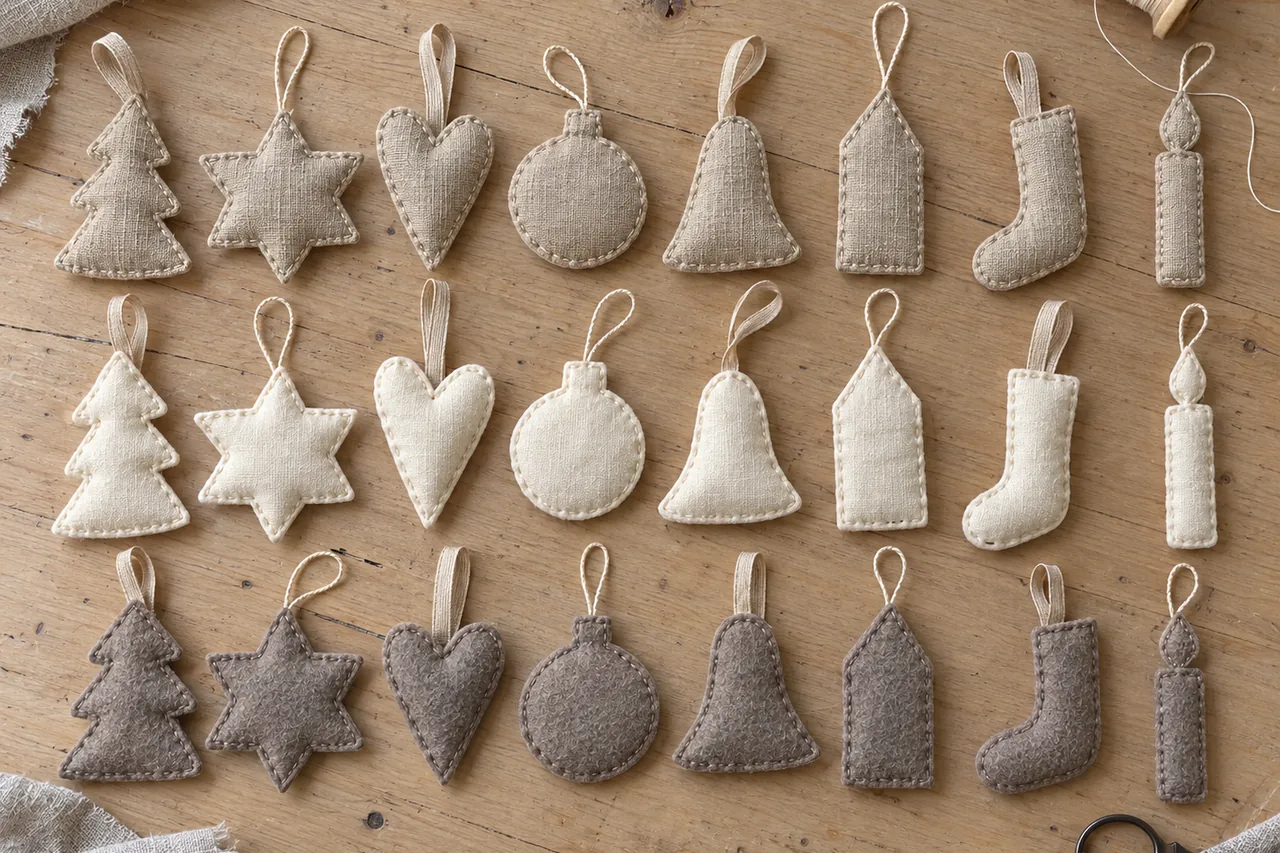
If you like this kind of shape: exactly these motifs reappear in the sewn linen tree ornaments. Biscuits and ornaments together on one tray – it all looks of a piece.
The egg plan nothing goes to waste
Anyone who bakes several kinds knows the problem: here you have egg whites left over, there you’re a yolk short. These four recipes have been chosen to fit together.
| Recipe | needs | left over |
|---|---|---|
| Vanillekipferl | 2 egg yolks | 2 egg whites |
| Spitzbuben | 1 egg yolk | 1 egg white |
| Zimtsterne | 3 egg whites | – |
| Butter biscuits | 1 whole egg | – |
So altogether you need just four eggs for all four kinds. Egg whites keep in a clean, sealed jar in the fridge for two to three days – plenty of time for a baking weekend. And if you’d rather bake macaroons than cinnamon stars: hazelnut macaroons (recipe in German) also need exactly three egg whites.

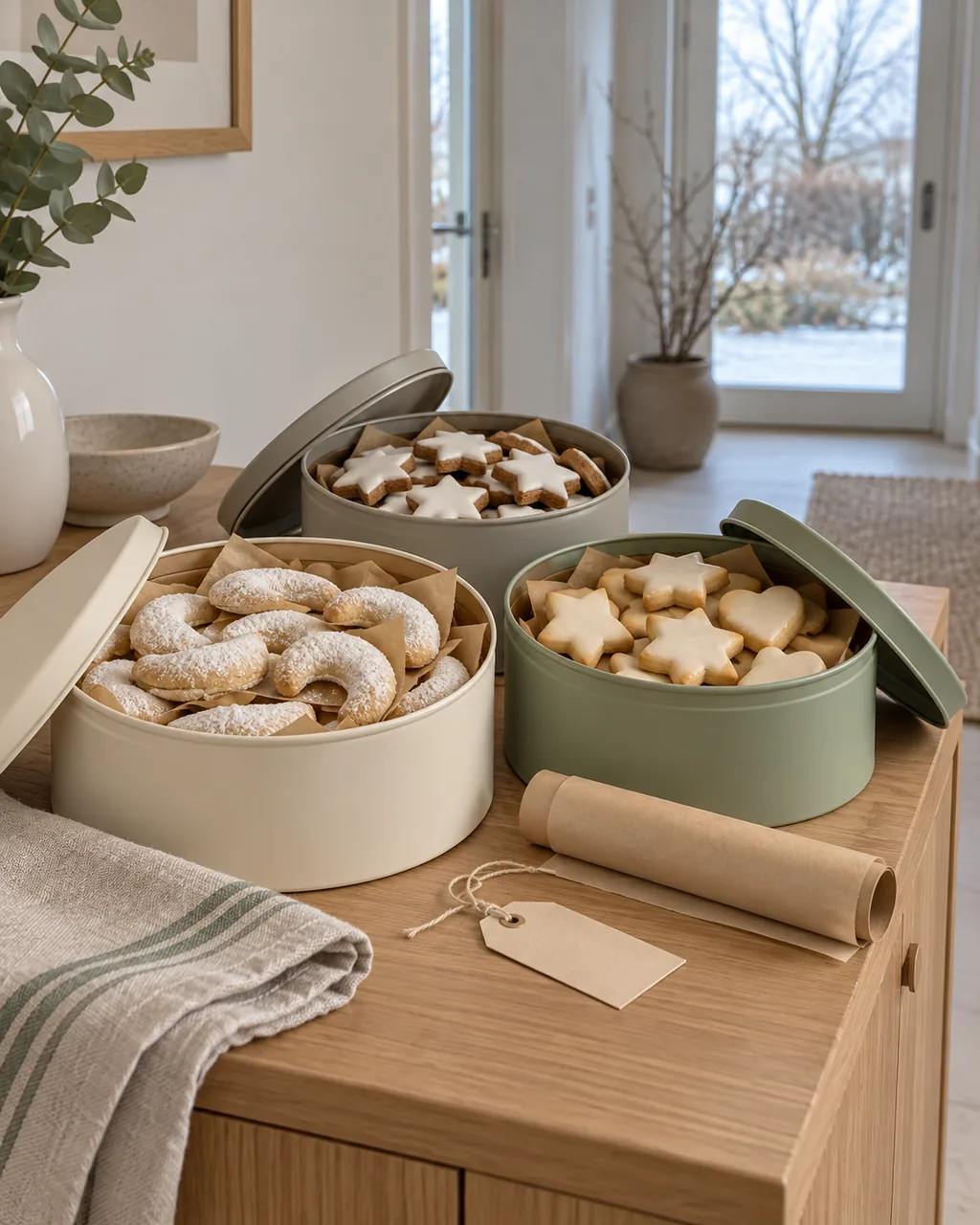
A baking plan for an unhurried Advent weekend one evening to prepare, two baking days
Four kinds in one day is possible, but hardly cosy. With a short evening of preparation and two baking days, it becomes a calm weekend.
Friday evening – preparation (about 45 minutes)
- Make the dough for the Vanillekipferl, Spitzbuben and butter biscuits, wrap each one and put them in the fridge.
- Collect the egg whites in the jar.
Saturday – first baking day
- Shape and bake the Vanillekipferl and roll them in vanilla sugar.
- Cut out and bake the Spitzbuben, then leave them to cool.
- Prepare the Zimtsterne, glaze them and leave them to dry overnight.
Sunday – second baking day
- Bake the Zimtsterne.
- Cut out, bake and decorate the butter biscuits.
- Sandwich the Spitzbuben with jelly.
- Let everything cool completely, then pack into tins.
That way no dough waits too long, the oven only ever has one kind to look after, and by Sunday evening there is a full plate on the table.
Which biscuits in which tin? storing them properly
Biscuits should only go into the tin once they have cooled completely – otherwise they turn soft. It also matters to keep crisp and soft kinds apart, because they pass moisture to one another.
| Biscuit | Storage | Keeps (as a guide) |
|---|---|---|
| Vanillekipferl | Tin, in layers with baking paper | approx. 3 to 4 weeks |
| Spitzbuben | A tin of their own, in one layer or with paper in between | approx. 2 to 3 weeks |
| Zimtsterne | A tin of their own, well sealed | approx. 3 to 4 weeks |
| Butter biscuits | Tin, cool and dry | approx. 3 to 4 weeks, a little less with icing |
These times are a guide – how long biscuits stay good depends on the warmth of the room, the humidity and the tin. If they no longer smell or taste fresh, it is better to set them aside.
A cool room is ideal – a larder, an unheated spare room or a shelf in the hallway. The fridge is less suitable, because biscuits can take on moisture and smells there.
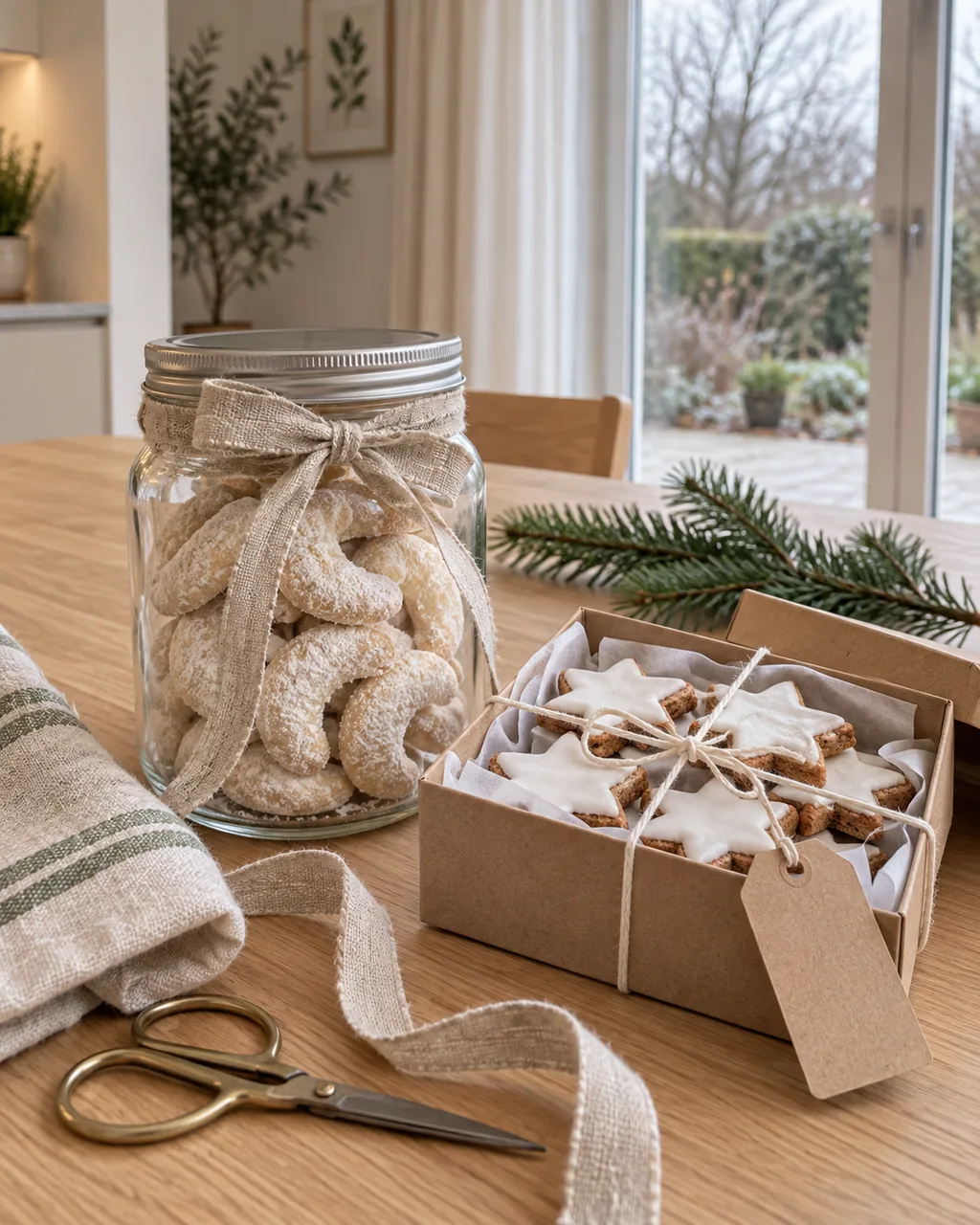
Giving biscuits as presents so they arrive beautifully
Home-baked biscuits are among the loveliest small presents of Advent. So that they arrive well:
Only one or two kinds per parcel. Soft and crisp biscuits packed together both lose their character.
Glassine or greaseproof paper between the layers. It protects the glaze and the icing sugar.
Natural wrapping rather than shiny cellophane. A screw-top jar with a linen ribbon, a cardboard box tied with string or a sewn linen bag look lovely and can be used again.
A little label with the name of the biscuit – and, for anyone with allergies, a note that it contains nuts.
The biscuit plate on the table simple is loveliest
During Advent, a plate of biscuits is often more decoration than any candle. A plain white plate or a shallow wooden bowl, a few sprigs beside it, a piece of linen underneath – that is all it needs. For more ideas on decorating calmly and naturally, have a look at Christmas Decor in Country Style.
And perhaps the loveliest thing about biscuits isn’t the finished plate at all, but the baking itself: an afternoon with nothing else to do but roll out dough and wait for the oven. If you’d like to give yourself a few such quiet hours in December, you’ll find some more thoughts on it in A Quiet Christmas.
How biscuits found their way into Advent a little look back
The German word “Plätzchen” is usually traced back to the old word “Platz”, meaning a flat bake or flatbread. Its origin isn’t entirely settled, but the image fits: a small, flat bake – long before anyone thought of stars, hearts and colourful plates.
The roots of Christmas baking reach back to the monasteries of the Middle Ages – though not in the form of the biscuits we know today, but above all as Lebkuchen and other spiced bakes. Spices such as cinnamon, cloves and nutmeg travelled long trade routes to Europe and into the monastery kitchens, where special bakes were made for the great feast days. Spices were precious, and to flavour a bake with them meant sharing something very valuable. Many of these spiced bakes still belong to Advent today.
For most families, fine Christmas baking nevertheless remained something special for a long time. Sugar was expensive, butter precious, and an oven that baked evenly was far from standard in every kitchen. Only in the 19th century did things begin to change: sugar from home-grown sugar beet slowly became more affordable, ranges with an oven found their way into more homes, and tin cutters appeared. Small biscuits in many shapes, and baking together at home as a fixed Advent ritual, are therefore a comparatively young tradition that only truly took hold in the 20th century – above all from the 1950s, when baking ingredients and Christmas spices became affordable for most families.
Individual kinds have their stories, too. It is often said that the crescent shape of the Kipferl recalls the crescent moon on the banners of the army that besieged Vienna in 1683. That is a legend: crescent-shaped Kipferl – originally made from yeast dough – are recorded in Austria long before. Today’s Vanillekipferl made from almond shortcrust is a much younger recipe. It is a lovely tale all the same.
Why baking biscuits does you good busy hands, a slower mind
For many people, baking simply belongs to Advent – and that has less to do with the result than with the way there. Rolling out dough, cutting shapes, swapping trays, waiting: it has a quiet rhythm all of its own. Your hands are busy, your mind is allowed to slow down, and the kitchen smells of butter, vanilla and cinnamon. Many people love to bring someone to the table for it – friends, neighbours or children; others treasure the quiet hour on their own. Either way, it is a lovely small counterweight to a December full of appointments.
Frequently asked questions short & clear answers
Can I freeze the dough?
Yes. Shortcrust for Vanillekipferl, Spitzbuben and butter biscuits freezes well for up to three months if wrapped properly. Let it thaw overnight in the fridge and carry on as usual. Zimtsterne dough is less suited to freezing.
Why do my Vanillekipferl break when I roll them in sugar?
Usually they are still too hot. Leave them on the tray for two to three minutes after baking. They shouldn’t be completely cold either, though, or the sugar won’t stick.
Why has the glaze on my Zimtsterne turned brown?
The oven was too hot or the stars were in it too long. Choose 150 °C / 300 °F conventional heat and lean towards the shorter baking time. The stars may still be soft inside when you take them out.
Can I replace the almonds?
For Vanillekipferl and Spitzbuben, ground hazelnuts work just as well and give a stronger flavour. For Zimtsterne you can also use hazelnuts or a mixture of both.
Can I use less sugar?
For butter biscuits and Spitzbuben, you can reduce the sugar by about a quarter; the dough will be a little more crumbly. Not for Zimtsterne – here the sugar is what makes the egg white mixture set. If you like to bake with less sugar in general, you’ll find ideas in Naturally Sweet.
How long before Christmas should I bake?
Vanillekipferl, Zimtsterne and butter biscuits keep for three to four weeks, so you can bake them at the end of November or on the first weekend of Advent. Spitzbuben only keep for two to three weeks – bake them in early December, or make the dough ahead and freeze it.
Further reading on the history (in German): Was den Zauber des Plätzchenbackens ausmacht – interview with the LVR Institute for Regional Studies (domradio) · Weihnachtsplätzchen: how monasteries shaped our Advent kitchen (Sonntagsblatt) · Kipfel – traditional foods in Austria (BMLUK)
Happy baking – Jona

About the author
Jona · Villa Bloom & Co.
I write about country style, the garden, sewing and cosy living. What I sew, bake and do in the garden myself, I describe from my own experience. Much of what you find here is inspiration – ideas I find beautiful and love to pass on. Some of the mood images were created with the help of AI. More about me →
You might also like